


How Does The Oem Process Work for Commercial Gas Griddles?
When professional kitchens, restaurant chains, or catering projects evaluate new cooking equipment, commercial Gas Griddles are often at the top of the list due to their versatility and efficiency. However, beyond choosing a product off the shelve, many buyers today require customized solutions tailored to specific kitchen layouts, output capacity, or operational standards. This is where the OEM process for commercial gas griddles becomes critical.
In this article, we explore how the OEM manufacturing process works, why sourcing directly from a manufacturer like MLP Kitchen offers advantages over engaging with traders, what buyers should consider in bulk supply and project sourcing, and how manufacturing quality and export compliance play a pivotal role in delivering reliable, high-performance cooking equipment.
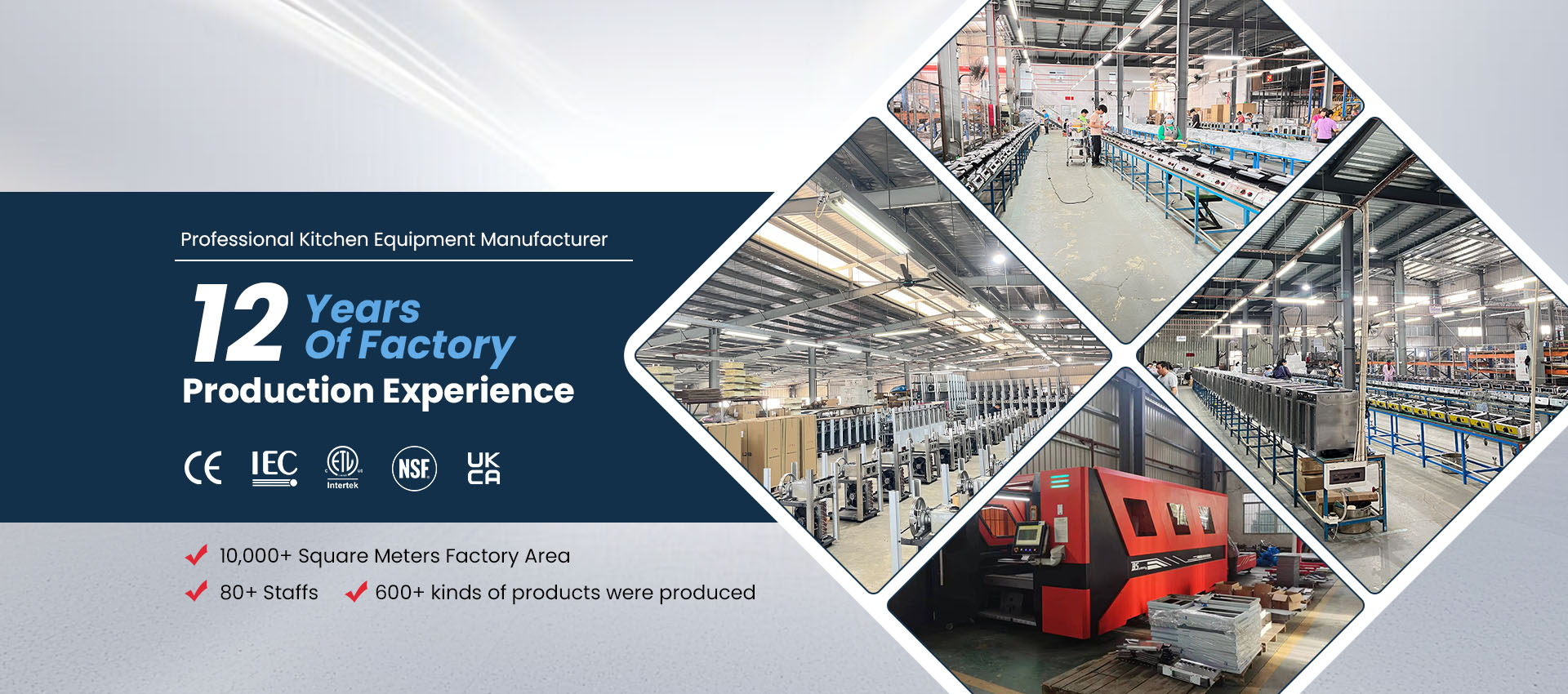
Why Choose a Manufacturer Over a Trader?
Before understanding the OEM workflow, it is important to distinguish between working with a manufacturer and sourcing through a trader.
When buyers work with a trader, they often experience limitations in product customization, inconsistent technical support, and less transparent pricing structures. Traders act as intermediaries and rarely control product design or assembly. This can lead to delays or unmet specifications when projects demand tailored solutions.
In contrast, working directly with a factory-based manufacturer such as MLP Kitchen gives buyers:
Direct access to engineering and design teams
Customized configuration based on technical requirements
Clear visibility into production capacity and timelines
Lower overall costs by eliminating multiple layers of markup
For commercial gas griddles meant to serve high-volume kitchen operations, this direct partnership is a foundation for quality and reliability.
The OEM / ODM Process for Commercial Gas Griddles
The OEM process for commercial gas griddles at MLP Kitchen follows a structured workflow designed to ensure that customized specifications are accurately translated into finished products:
1. Requirement Gathering and Technical Discussion
Buyers provide their operational needs including griddle size, heating zones, material preferences, and expected daily workload. MLP Kitchen’s technical team conducts in-depth discussions to clarify functional and safety expectations.
2. Concept Design and Engineering Proposal
Based on the initial requirements, engineers prepare design proposals that include mechanical schematics, burner layouts, and material options. This phase ensures that the griddle design aligns with local kitchen ventilation, gas inlet standards, and user ergonomics.
3. Prototype and Sample Confirmation
Before mass production, a prototype or sample unit is manufactured and evaluated. This step verifies design feasibility and allows the buyer to assess surface finish, heat distribution, and burner performance.
4. Pre-Production Adjustment
Feedback from the prototype stage is integrated into final production specifications. Any adjustments related to mounting options, control panels, or modular components are addressed before starting bulk fabrication.
5. Mass Production
Once final details are confirmed, the commercial gas griddles enter full-scale production. Manufacturing processes are scheduled to maintain consistent quality and on-time delivery.
6. Quality Inspection and Validation
Every produced unit undergoes rigorous testing including burner performance checks, leakage tests, and temperature uniformity verification.
7. Packing and Export Preparation
Finished products are securely packaged for transport. OEM labeling and documentation are prepared according to buyer requirements and destination regulations.
This comprehensive process ensures that each commercial gas griddle meets both functional expectations and project specifications.
Bulk Supply Considerations for Commercial Projects
When buyers place large orders for restaurant chains, institutional kitchens, or franchise operations, certain bulk supply factors become critical:
Production Capacity
Manufacturers must have sufficient production lines and skilled workforce to meet delivery deadlines without quality compromises.Consistent Specifications
Each griddle unit must match exact specifications so that installation, maintenance, and operator experience remain uniform across all locations.Packaging and Logistics Planning
Large kitchen equipment requires reinforced protective packaging and planned sequencing of shipment to avoid damage during transport.Lead Time Management
Clear communication of production milestones ensures that bulk orders integrate smoothly into kitchen build-out schedules.
MLP Kitchen’s integrated production facilities and standardized manufacturing workflows help buyers mitigate common bulk supply challenges.
Project Sourcing Checklist for Commercial Gas Griddles
Before placing an order or initiating an OEM project, buyers should evaluate suppliers against the following sourcing criteria:
Technical Compliance
Is the supplier able to meet specified cooking surface dimensions, BTU output range, and multi-zone control requirements?Certification and Safety Standards
Does the griddle design comply with local gas appliance codes and electrical safety expectations?Customization Capabilities
Can the manufacturer adapt burner configurations, control panels, or mounting options as required?After-Sales Support
Is there a clear plan for training, spare parts support, and service response?Documentation and Traceability
Can the supplier provide detailed drawings, test reports, and material records for audits or inspections?
A structured sourcing checklist helps procurement teams make informed decisions and avoid hidden risks.
Manufacturing Process Overview
The manufacturing of commercial gas griddles involves multiple coordinated operations:
Material Preparation
Quality stainless steel, carbon steel, or cast iron plates are cut and shaped to the required dimensions. Material standards are selected based on their corrosion resistance, heat conductivity, and ease of cleaning.
Frame and Body Fabrication
Precision bending, welding, and forming create the structural body of the griddle. Reinforcements are added where necessary to maintain flatness and structural integrity.
Burner Assembly and Integration
High-efficiency burner tubes and gas manifolds are installed. Calibration ensures even flame distribution and consistent heat across the griddle surface.
Control and Safety Systems
Control valves, thermocouples, and safety shut-off mechanisms are integrated to meet performance and compliance standards.
Surface Treatment
Cooking surfaces are finished to facilitate heat transfer and durability. Edges and corners are smoothed to ensure food safety and ease of cleaning.
This industrial workflow ensures that each gas griddle delivers reliable thermal performance and meets rigorous operational demands.
Quality Control Checkpoints
Quality control is embedded at every stage of griddle production:
Material Verification
Incoming metal sheets and components are tested for composition and thickness.Dimensional Inspection
Cutting and bending accuracy are verified against engineering drawings.Welding and Structural Integrity Tests
Weld lines are inspected to prevent leaks and maintain load-bearing strength.Burner Performance Testing
Gas delivery, flame pattern, and heat dispersion are measured before certification.Safety and Leakage Checks
All gas lines and fittings are tested under pressure to ensure no leakage.Final Acceptance Testing
Operational testing simulates real kitchen conditions to verify performance under load.
These checkpoints reduce defects and improve long-term reliability for end users.
Material Standards Used
Commercial gas griddles must use materials that withstand high temperatures, frequent cleaning, and heavy usage. Industry-recognized material standards include:
Stainless Steel (304 / 316 Grades)
Excellent corrosion resistance and ease of sanitation.Cold Rolled Steel with Protective Coating
Provides strength and cost efficiency for structural frames.Cast Iron or Alloy Plates
Used in cooking surfaces where heat retention and durability are priorities.
Each material choice affects performance, maintenance cycles, and long-term value for buyers.
Export Market Compliance
When supplying commercial gas griddles to international markets, manufacturers must ensure compliance with various regulatory standards:
Gas Safety Regulations
Equipment must meet applicable gas appliance safety codes in destination markets.Certification Requirements
Compliance with local certification bodies ensures acceptance by inspectors and end users.Labeling and Documentation
Clear markings, assembly instructions, and safety guidelines must be provided in the required languages.Customs and Export Documentation
Manufacturers must prepare export paperwork that aligns with buyer country import regulations.
MLP Kitchen’s export department ensures that all documentation and compliance requirements are met, allowing for smooth customs clearance and confidence in global projects.
Conclusion
Understanding the OEM process for commercial gas griddles requires a blend of technical insight, manufacturing transparency, and project-oriented sourcing strategies. Partnering with a manufacturer like MLP Kitchen empowers buyers to achieve customized solutions that align with operational requirements, quality expectations, and global compliance demands.
By focusing on factory-level expertise in design, material standards, bulk supply planning, and quality checkpoints, buyers can confidently specify commercial gas griddles that deliver reliable performance and long-term value in demanding kitchen environments.