


What Are The Key Stages in Developing A Customized Commercial Griddle?
Developing a customized commercial griddle is a structured engineering and manufacturing process that transforms operational requirements into a certified, production-ready cooking appliance. For restaurant chains, food service distributors, and commercial kitchen projects, customization is often necessary to meet space constraints, performance targets, and regional compliance standards.
Working directly with a manufacturer such as MLP Kitchen ensures that customization is managed through controlled design, fabrication, testing, and export preparation rather than limited to surface-level modifications typically offered by traders.
Below are the key stages involved in developing a customized commercial Gas Griddle.
1. Requirement Definition and Market Positioning
The development process begins with detailed requirement analysis. This includes:
Target market and regulatory standards
Kitchen layout constraints
Cooking surface dimensions
Burner quantity and heat output expectations
Gas type compatibility (NG or LPG)
User workflow and ergonomic considerations
Clear definition at this stage prevents redesign later in the project cycle.
2. Engineering Design and Structural Planning
Once requirements are confirmed, engineers create technical drawings and structural layouts. This includes:
Frame reinforcement structure
Griddle plate thickness and material selection
Burner placement and heat zoning
Grease management system design
Control panel positioning
This stage is critical for ensuring uniform heat distribution, durability, and long-term operational stability.
3. Material Standard Confirmation
Material selection directly impacts performance and lifespan. Commercial griddle development typically involves:
Stainless steel (commonly 304 grade) for external panels
Carbon steel or cast iron for cooking surfaces
High-temperature resistant gas valves and components
Reinforced structural steel for load-bearing sections
Material standards must align with food safety expectations and corrosion resistance requirements.
4. Prototype Manufacturing
Before mass production, a prototype unit is fabricated. This stage allows evaluation of:
Heat distribution consistency
Flame stability and gas flow balance
Surface flatness
Structural rigidity
Ease of cleaning and maintenance
Feedback from prototype testing is incorporated into final design adjustments.
5. Quality Control Planning
Customized projects require defined quality checkpoints. These typically include:
Incoming material inspection
Dimensional verification during fabrication
Welding integrity inspection
Burner calibration testing
Gas leakage and pressure testing
Final functional simulation
Establishing quality benchmarks before production ensures consistency across bulk orders.
6. Pre-Production Review and Approval
Before launching full production, all engineering drawings, component lists, and compliance requirements are finalized. Branding elements and packaging specifications for private label projects are also confirmed at this stage.
This structured review phase reduces risk in high-volume manufacturing.
7. Mass Production and Assembly
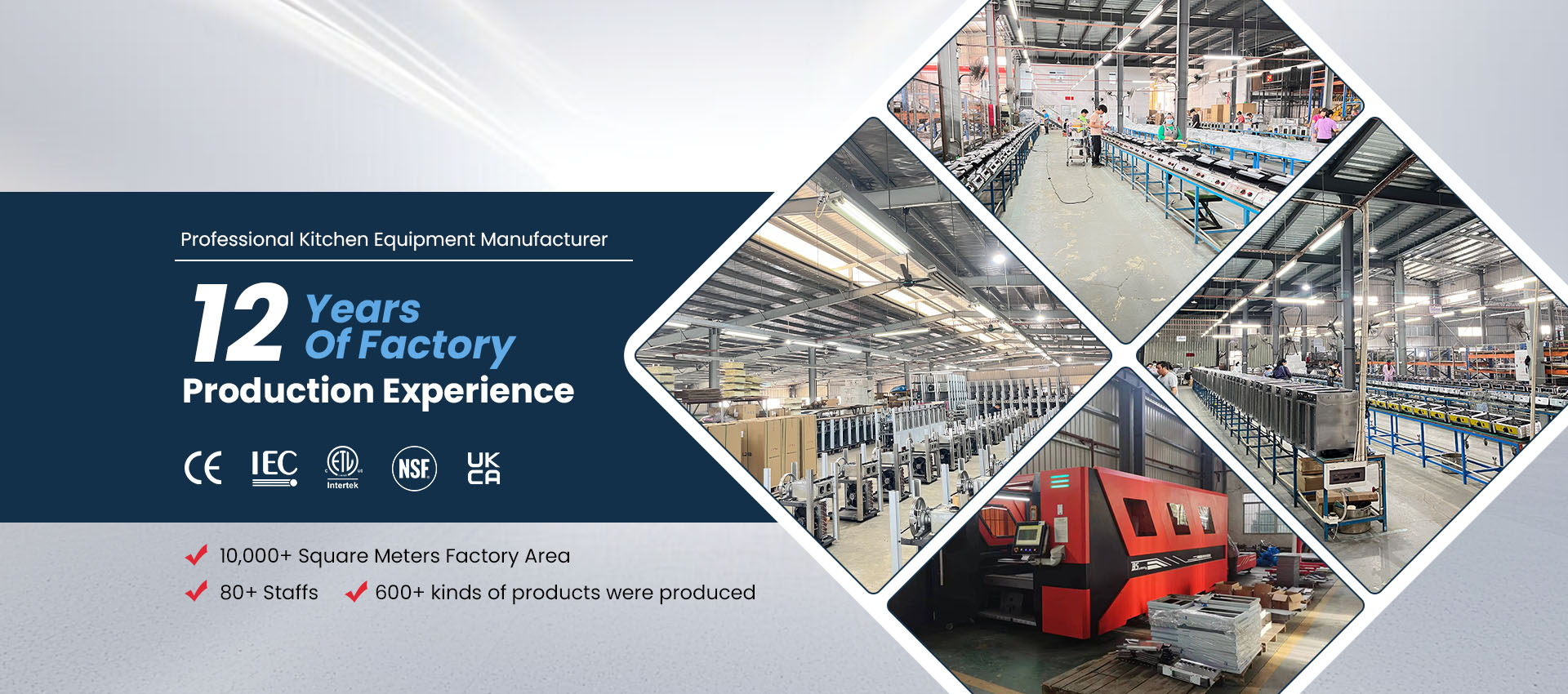
After approval, the commercial griddle enters scaled manufacturing. At MLP Kitchen, production integrates:
Sheet metal processing
Precision bending and welding
Burner assembly
Surface finishing
Final assembly and inspection
Controlled production workflows ensure consistent performance across units.
8. Certification and Export Preparation
For international markets, compliance documentation and safety certification are prepared according to destination requirements. Proper labeling, marking, and reinforced packaging are implemented to meet export regulations and transport conditions.
Conclusion
Developing a customized commercial griddle involves coordinated stages from requirement analysis and engineering design to prototype validation, quality control, and certified mass production.
Partnering directly with a manufacturer like MLP Kitchen enables full control over structural design, material standards, safety validation, and bulk supply management. This integrated approach ensures that customized commercial griddles meet operational demands, regulatory expectations, and long-term durability requirements in professional kitchen environments.