


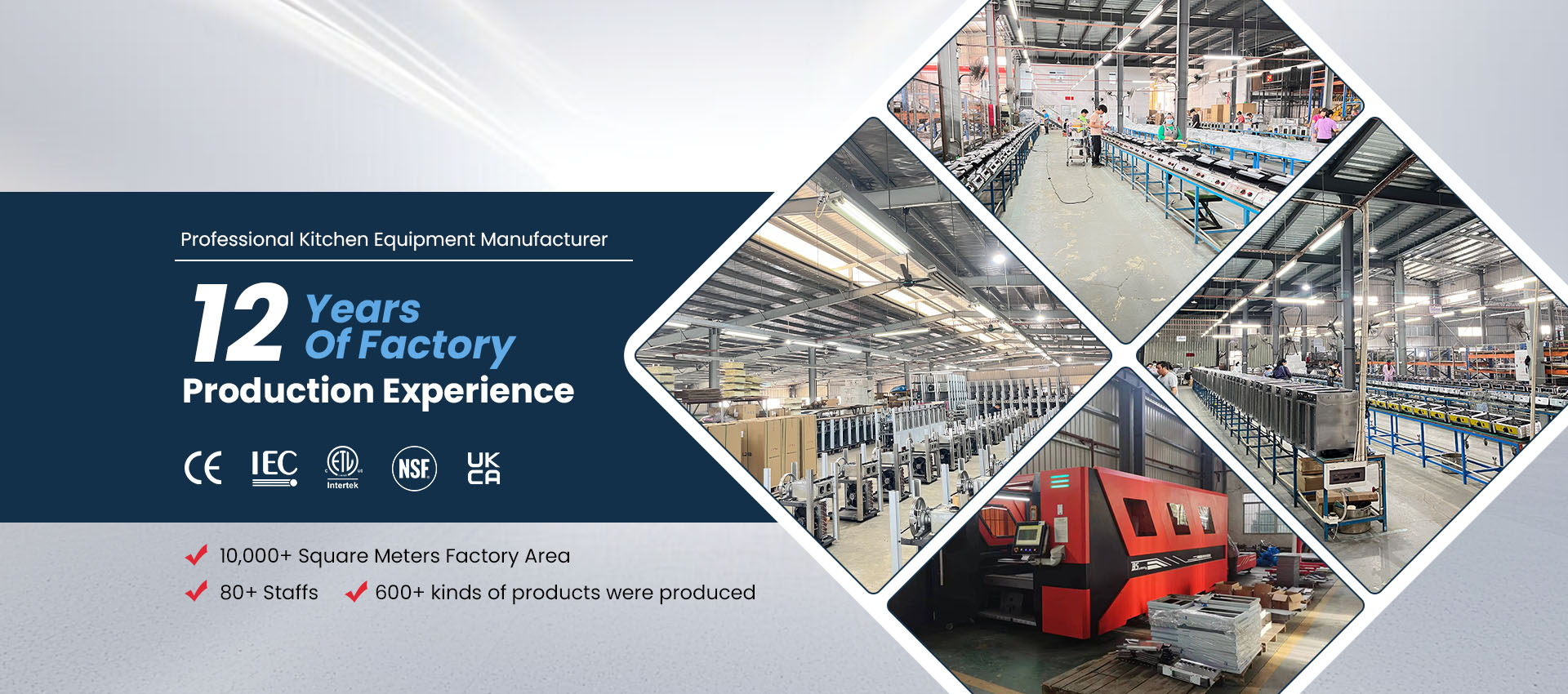
Managing lead time for large Gas Griddle supply projects requires structured coordination between engineering, production planning, quality control, and logistics. For restaurant chains, hospitality groups, or institutional kitchen builds, delays in equipment delivery can disrupt installation schedules and revenue timelines. Effective lead time control begins long before production starts.
Working directly with a manufacturer such as MLP Kitchen allows buyers to align engineering validation, production capacity, and export preparation under one controlled system, significantly reducing uncertainty compared to trader-based sourcing.
Below are the key strategies to manage lead time effectively.
1. Finalize Technical Specifications Early
One of the most common causes of delay is incomplete or changing specifications. Before confirming an order, buyers should lock in:
Cooking surface size and thickness
Burner configuration and BTU output
Gas type compatibility
Material grade requirements
Branding and packaging details
Clear documentation minimizes revision cycles during prototype and production stages.
2. Choose a Direct Manufacturer
Lead time risk increases when orders pass through intermediaries. Traders often rely on external factories and may not control production schedules directly.
A factory-based manufacturer offers:
Direct engineering communication
Real-time production scheduling
Integrated quality control
Controlled material sourcing
This reduces coordination delays and shortens decision loops.
3. Confirm Production Capacity & Schedule
Before placing a large order, verify:
Monthly production output capability
Current production load
Raw material availability
Estimated fabrication timeline
At MLP Kitchen, bulk production scheduling is aligned with confirmed specifications to ensure consistent batch completion without disrupting other projects.
4. Streamline Prototype Approval
For customized OEM projects, prototype approval directly affects lead time. Buyers can accelerate this stage by:
Providing detailed technical drawings
Clarifying performance expectations
Consolidating revision feedback into a single review cycle
Efficient validation reduces time lost between design and mass production.
5. Standardize Material & Component Selection
Material sourcing can create bottlenecks if uncommon grades or specialty components are selected without prior planning. Confirming standard material options — such as stainless steel grades and approved gas valves — improves procurement efficiency.
Stable material standards also support repeatability across large production runs.
6. Implement Defined Quality Control Checkpoints
Structured quality inspections reduce the risk of rework, which can extend production timelines. Key checkpoints should include:
Incoming material inspection
Dimensional verification
Welding integrity checks
Gas leakage testing
Burner performance validation
Final functional testing
Preventive inspection saves time compared to correcting defects after assembly.
7. Plan Packaging & Logistics in Parallel
Shipping heavy commercial gas griddles requires reinforced packaging and container planning. To avoid delays:
Confirm packaging specifications early
Align container loading schedules with production completion
Prepare export documentation in advance
Coordinate freight booking before final inspection
Parallel planning ensures immediate shipment once goods are ready.
8. Align Export Compliance Requirements Early
Certification and documentation delays can impact delivery schedules. Buyers should confirm:
Required safety certifications
Labeling and marking standards
Gas appliance compliance rules
Customs documentation requirements
Early compliance alignment prevents redesign or shipment hold-ups.
9. Forecast Future Volume for Repeat Orders
For restaurant chains or distributors planning long-term cooperation, sharing forecasted demand allows manufacturers to reserve production capacity and stabilize raw material supply. This proactive planning reduces future lead times.
Conclusion
Managing lead time for large gas griddle supply projects depends on early specification confirmation, direct factory collaboration, structured quality control, stable material sourcing, and parallel logistics planning.
By working with a manufacturer like MLP Kitchen, buyers gain greater control over engineering validation, production scheduling, inspection processes, and export preparation. This integrated approach minimizes delays, ensures consistent bulk supply, and supports on-time project execution in commercial kitchen environments.