


Restaurant chains often require consistent equipment across multiple locations, making volume pricing a key part of procurement strategy. When ordering commercial Gas Griddles in large quantities, pricing is not simply a matter of multiplying unit cost by volume. Instead, manufacturers apply structured cost analysis based on production efficiency, material utilization, and long-term partnership value.
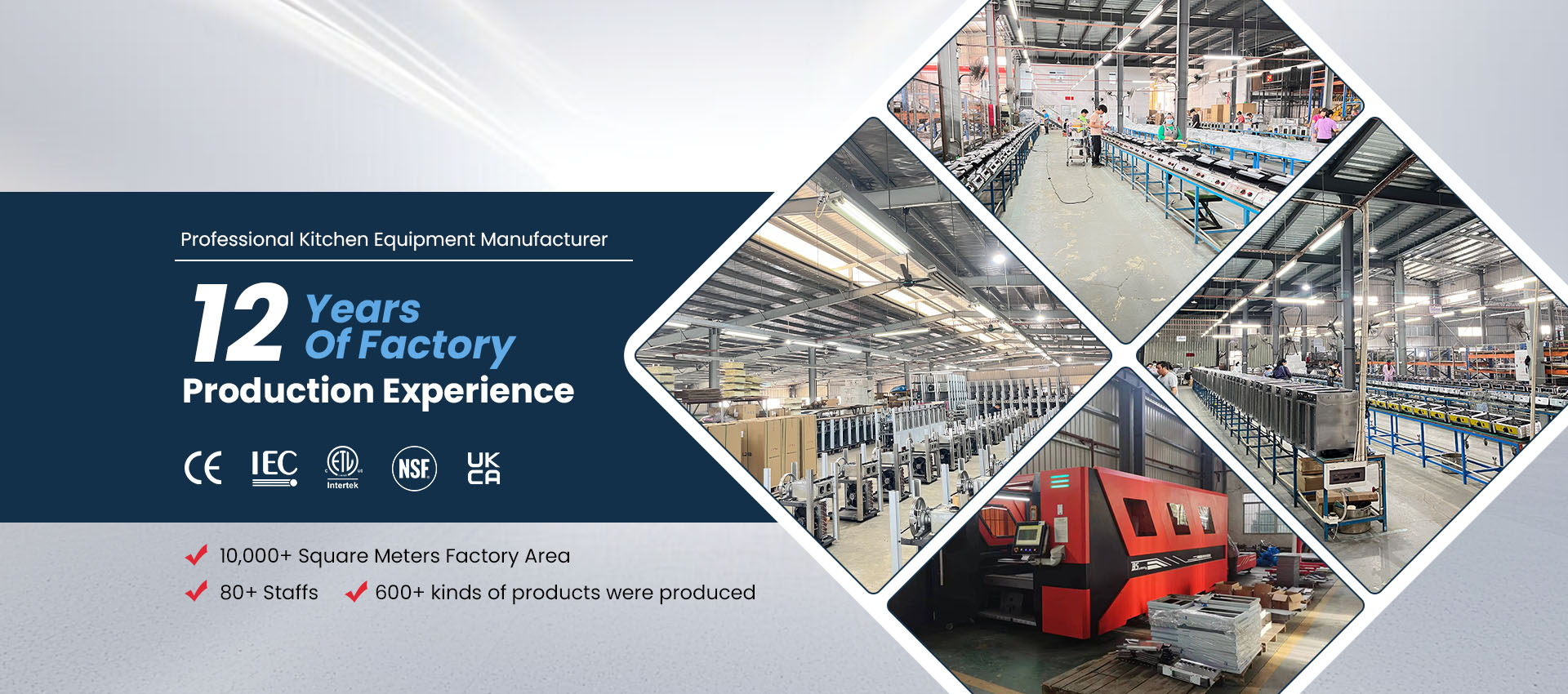
Working directly with a factory-based manufacturer such as MLP Kitchen enables restaurant groups to access transparent volume pricing models built on real production data rather than intermediary markups.
Below is how manufacturers typically structure pricing for large-scale restaurant chain orders.
1. Cost Breakdown Based on Production Structure
Manufacturers evaluate pricing through several core cost components:
Raw material consumption (steel plate, stainless steel panels, burner systems)
Fabrication and welding labor
Assembly line efficiency
Quality control and testing
Packaging and logistics preparation
When order volume increases, production efficiency improves. Bulk material purchasing reduces per-unit raw material cost, and assembly line batching lowers labor allocation per unit. These efficiencies are reflected in scaled pricing tiers.
2. Economies of Scale in Material Procurement
Large restaurant chain orders allow manufacturers to secure better pricing from upstream suppliers. By purchasing stainless steel sheets, valves, and burner components in bulk, factories reduce material fluctuation risks.
Stable material standards, such as consistent stainless steel grades or cooking plate thickness, help streamline procurement and reduce waste.
These economies of scale directly support competitive volume pricing.
3. Standardization Reduces Unit Cost
When restaurant chains maintain uniform specifications across locations, manufacturers can standardize:
Burner configuration
Frame dimensions
Control panel design
Surface finishing processes
Standardization reduces engineering modification time and minimizes tooling adjustments. This production stability lowers cost per unit in high-volume projects.
4. Long-Term Supply Agreements
Manufacturers often provide more favorable pricing structures when restaurant groups commit to forecasted annual volume rather than one-time purchases.
Long-term cooperation offers:
Reserved production capacity
Predictable material sourcing
Reduced administrative overhead
Improved planning efficiency
These factors contribute to better negotiated pricing compared to single-batch orders.
5. Manufacturing Efficiency Optimization
High-volume production enables workflow optimization:
Batch cutting and bending of sheet metal
Streamlined welding sequences
Pre-calibrated burner assemblies
Parallel quality control checkpoints
In integrated production environments like MLP Kitchen, these efficiencies reduce overall operational cost and improve pricing competitiveness for chain orders.
6. Quality Control Stability in Large Orders
Maintaining consistent quality across hundreds or thousands of units is essential for restaurant chains. Manufacturers implement defined quality checkpoints such as:
Dimensional inspection
Gas leakage testing
Burner performance validation
Surface flatness inspection
Final operational testing
Stable quality processes reduce rework and warranty risk, which helps maintain predictable cost structures.
7. Packaging & Logistics Optimization
Bulk shipments benefit from container optimization strategies:
Efficient pallet arrangement
Reinforced protective packaging
Balanced container loading
Reduced freight cost per unit further contributes to improved volume pricing for large orders.
8. Export Compliance and Certification Alignment
For international restaurant chains, compliance requirements must be integrated into pricing calculations. Certification costs, labeling standards, and documentation preparation are planned at scale to avoid repeating expenses across smaller batches.
Managing compliance during the production phase prevents costly adjustments later in the distribution process.
Conclusion
Manufacturers handle volume pricing for restaurant chain orders through structured cost optimization, material efficiency, standardized production, and long-term supply planning. Pricing advantages are achieved not simply through discounts but through operational efficiencies that emerge in high-volume manufacturing environments.
By partnering directly with a manufacturer such as MLP Kitchen, restaurant groups gain access to transparent cost structures, scalable production capacity, and consistent quality control — ensuring reliable bulk supply of commercial gas griddles at competitive pricing levels while maintaining performance and compliance standards.