


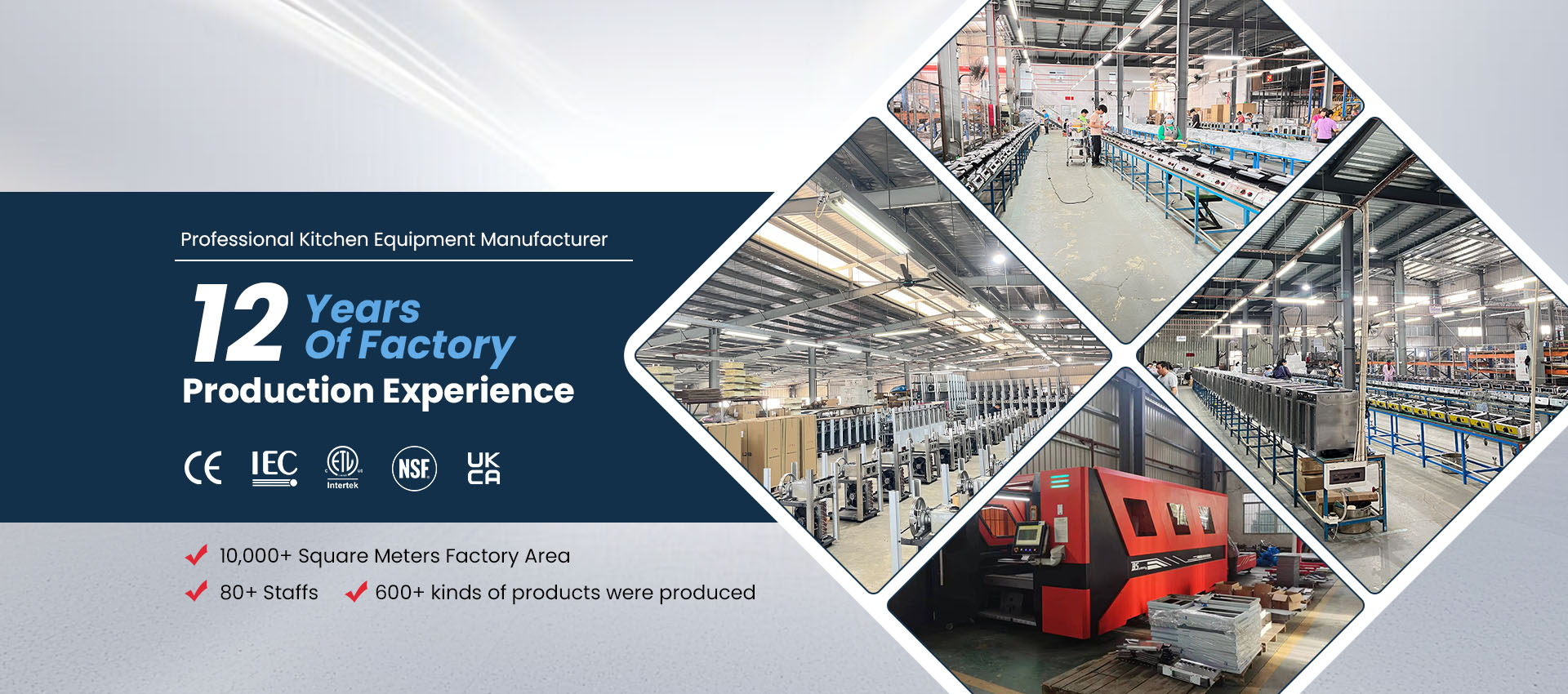
Importing commercial Gas Griddles at scale requires more than negotiating price and confirming shipment dates. For restaurant chains, distributors, and commercial kitchen contractors, inventory planning directly impacts cash flow, warehouse capacity, installation timelines, and service readiness.
Because commercial gas griddles are heavy-duty appliances with significant unit value, poor inventory coordination can create overstock risk, delayed deployments, or costly storage bottlenecks. Working directly with a manufacturer such as MLP Kitchen enables buyers to align production schedules with structured inventory strategies.
Below are the key inventory planning strategies that support large-scale gas griddle imports.
1. Demand Forecasting Based on Installation Phases
Large-scale imports should be aligned with real installation schedules rather than speculative stock accumulation.
Buyers should forecast:
Number of new restaurant openings per quarter
Replacement cycles for existing locations
Seasonal expansion trends
Regional rollout schedules
Breaking bulk orders into phased shipments reduces warehouse congestion and improves cash flow efficiency.
2. Staggered Production and Shipment Scheduling
Instead of receiving all units at once, staggered production batches can help balance storage and deployment.
A structured schedule may include:
Initial shipment for pilot locations
Follow-up batches aligned with contractor readiness
Reserve buffer stock for emergency replacements
Coordinated scheduling between manufacturer and importer prevents inventory surges.
3. Safety Stock Calculation for Critical Components
When importing gas griddles in large quantities, it is essential to maintain safety stock not only for full units but also for spare parts such as:
Burner assemblies
Gas valves
Thermocouples
Control knobs
Maintaining spare component inventory reduces operational downtime and protects restaurant chain continuity.
4. Warehouse Capacity & Handling Considerations
Commercial gas griddles require reinforced pallet storage and careful stacking. Inventory planning must account for:
Floor load capacity
Forklift maneuverability
Non-stackable equipment height
Damage prevention space allocation
Efficient warehouse layout planning reduces handling risks and improves dispatch speed.
5. Standardization Across Locations
Standardizing gas griddle specifications across multiple sites simplifies inventory management. When all units share identical dimensions and burner configurations:
Spare parts become interchangeable
Installation teams require less training
Inventory tracking becomes simpler
Replacement lead time shortens
Uniform product specification supports scalable operations.
6. Compliance and Documentation Tracking
Imported gas appliances may require:
Certification documents
Label verification
Serial number tracking
Customs clearance records
Inventory systems should integrate compliance documentation to prevent shipment release delays or regulatory audits.
7. Buffer Planning for Lead Time Variability
International shipping can be affected by port congestion, customs inspection, or seasonal freight fluctuations. Buyers should build a lead time buffer into inventory planning to absorb unexpected delays.
Maintaining a calculated safety inventory ensures uninterrupted restaurant operations even when freight schedules shift.
8. Cost Control Through Inventory Turnover Management
High-value equipment ties up working capital. Effective strategies include:
Monitoring turnover ratios
Avoiding overstock beyond forecasted demand
Coordinating production batches with cash flow cycles
Negotiating staggered payments aligned with shipment phases
Balancing turnover speed with supply security improves financial efficiency.
9. Digital Tracking and Serial Number Management
For large imports, tracking each gas griddle unit through serial numbers enables:
Warranty management
Service history tracking
Regional distribution monitoring
Replacement unit identification
Structured traceability supports both operational control and quality accountability.
Conclusion
Inventory planning for large-scale gas griddle imports requires alignment between production scheduling, warehouse capacity, installation phases, spare parts management, and compliance documentation.
By collaborating directly with a manufacturer such as MLP Kitchen, buyers can synchronize production output with phased shipment strategies, standardized specifications, and quality-controlled batch consistency. This integrated approach minimizes excess stock risk, protects operational continuity, and ensures scalable growth for commercial kitchen projects importing gas griddles at scale.