


What Should Be Included in A Gas Griddle Project Sourcing Checklist?
A structured sourcing checklist is essential when procuring commercial Gas Griddles for restaurant chains, hospitality projects, institutional kitchens, or distributor networks. Because gas griddles are safety-regulated, high-temperature appliances used in demanding environments, sourcing decisions must extend beyond price comparison.
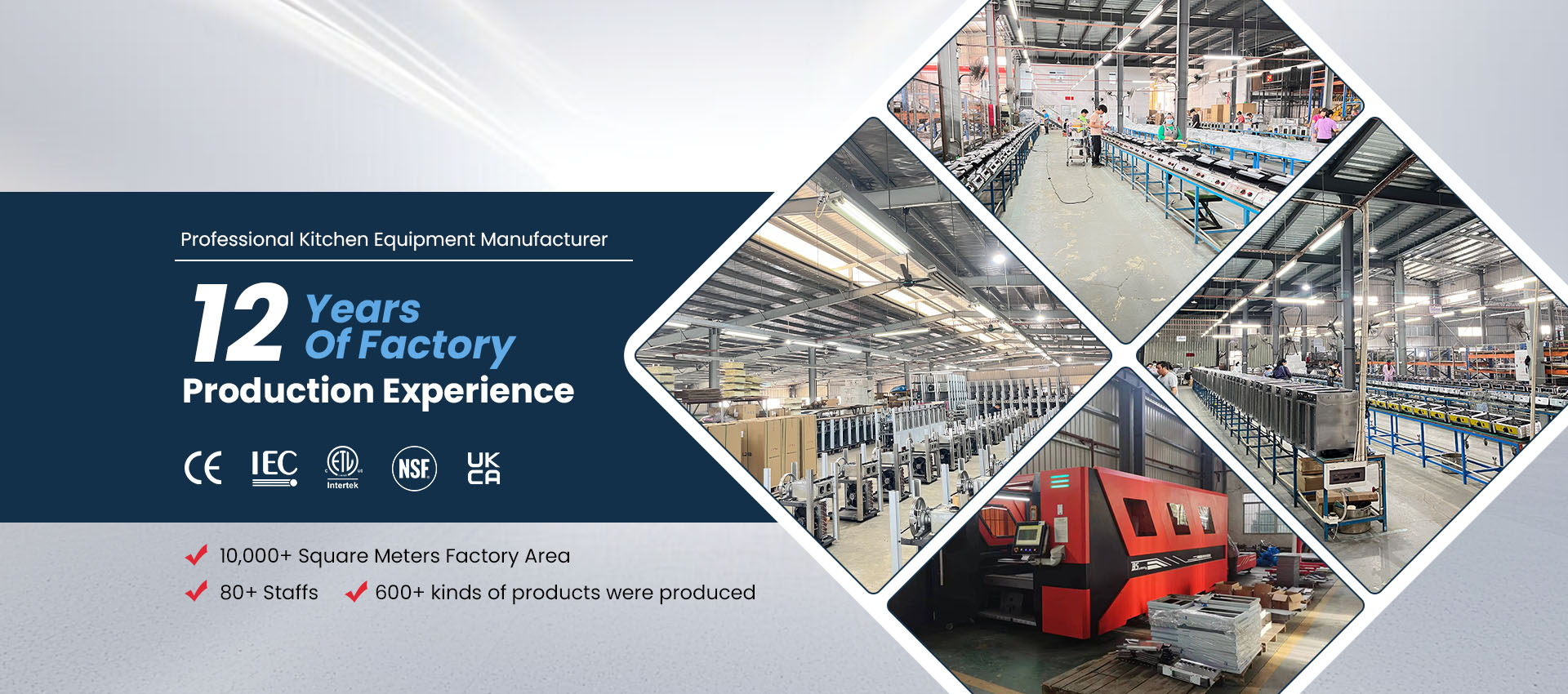
A comprehensive project sourcing checklist helps buyers evaluate technical suitability, manufacturing capability, quality assurance systems, and export compliance readiness. When working directly with a manufacturer such as MLP Kitchen, this checklist becomes a practical tool for aligning engineering requirements with production execution.
Below are the key components that should be included.
1. Supplier Type and Manufacturing Capability
Is the supplier a direct manufacturer or a trading intermediary?
Does the factory have in-house engineering and production lines?
What is the monthly production capacity?
Can the supplier handle large-scale or repeat orders?
Manufacturer-based sourcing ensures better design control and production transparency compared to trader-based models.
2. Technical Specifications Confirmation
Cooking surface dimensions and thickness
Number of burners and heat zones
BTU or heat output capacity
Gas type compatibility (NG or LPG)
Grease management system design
Control panel configuration
Clear technical confirmation prevents inconsistencies during installation across multiple locations.
3. Material Standards and Structural Design
Stainless steel grade for exterior panels
Cooking plate material (carbon steel, cast iron, alloy steel)
Frame reinforcement structure
Corrosion resistance level
Heat resistance of valves and internal components
Material clarity directly affects durability and long-term operational performance.
4. Manufacturing Process Overview
Sheet metal fabrication accuracy
Welding process and structural reinforcement
Burner assembly method
Surface finishing standards
Assembly workflow control
Understanding production methods ensures consistency in large-scale orders.
5. Quality Control Checkpoints
Incoming material inspection
Dimensional verification
Welding integrity inspection
Gas leakage testing
Burner calibration and flame stability testing
Temperature uniformity validation
Final functional inspection
A supplier should provide documented quality control procedures before shipment.
6. OEM / ODM Customization Capability
Ability to modify dimensions or structure
Private label branding integration
Packaging customization
Control panel language adjustments
Compliance-specific configuration
This is critical for restaurant chains or distributors requiring tailored product positioning.
7. Production Lead Time and Bulk Supply Planning
Prototype development timeline
Mass production cycle
Raw material sourcing stability
Capacity allocation for large orders
Bulk projects require realistic and predictable scheduling.
8. Export Compliance and Certification
Required certification for destination market
Gas appliance safety compliance
Labeling and marking standards
Export documentation readiness
Customs clearance support
Early compliance alignment prevents shipment rejection or delays.
9. Packaging and Logistics Planning
Reinforced packaging for heavy equipment
Container loading optimization
Protection for gas valves and control components
Clear handling instructions
Proper packaging reduces damage risk during international shipment.
10. After-Sales Support and Spare Parts Availability
Availability of replacement burners and valves
Spare parts inventory support
Warranty terms
Technical documentation provision
Reliable support is especially important for multi-location projects.
Conclusion
A gas griddle project sourcing checklist should cover supplier structure, technical specifications, material standards, manufacturing processes, quality control checkpoints, OEM capabilities, lead time planning, export compliance, logistics, and after-sales support.
By partnering directly with a manufacturer like MLP Kitchen, buyers gain clearer visibility into production operations, engineering capabilities, and compliance preparation. This structured approach reduces procurement risk and ensures that commercial gas griddles meet performance, safety, and scalability requirements for large-scale kitchen projects.