


Selecting the right supplier for commercial Gas Griddles is a critical decision that directly impacts product safety, operational reliability, project timelines, and long-term cost control. Because gas griddles are heat-intensive and safety-regulated appliances, evaluation must go far beyond price comparison.
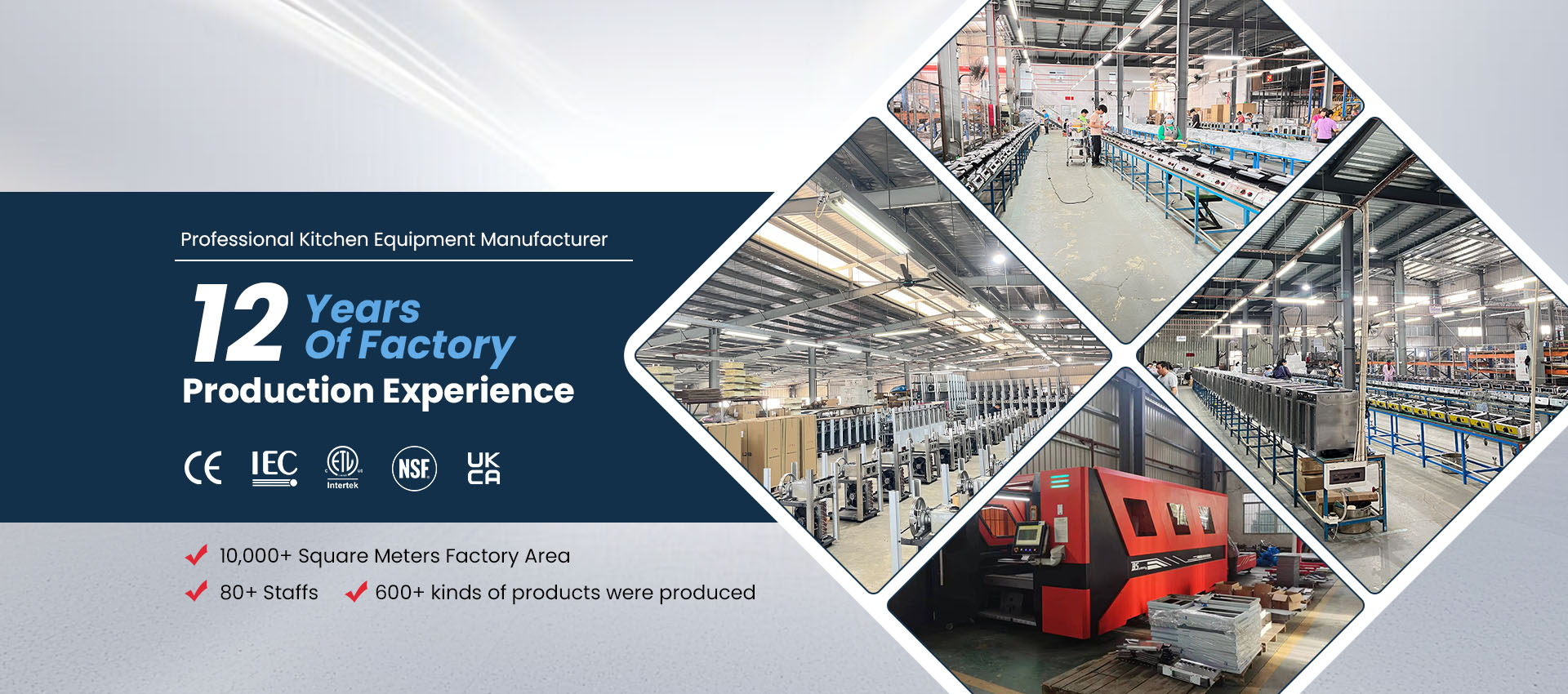
A structured supplier evaluation framework helps buyers minimize risk and ensure consistent bulk supply. When working with a factory-based manufacturer such as MLP Kitchen, buyers gain transparency across engineering, production, and compliance systems.
Below are the key areas to assess before placing an order.
1. Confirm Whether the Supplier Is a Manufacturer or a Trader
The first step is identifying the supplier’s operational structure.
A true manufacturer should demonstrate:
In-house engineering capabilities
Dedicated production facilities
Controlled fabrication and assembly processes
Direct oversight of quality inspection
Traders typically rely on third-party factories and may lack control over production scheduling, material standards, and quality consistency. For large-scale commercial kitchen projects, direct manufacturer sourcing reduces coordination risk.
2. Review Manufacturing Capability and Capacity
Evaluate whether the supplier can handle your order volume without compromising quality. Key questions include:
What is the monthly production capacity?
How many production lines are dedicated to gas griddles?
Is production workflow standardized?
Can the factory manage repeat bulk orders?
Stable capacity planning is essential for restaurant chains or distributor networks.
3. Assess Engineering and Customization Support
Commercial gas griddle projects often require structural or branding adjustments. Evaluate:
Ability to modify cooking surface dimensions
Burner configuration flexibility
Private label integration
Control panel customization
Packaging adaptation
Manufacturers with internal engineering teams can manage OEM/ODM projects efficiently, while traders often cannot provide structural customization.
4. Examine Material Standards
Material quality determines durability and safety. Confirm:
Stainless steel grade used in exterior panels
Cooking plate material type and thickness
Corrosion resistance treatment
Heat resistance rating of gas valves and components
Request material specification documentation to verify compliance.
5. Inspect Manufacturing Process Transparency
Understanding how the product is built reveals long-term reliability. A qualified supplier should clearly explain:
Sheet metal fabrication accuracy
Welding standards and inspection methods
Burner assembly and calibration process
Surface finishing controls
Final assembly workflow
Transparent production systems indicate operational maturity.
6. Evaluate Quality Control Checkpoints
A robust quality management system should include:
Incoming material inspection
Dimensional verification
Gas leakage testing
Flame stability testing
Temperature uniformity validation
Final functional performance testing
Documented inspection records provide assurance of consistency across bulk shipments.
7. Verify Compliance and Certification Readiness
For international orders, confirm:
Compliance with destination gas appliance standards
Required certifications
Labeling and marking accuracy
Export documentation capability
Early compliance alignment prevents costly redesign or customs delays.
8. Analyze Lead Time and Production Planning
Ask for:
Prototype development timeline
Mass production cycle
Raw material procurement stability
Peak season production capacity
Reliable scheduling is essential for project-based installations.
9. Review Packaging and Logistics Experience
Commercial gas griddles require reinforced packaging to withstand international transport. Evaluate:
Protective packaging structure
Container loading optimization
Handling instructions
Damage prevention measures
Suppliers experienced in export logistics reduce transit risk.
10. Confirm After-Sales Support and Spare Parts Availability
Large-scale kitchen operations require stable service support. Confirm:
Availability of spare burners and valves
Warranty terms
Technical documentation
Replacement lead times
After-sales readiness reflects long-term partnership capability.
Conclusion
Evaluating a supplier before ordering commercial gas griddles requires a structured review of manufacturing capability, engineering support, material standards, quality control systems, compliance readiness, and logistics management.
By partnering directly with a manufacturer such as MLP Kitchen, buyers gain full visibility into production operations, scalable bulk supply capacity, and integrated quality assurance. This comprehensive evaluation process reduces procurement risk and ensures dependable performance for commercial kitchen projects.