


What Risk Factors Should Be Reviewed before Confirming A Kitchen Equipment Supplier?
Confirming a kitchen equipment supplier—especially for commercial Gas Griddles or other heat-intensive appliances—requires a thorough risk assessment. Large-scale restaurant, hospitality, or institutional projects depend on reliable supply, regulatory compliance, and consistent product performance. Overlooking supplier risk factors can result in delivery delays, compliance failures, safety issues, or long-term operational disruptions.
Below are the key risk factors that should be reviewed before entering into a supply agreement.
1. Supplier Structure Risk: Manufacturer vs Trader
The first risk factor is understanding whether the supplier is:
A direct manufacturer with in-house engineering and production
A trading intermediary relying on external factories
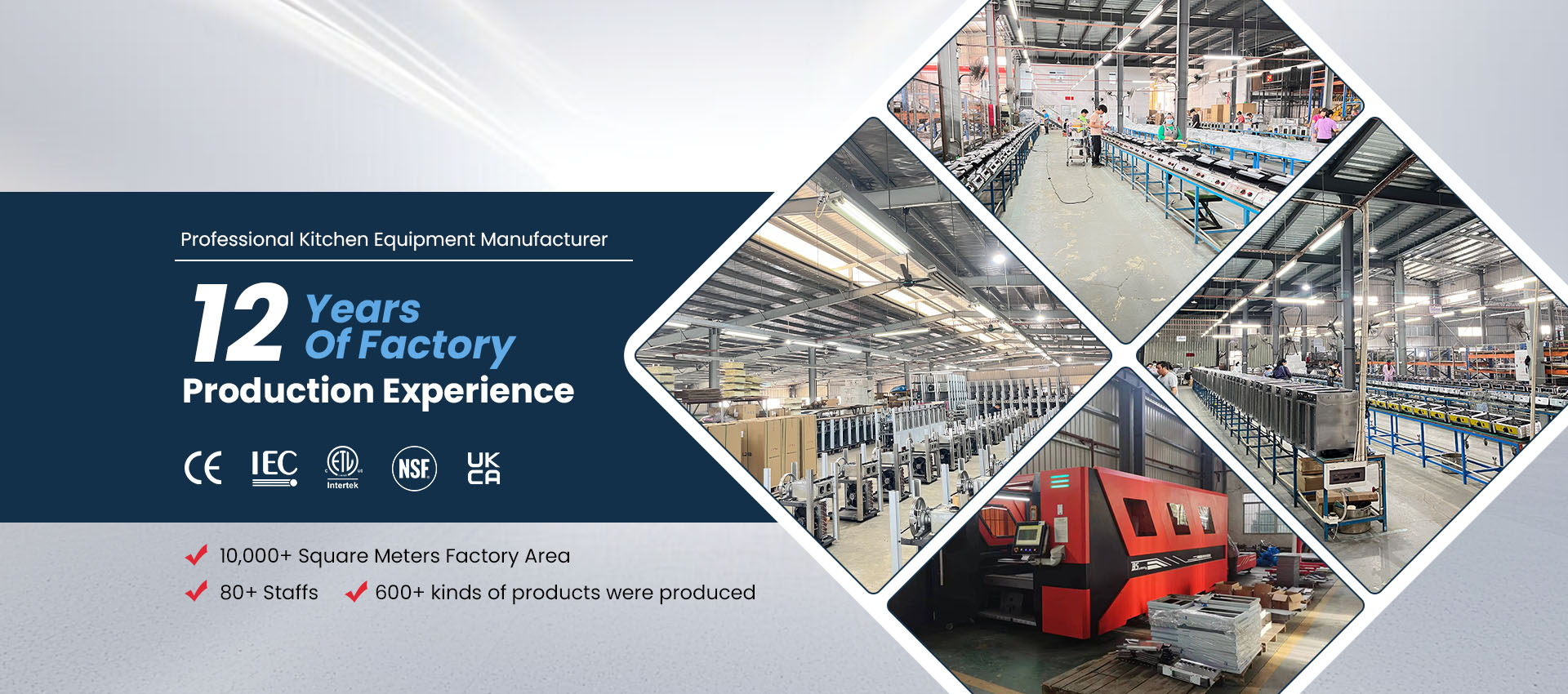
Traders may lack production control, technical authority, or quality oversight. This increases the risk of inconsistent specifications, unstable lead times, and unclear accountability. A factory-based manufacturer provides greater transparency, engineering access, and production traceability.
2. Production Capacity and Overload Risk
Large projects require stable capacity. Buyers should evaluate:
Monthly production output
Current production commitments
Peak-season load handling
Raw material sourcing stability
If a supplier is operating near full capacity, delivery timelines may be extended or quality may suffer under production pressure.
3. Engineering and Customization Risk
For OEM or customized projects, lack of engineering capability is a major risk. Review:
In-house design and technical team availability
Ability to modify structural specifications
Prototype development capability
Responsiveness to technical revisions
Without engineering support, suppliers may struggle to execute custom projects accurately.
4. Material Quality and Standard Risk
Material inconsistency directly affects durability and safety. Confirm:
Stainless steel grade used
Cooking plate thickness and material type
Heat resistance of gas valves
Corrosion protection measures
Unverified material standards increase long-term maintenance costs and failure risk.
5. Quality Control System Risk
Inadequate quality inspection procedures can result in defective shipments. Evaluate whether the supplier has:
Incoming material inspection
Dimensional verification checkpoints
Gas leakage testing protocols
Flame stability validation
Temperature performance testing
Final operational simulation
Documented quality checkpoints reduce defect and warranty risk.
6. Compliance and Certification Risk
For export projects, regulatory misalignment can lead to shipment rejection. Confirm:
Required gas appliance certifications
Labeling and marking compliance
Destination-specific gas pressure compatibility
Complete export documentation preparation
Failure to align compliance early may cause costly redesign or customs delays.
7. Lead Time and Scheduling Risk
Production and delivery timing must align with installation schedules. Review:
Prototype timeline
Mass production cycle
Shipment coordination
Buffer planning for freight variability
Unrealistic timelines are a common risk in large equipment procurement.
8. Logistics and Packaging Risk
Commercial kitchen equipment is heavy and vulnerable during transit. Assess:
Reinforced packaging standards
Container loading methods
Protection of gas valves and control components
Damage prevention measures
Poor packaging increases transit damage claims and operational delays.
9. Financial and Stability Risk
Long-term cooperation requires supplier stability. Consider:
Years in operation
Production facility scale
Financial reliability
Long-term supply capacity
A stable manufacturing partner reduces interruption risk in ongoing supply programs.
10. After-Sales and Spare Parts Risk
Operational continuity depends on service readiness. Confirm:
Spare parts availability
Warranty coverage terms
Technical documentation support
Replacement lead time
Lack of service support can create downtime in high-volume kitchen operations.
Conclusion
Before confirming a kitchen equipment supplier, buyers should systematically review risks related to supplier structure, production capacity, engineering capability, material standards, quality control systems, compliance readiness, logistics planning, financial stability, and after-sales support.
A structured risk review framework helps ensure that the selected partner can deliver consistent performance, scalable supply, and regulatory compliance for commercial kitchen projects. Careful evaluation at the sourcing stage prevents costly disruptions later in the project lifecycle.