


For overseas buyers sourcing commercial kitchen equipment, choosing the right supplier is a key part of ensuring project stability. Gas Griddles are widely used in restaurants, hotels, catering chains, and food service operations. Their performance depends not only on heating design and material quality but also on production consistency, safety standards, and long-term supply stability.
Many buyers initially work with trading companies because they are easier to find. However, when projects move from quotation to product customization, certification compliance, and bulk delivery, the difference between a manufacturer and a trader becomes very clear. Purchasing gas griddles directly from a manufacturer often offers better technical communication, stronger customization capability, and more stable supply control.
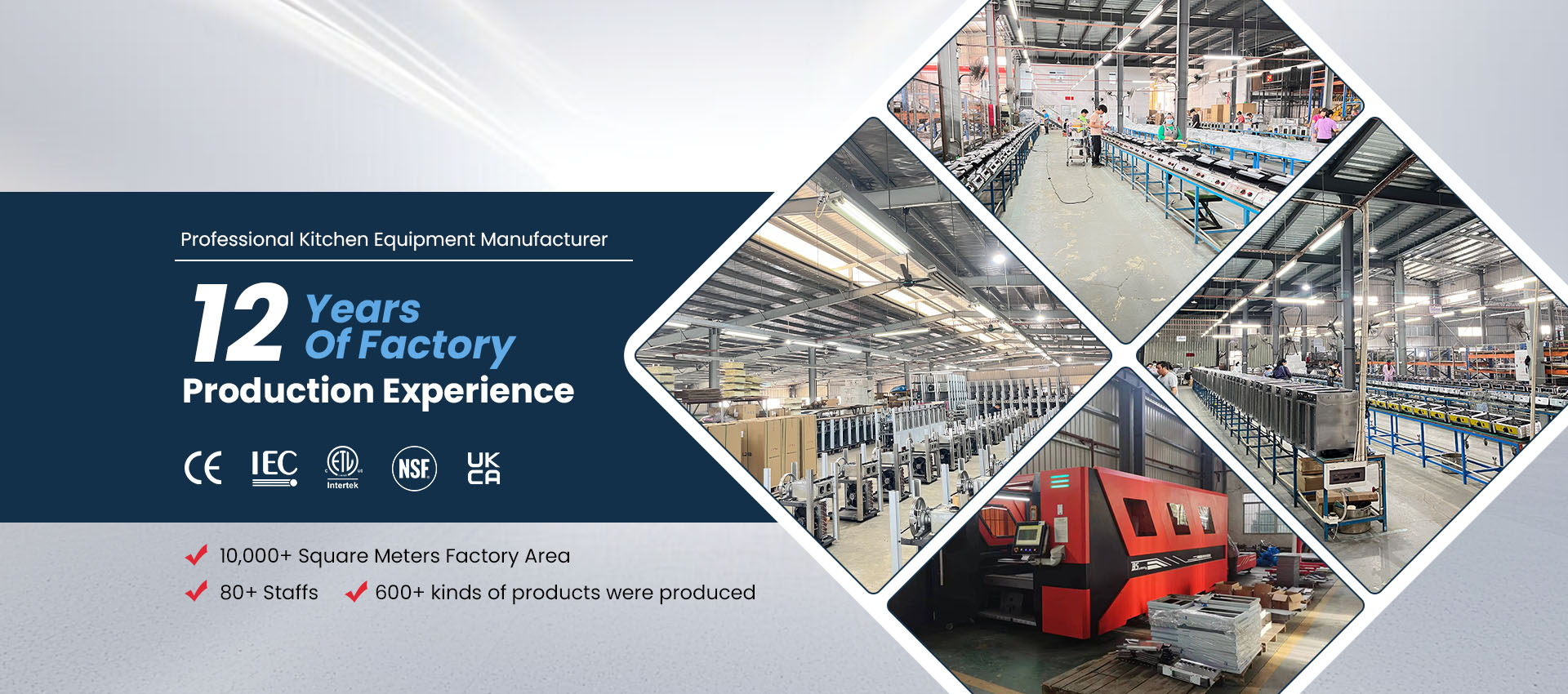
Jiangmen Dingfeng Saving Kitchen Electric Co., Ltd., the company behind the MLP Kitchen brand, is a commercial kitchen equipment manufacturer with more than ten years of industry experience. The company operates a factory of over 10,000 square meters with more than 80 employees and multiple production lines. Its product range includes gas griddles, fryers, waffle bakers, barbecue grills, Ice Cream Machines, and other commercial kitchen appliances. The company also supports OEM customization and exports equipment to many international markets.
Manufacturer Vs Trader
One of the biggest advantages of working directly with a manufacturer is the shortened communication chain. When buyers discuss product specifications such as griddle plate thickness, burner configuration, ignition systems, gas compatibility, and structural layout, these technical details must eventually be confirmed by the factory.
If the supplier is a trading company, information often passes through multiple layers before reaching engineers. This increases the risk of misunderstandings and slows down the decision process. Direct communication with a manufacturer allows buyers to discuss technical requirements with teams who understand the product design and production process.
MLP Kitchen operates its own production facility equipped with CNC punching, cutting, bending, and welding machines. These capabilities allow the company to control manufacturing processes internally rather than relying on outsourced production. For project buyers, this type of production control is an important indicator of supplier reliability.
Another difference lies in flexibility. Trading companies typically focus on reselling standard products, while manufacturers can modify design elements such as control panels, logos, packaging, electrical components, and gas configurations. This flexibility is essential for distributors, brand owners, and commercial kitchen equipment importers who require customized products.
OEM And ODM Process
In the commercial kitchen equipment industry, OEM cooperation is very common. Many distributors and brand owners purchase equipment from manufacturers and apply their own branding and packaging. However, successful OEM cooperation requires strong engineering and production support.
When buyers work directly with a manufacturer, the OEM process can move more efficiently through several stages. First, buyers provide basic requirements such as product dimensions, heating power, gas type, and brand design elements. Engineers then evaluate whether these changes affect product structure or certification requirements. After that, prototype samples are produced for confirmation before bulk production begins.
MLP Kitchen supports multiple OEM customization options including logo printing, panel design, plug types, and packaging configurations. These options allow distributors and brand owners to create products that match their target market requirements.
ODM cooperation goes even further by involving manufacturers in product development. Instead of simply producing an existing design, the manufacturer can participate in improving the product structure, optimizing material selection, and adjusting the design to meet market demands. For commercial kitchen equipment projects, this collaboration can improve product durability and reduce production complexity.
Bulk Supply Considerations
For B2B buyers, the most important factor is often supply stability rather than individual product price. Gas griddles are frequently purchased in large quantities for restaurant chains, catering service providers, equipment distributors, or commercial kitchen projects. These buyers must ensure that suppliers can maintain consistent quality across large orders.
Manufacturers with dedicated production facilities are better positioned to handle bulk orders because they control the production schedule and component sourcing. According to information published by MLP Kitchen, the company operates multiple production lines and is able to deliver large container orders within a relatively short lead time.
Bulk procurement also requires consistent product specifications. In commercial kitchen environments, small changes in burner configuration, heating plate thickness, or control components can affect performance. When working with a manufacturer, these specifications can be fixed within the production process to ensure that each batch maintains the same quality level.
Another advantage is long-term supply continuity. If distributors need to reorder products months later, manufacturers can reproduce the same design and configuration more accurately because they maintain production records and technical drawings.
Project Sourcing Checklist
When sourcing gas griddles for commercial projects, buyers should evaluate suppliers using a structured checklist. This helps ensure that the supplier is a real manufacturer capable of supporting long-term cooperation.
First, examine factory capability. Reliable manufacturers usually disclose information about their factory size, production lines, and manufacturing equipment. Facilities equipped with CNC processing equipment and metal fabrication machines indicate the ability to produce equipment independently.
Second, evaluate product range. Manufacturers that specialize in commercial kitchen equipment usually produce multiple categories of cooking equipment rather than a single item. MLP Kitchen offers products including gas griddles, fryers, Snack Equipment, Refrigeration Equipment, and other commercial kitchen appliances, showing a more complete manufacturing structure.
Third, review export certifications and compliance capability. Equipment exported to different markets may require certification such as CE, UL, or UKCA. Suppliers familiar with international compliance standards can help buyers reduce regulatory risks during import.
Finally, assess service support. A professional manufacturer should provide technical consultation, product customization support, and after-sales communication for international customers.
Manufacturing Process Overview
The manufacturing quality of gas griddles depends heavily on metal processing precision and assembly control. The main structural components include stainless steel frames, heating plates, burner systems, control panels, and gas valve assemblies.
The typical manufacturing process begins with raw material preparation followed by sheet metal cutting and punching. Components are then shaped using bending machines before welding operations create the structural frame. After welding, surfaces are polished and cleaned to prepare for assembly.
During the assembly stage, heating components, burners, valves, and control systems are installed. Each unit is then tested for ignition performance and heating stability. Only after these checks are completed will the product move to final inspection and packaging.
Manufacturers with in-house fabrication capabilities can control each stage of this process more effectively. This improves consistency between production batches and reduces dependency on external suppliers.
Quality Control Checkpoints
Commercial gas griddles operate in high-temperature environments and are used frequently in professional kitchens. For this reason, strict quality control procedures are necessary to ensure reliability.
Quality inspection generally begins with raw material verification to confirm that metal thickness and material specifications meet production standards. During fabrication, weld joints and structural alignment are checked to ensure stability.
Gas system safety tests are also critical. Each unit should undergo leakage testing and ignition verification to confirm that burners function correctly. Heating performance tests ensure that the griddle plate distributes heat evenly across the cooking surface.
After assembly, visual inspection ensures that the exterior surfaces are free from damage or manufacturing defects. Packaging inspections confirm that accessories, manuals, and components are correctly included before shipment.
These inspection checkpoints help ensure that products delivered to international buyers maintain consistent performance and durability.
Material Standards Used
Material selection is another important factor that influences the performance of commercial gas griddles. Most professional kitchen equipment uses stainless steel structures because they offer durability, corrosion resistance, and easier cleaning in high-temperature kitchen environments.
Griddle plates are typically made from heavy-duty steel to maintain stable heat distribution during cooking. The thickness of the plate plays a significant role in heat retention and cooking efficiency. High-quality burners and gas control components also contribute to stable heating performance.
MLP Kitchen produces professional stainless steel gas griddles designed for commercial kitchen use. Using durable materials helps ensure that the equipment can operate reliably in restaurants, food service facilities, and catering environments where continuous operation is required.
Export Market Compliance
When exporting gas griddles to international markets, compliance with safety and certification standards becomes essential. Different regions have different requirements for gas appliances, electrical components, and product labeling.
Manufacturers familiar with export regulations can help buyers prepare the necessary documentation and product configurations required for import clearance. MLP Kitchen indicates that its products meet international standards and have certifications such as CE, UL, and UKCA.
Compliance preparation may also include adjusting electrical plugs, labeling formats, packaging markings, and instruction manuals according to the destination market. Addressing these details during the production stage helps avoid delays during customs clearance and product distribution.
Why Working With A Manufacturer Supports Long-Term Business
For importers, distributors, and commercial kitchen project buyers, long-term cooperation with a manufacturer provides several advantages. Manufacturers can offer stronger technical communication, faster customization response, and more stable production capacity.
Companies like MLP Kitchen operate dedicated production facilities with professional engineering teams and multiple product lines. Their experience in commercial kitchen equipment manufacturing allows them to support OEM customization, bulk supply, and international export requirements.
By sourcing gas griddles directly from a manufacturer instead of a trading company, buyers can improve supply chain transparency, maintain better control over product specifications, and build more reliable partnerships for future projects.