


How Does A Factory-Based Supplier Improve Gas Griddle Quality Control?
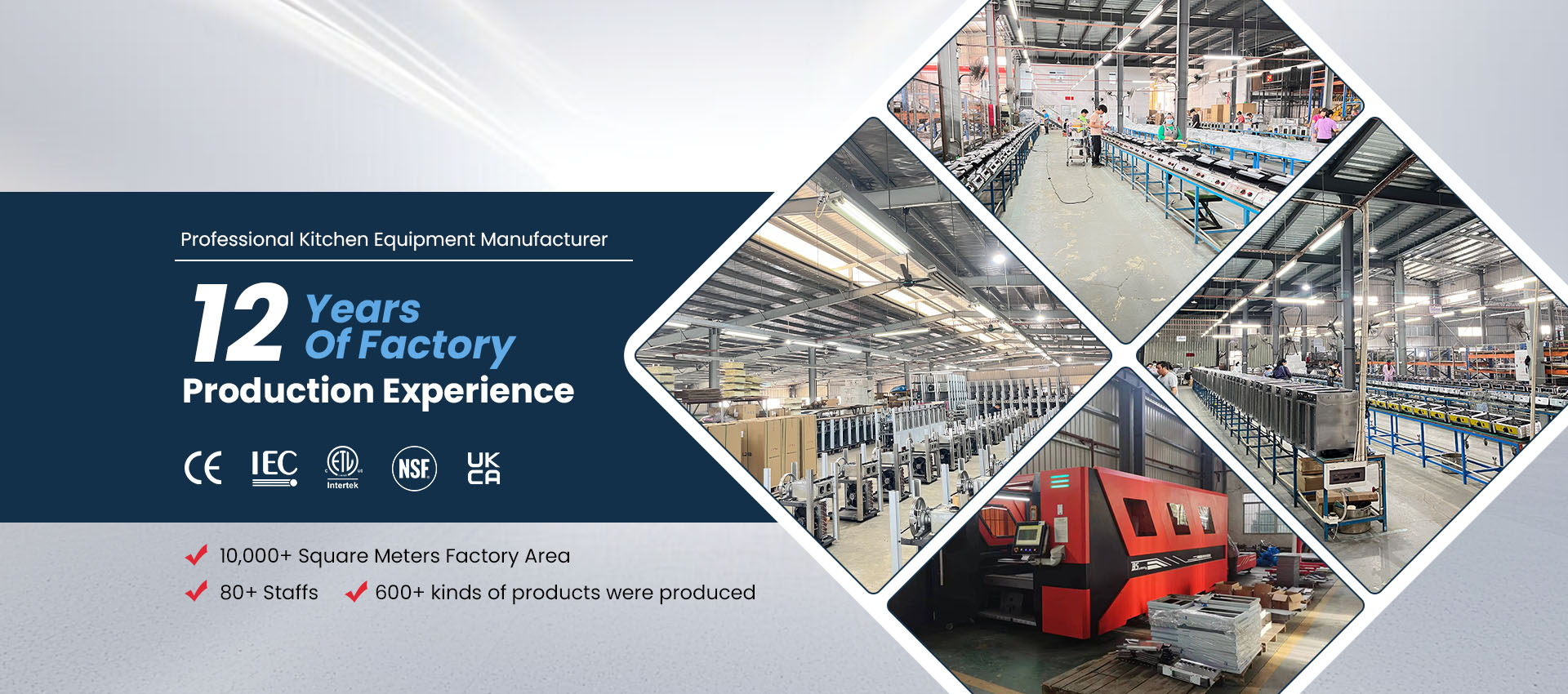
Working with a factory-based supplier significantly strengthens quality control in the production of commercial Gas Griddles. Because manufacturing, assembly, and inspection are managed within the same production system, the supplier can maintain tighter control over materials, processes, and final product performance.
Controlled Raw Material Selection
Factory-based suppliers usually establish fixed standards for raw materials such as stainless steel sheets, griddle plates, burners, and gas valves. Incoming materials are inspected before entering production to confirm thickness, composition, and durability. This prevents substandard components from affecting the final equipment quality.
Standardized Manufacturing Processes
When the supplier owns the manufacturing facility, each step of production follows a structured process. Sheet metal cutting, punching, bending, welding, and surface finishing are completed using dedicated equipment and repeatable procedures. Consistent manufacturing processes ensure that every gas griddle maintains the same structural accuracy and appearance.
Integrated Assembly Inspection
During assembly, technicians verify the installation of burners, valves, ignition systems, and control components. Factory production lines typically include intermediate inspection points where technicians check structural alignment, fasteners, and component compatibility before the equipment moves to the next stage.
Functional Performance Testing
A factory environment allows suppliers to conduct operational tests before shipment. Gas griddles are usually tested for ignition performance, flame stability, and heating distribution across the cooking surface. These tests help ensure that the equipment performs reliably in commercial kitchen environments.
Final Quality Verification Before Shipment
Before packaging, each unit undergoes final inspection to confirm product appearance, component completeness, and operational status. Packaging checks also ensure that manuals, accessories, and labeling match export requirements. This final step reduces the risk of defects reaching international buyers.
By controlling each stage of production and inspection internally, a factory-based supplier can maintain consistent product quality and reduce manufacturing variability. This structured quality control approach is especially important for commercial kitchen equipment such as gas griddles, where reliability and safety are essential for professional food service operations.