


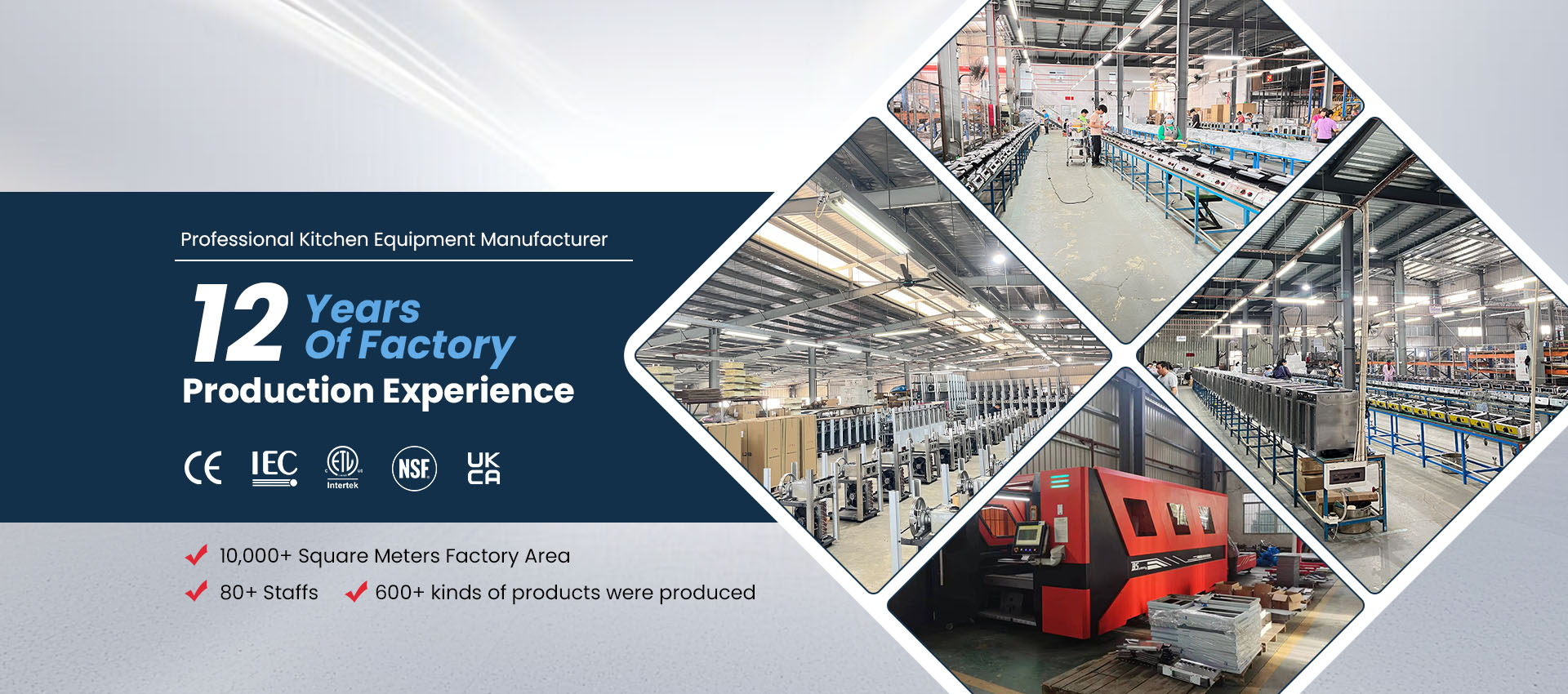
Quality control plays a critical role in the manufacturing of commercial Gas Griddles. Because these appliances operate in high-temperature and high-frequency cooking environments, manufacturers must carefully inspect materials, fabrication processes, assembly accuracy, and operational performance. A structured quality control system helps ensure that each unit meets safety requirements and maintains consistent cooking performance.
Raw Material Inspection
The first checkpoint occurs when raw materials arrive at the factory. Stainless steel sheets, griddle plates, burners, valves, and other components are inspected to verify thickness, surface condition, and material specifications. Ensuring that materials meet production standards prevents structural weakness and improves the long-term durability of the equipment.
Sheet Metal Fabrication Inspection
During the fabrication stage, components created through cutting, punching, and bending processes are inspected for dimensional accuracy. Technicians verify that panels, brackets, and structural parts match the required measurements and maintain proper alignment. Accurate fabrication ensures that components can be assembled smoothly without structural deformation.
Welding Quality Verification
Welding is an essential process in forming the equipment frame. At this stage, inspectors check weld joints for strength, stability, and appearance. Poor welding can weaken the equipment structure and reduce its ability to withstand high temperatures during operation. Proper welding inspection ensures that the body structure remains stable over time.
Component Assembly Inspection
During assembly, technicians inspect the installation of burners, gas valves, ignition systems, and control components. Each component must be securely mounted and correctly aligned with the internal structure. Incorrect assembly could affect heating performance or gas system safety.
Gas System Safety Testing
One of the most critical quality checkpoints is testing the gas system. Manufacturers perform leak detection tests to ensure that gas connections are sealed correctly. Ignition tests are also conducted to confirm that burners ignite properly and maintain stable flames during operation.
Heating Performance Testing
To verify cooking performance, gas griddles undergo heating tests after assembly. Technicians evaluate whether the cooking plate heats evenly and whether burners maintain consistent heat output. This stage helps identify potential hot spots or uneven heating areas before the product leaves the factory.
Appearance And Structural Inspection
After functional testing, inspectors check the overall appearance and structural condition of the equipment. Stainless steel surfaces are examined for scratches, dents, or finishing defects. Structural parts are also checked to confirm that panels, handles, and supports are securely installed.
Packaging Verification
The final checkpoint occurs before shipment. Inspectors verify that manuals, accessories, and required components are included in the packaging. Labels and product information must also match export requirements to ensure compliance with international shipping standards.
Final Quality Confirmation
After completing all inspections, the finished gas griddle is approved for packaging and export. This final confirmation ensures that the equipment meets manufacturing standards and is ready for use in commercial kitchen environments.
By implementing multiple quality control checkpoints throughout the production process, manufacturers can maintain consistent product reliability and reduce the risk of defects reaching international buyers.