


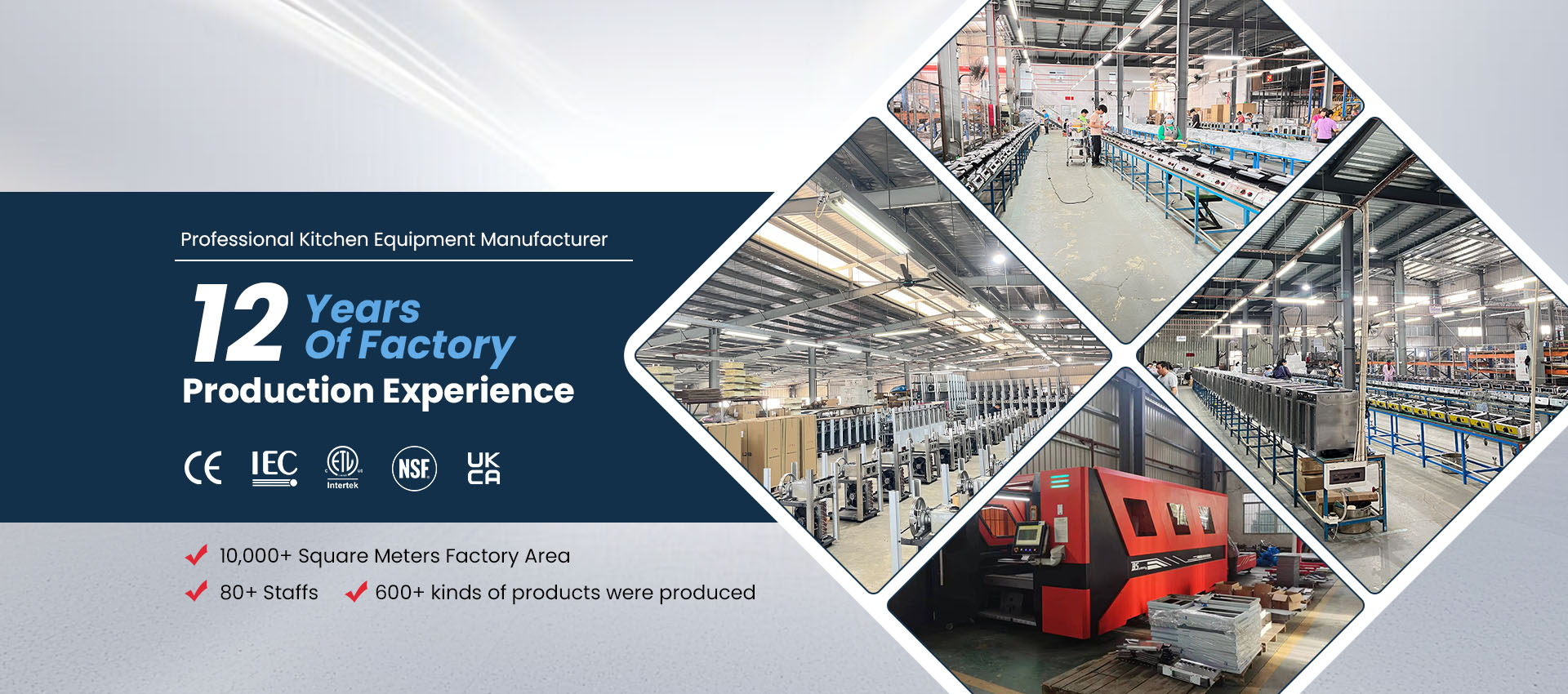
Before commercial Gas Griddles are exported to international markets, manufacturers must complete a series of final safety inspections. These inspections confirm that the equipment operates safely, meets export requirements, and is ready for installation in professional kitchen environments. Final verification typically covers gas system safety, operational performance, structural integrity, and compliance documentation.
Gas System Leakage Inspection
One of the most important final checks is confirming that the gas system is completely sealed. Technicians inspect all gas connections, valves, and pipelines to ensure that there are no leaks. Pressurized testing and leak detection solutions are often used to verify that gas does not escape from joints or fittings. This inspection helps prevent safety hazards during operation.
Ignition And Flame Stability Testing
Manufacturers also conduct ignition testing to confirm that burners ignite reliably and maintain stable flames. During this process, technicians observe the flame pattern to ensure that it burns evenly and does not fluctuate or extinguish unexpectedly. Stable combustion is essential for both cooking performance and operational safety.
Heating Performance Verification
The griddle plate must reach the intended cooking temperature and distribute heat evenly across the surface. Technicians perform heating tests to confirm that burners provide consistent heat output and that the cooking plate responds correctly to control adjustments. This ensures that the equipment performs reliably in commercial kitchen operations.
Electrical And Control Component Inspection
If the gas griddle includes electrical components such as ignition modules or indicator systems, these parts are tested to confirm proper functionality. Technicians verify wiring connections, control switches, and electrical safety features to ensure that all control systems operate as designed.
Structural And Appearance Inspection
Before packaging, inspectors examine the overall structure of the equipment. They check that panels, handles, supports, and control components are securely installed and free from damage. Stainless steel surfaces are inspected for scratches, dents, or finishing defects that could affect product quality.
Labeling And Documentation Verification
Export equipment must include correct product labels and documentation. Inspectors verify that the equipment identification labels, safety markings, and operating instructions are properly attached and consistent with export requirements. Manuals and product information must also match the destination market specifications.
Packaging Safety Inspection
The final step involves checking packaging quality. Protective materials are applied to prevent damage during transportation, and accessories such as installation parts or manuals are verified to ensure completeness. Packaging is also inspected to confirm that it meets international shipping standards.
Final Approval Before Shipment
Once all inspections are completed, the gas griddle receives final approval for shipment. This confirmation ensures that the equipment has passed all safety checks and is ready for export to distributors, importers, or commercial kitchen project buyers.
By conducting these final inspections, manufacturers help ensure that exported gas griddles meet safety expectations and operate reliably in professional food service environments.