


Commercial Gas Griddle plates are one of the most critical components of professional cooking equipment. The material quality of the plate directly affects heat distribution, durability, cooking efficiency, and long-term performance. Because gas griddles are used continuously in restaurants and commercial kitchens, manufacturers must follow strict material standards to ensure reliable operation.
High-Strength Carbon Steel Or Stainless Steel
Most commercial gas griddle plates are made from heavy-duty carbon steel or stainless steel. Carbon steel is widely used because it has excellent heat conductivity and can retain heat effectively across the cooking surface. Stainless steel is often used in equipment structures due to its corrosion resistance and ease of cleaning.
The material must have sufficient strength to withstand continuous heating and cooling cycles without warping or deforming.
Appropriate Plate Thickness
Plate thickness plays a major role in heat retention and cooking stability. Commercial griddle plates are generally thicker than those used in residential equipment. A thicker plate helps distribute heat more evenly across the cooking surface and reduces temperature fluctuations when food is placed on the griddle.
Adequate thickness also increases the structural durability of the plate under heavy commercial use.
Flatness And Surface Uniformity
A griddle plate must maintain a flat and uniform surface to ensure even cooking results. Manufacturing standards require that the plate be precisely machined or processed so that the surface remains level across the entire cooking area.
Surface flatness helps maintain consistent contact between food and the cooking surface, which improves cooking efficiency and heat transfer.
Heat Resistance And Thermal Stability
Commercial griddle plates must tolerate high cooking temperatures without losing structural stability. The material should maintain its shape and mechanical strength under repeated heating cycles. Good thermal stability prevents plate distortion and ensures consistent heat distribution during long operating hours.
Surface Treatment And Finishing
The cooking surface is typically processed through grinding or polishing to remove imperfections and improve smoothness. A properly finished surface helps prevent food from sticking and makes cleaning easier in commercial kitchen environments.
Surface finishing also reduces the risk of corrosion and helps maintain the appearance of the equipment during long-term use.
Compatibility With Food Service Environments
Materials used in commercial gas griddle plates must be suitable for food preparation environments. This means the material should be resistant to corrosion, capable of handling frequent cleaning, and durable enough to withstand heavy daily usage.
These properties are essential for maintaining hygiene and operational reliability in restaurants, hotels, and catering facilities.
Consistent Material Quality
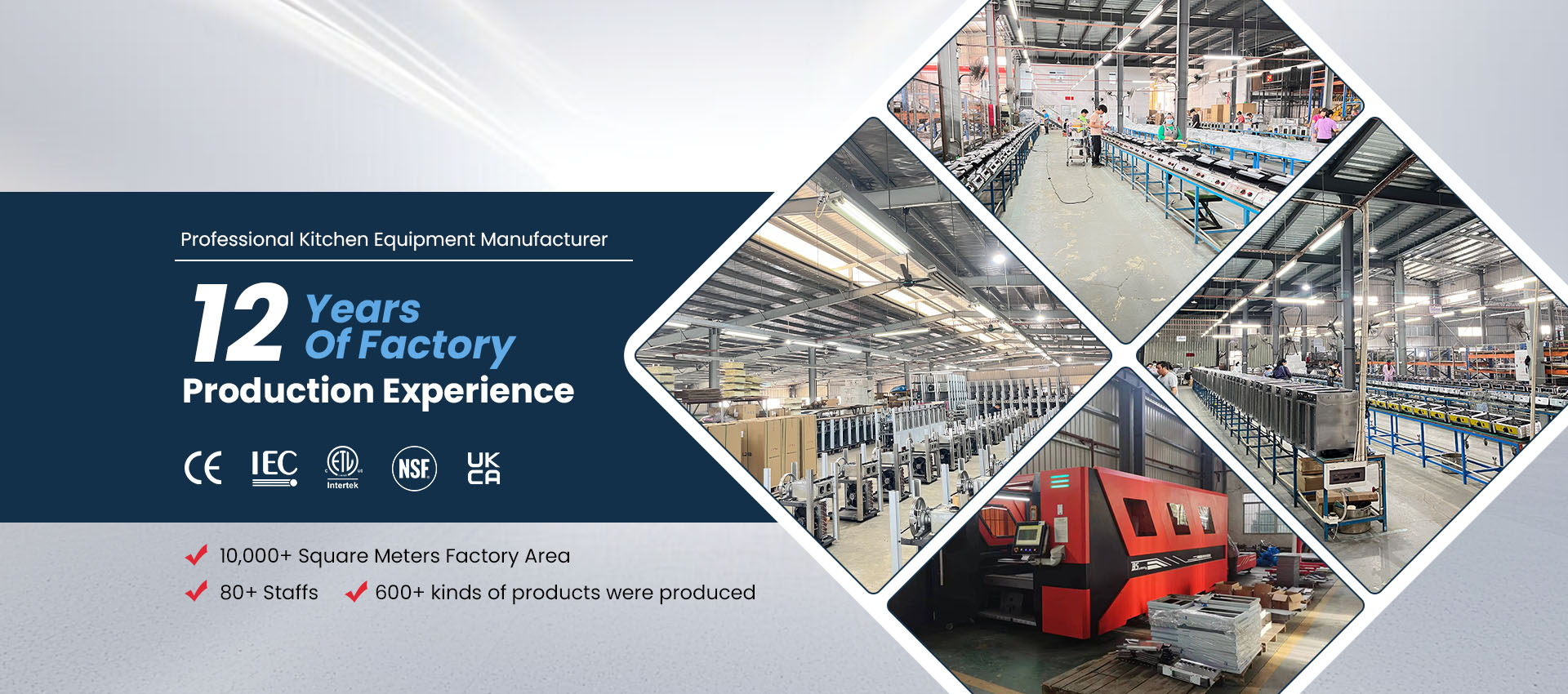
In large-scale production, manufacturers must ensure that each griddle plate is produced from materials that meet the same specifications. Consistent material quality helps maintain uniform cooking performance across different production batches and supports reliable equipment performance for distributors and commercial kitchen operators.
By meeting these material standards, commercial gas griddle plates can deliver stable heating performance, long service life, and consistent cooking results required in professional food service operations.