


What Is The Difference Between A Waffle Maker And A Waffle Iron
In everyday product language, Waffle Maker and waffle iron are often used to describe the same type of machine, but in commercial sourcing they do not always carry the same meaning. A waffle iron is usually understood as the core cooking unit that presses batter between two heated patterned plates, while a waffle maker is often used as the broader product term for a complete appliance designed for repeatable production, temperature control, and commercial operation. On Dingfeng’s website, the category is presented as Waffle Maker, and the line includes multiple commercial models for different shapes, capacities, and applications, which shows how the market now favors the wider appliance-based term rather than the older tool-based one.
The basic difference is terminology and application
Historically, the word waffle iron came from the earlier cooking format in which patterned metal plates were heated and closed over batter. In modern commercial equipment, the product is usually electric or gas powered, fitted with thermostatic control, and built for steady kitchen output. That is why many suppliers use commercial waffle maker as the main industry keyword. The term sounds more complete for export catalogs, product pages, and project sourcing because it covers the heating system, structure, controls, and housing together, not only the plates. Dingfeng’s category pages and product naming follow this pattern, using terms such as Waffle Maker, Waffle Baker, and commercial waffle machine across its Snack Equipment line.
A waffle iron refers more to the cooking function
A waffle iron focuses attention on the baking mechanism itself. Its main function is to heat batter from both sides, create the grid pattern, and shape the final product. In that sense, the iron is the working heart of the machine. The upper and lower plates, plate depth, hinge pressure, and heat distribution all affect texture, browning, and release. Dingfeng’s product pages show that several of its models use cast aluminum baking plates with non-stick surfaces, which is exactly the type of structure expected from a stable waffle iron design inside a commercial appliance.
A waffle maker refers more to the finished commercial appliance
A waffle maker usually means the full machine ready for countertop use and batch production. That includes the outer body, heating system, thermostat, handles, control panel, and food-contact plates. For commercial buyers, this term is more practical because it reflects how the product is actually evaluated during sourcing. Buyers are not only comparing the plate pattern. They are also comparing power configuration, body material, cleaning convenience, output speed, and long-cycle durability. Dingfeng’s waffle equipment pages describe stainless steel bodies, precision-cast aluminum plates, and non-stick surfaces, which positions the product as a complete commercial waffle maker rather than only a simple waffle iron.
Why the wording matters in commercial sourcing
For retail consumers, the two terms may be interchangeable. For bulk supply considerations, the wording affects search behavior, catalog structure, and inquiry quality. A buyer searching waffle iron supplier may focus more on the plate style and finished waffle shape. A buyer searching waffle maker manufacturer is often looking for a full equipment solution that covers manufacturing process overview, quality control checkpoints, labeling, and export market compliance. This is also where manufacturer vs trader becomes important. A trader may use whichever term is easier for online traffic, but a manufacturer usually needs to define the product more precisely because design drawings, electrical configuration, and food-contact materials must match the final shipped model.
Product comparison from a sourcing angle
| Term | Main focus | What buyers usually care about |
|---|---|---|
| Waffle iron | Plate structure and baking function | Grid pattern, heat transfer, molding result |
| Waffle maker | Complete appliance and production use | Housing, control system, capacity, cleaning, durability |
| Commercial waffle maker | Full project-level equipment solution | Output consistency, bulk supply, OEM options, export readiness |
This difference is why the broader term often performs better on industrial product pages and export-facing SEO content.
OEM and ODM projects usually use the term waffle maker
In OEM / ODM process communication, the term waffle maker is generally more useful because it covers the whole appliance configuration. A project may involve voltage changes, plug type changes, body branding, plate pattern customization, control style changes, or market-specific labeling. Those are appliance-level modifications, not just plate-level adjustments. For that reason, buyers discussing private label development, commercial kitchen integration, or distributor lines usually work under the term waffle maker. Dingfeng’s broad product range in this category suggests it can support this type of structured product development better than a seller limited to a few standard molds.
Material standards and cleaning design also shape the difference
Another reason the broader term matters is food-contact and hygiene control. The European Commission states that Regulation EC No 1935/2004 provides the general EU framework for food contact materials and sets principles of safety and inertness. For waffle equipment, this brings attention to the surfaces that touch batter, the coating stability, and the ease of cleaning around the plate area. Dingfeng’s product pages highlight stainless steel exteriors, aluminum cast plates, non-stick coating, and in some models removable tray structures for easier maintenance. These features belong to the full appliance design, which again supports the term waffle maker for export and project sourcing.
Why Dingfeng fits the manufacturer perspective
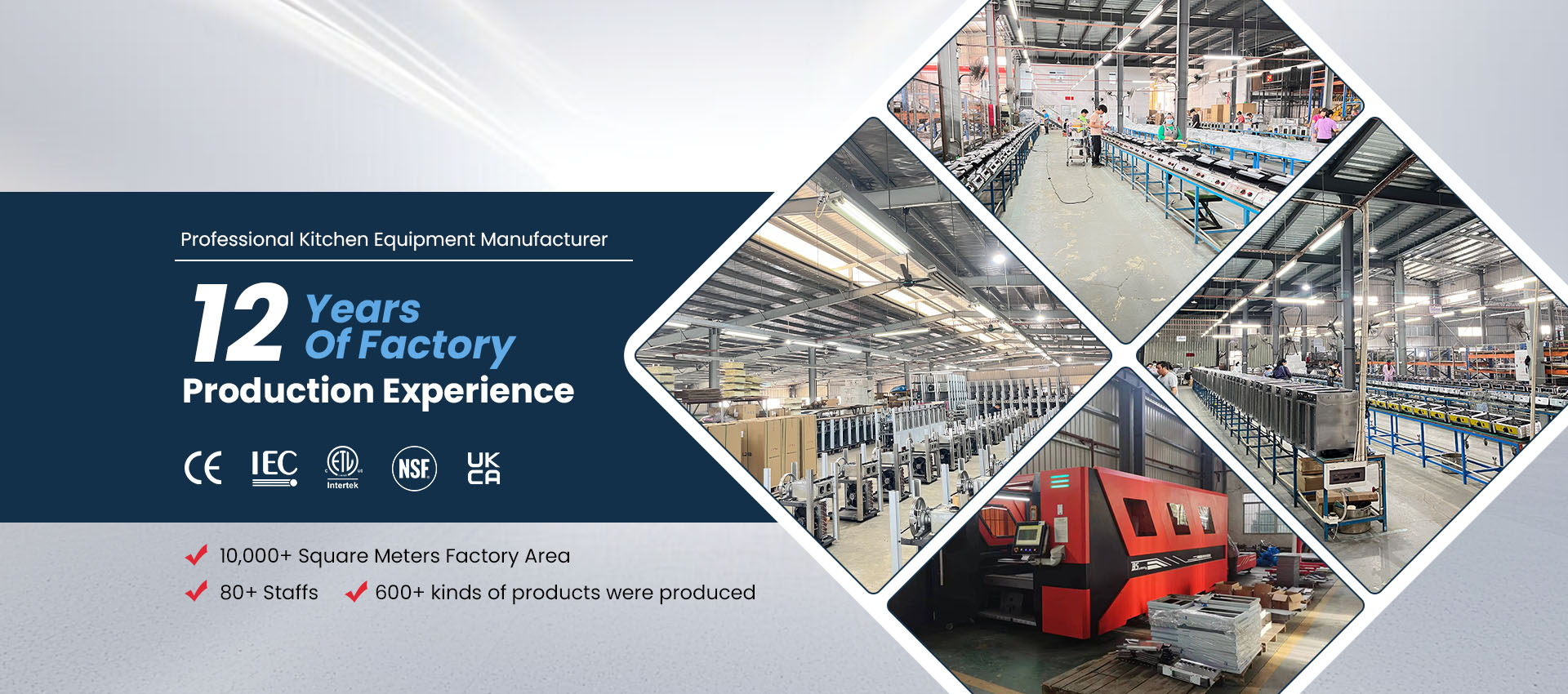
Dingfeng positions its waffle products inside a dedicated snack equipment system rather than as isolated countertop tools. Its site presents a large waffle maker range and states that the company has a factory of more than 10,000 square meters, more than 80 trained employees, and more than 1000 product types produced. That kind of manufacturing base matters for buyers comparing manufacturer vs trader, because large orders depend on consistent plate machining, stable assembly, repeatable testing, and accurate final configuration. A true manufacturer is better placed to manage the full chain from plate design to finished commercial waffle maker shipment.
What buyers should check before choosing between the two terms
A practical project sourcing checklist should stay focused on the real machine rather than the wording alone. Confirm whether the supplier is discussing only the baking plate function or the full appliance. Check the housing material, plate material, thermostat stability, cleaning structure, and food-contact compliance logic. Review the manufacturing process overview and ask about quality control checkpoints for heating consistency, coating condition, and final assembly. Once those points are clear, the naming difference becomes much easier to understand.
In simple language, a waffle iron is the cooking mechanism, while a waffle maker is usually the complete commercial appliance built around that mechanism. For export business, product development, and large-volume supply, the broader term is usually the more practical and more professional choice.
Previous: