


What Is The Best Way To Maintain A Waffle Maker?
Maintenance Starts With Daily Cleaning And Gentle Handling
The best way to maintain a Waffle Maker is to clean it after each service period, protect the non-stick plates, check the power parts regularly, and avoid harsh tools that damage the baking surface. In snack shops, dessert counters, breakfast stations, and restaurants, poor maintenance can cause batter sticking, uneven browning, smoke, odor, slower output, and shorter machine life.
Dingfeng’s maintenance guidance notes that batter residue, oil buildup, and degraded non-stick surfaces are common reasons for sticking in commercial waffle makers. Soft cleaning and fast removal of crumbs are recommended because abrasive cleaning can shorten coating life.
Practical Waffle Maker Maintenance Guide
| Maintenance Area | What To Do | Why It Matters |
|---|---|---|
| Baking plates | Wipe after cooling with a soft damp cloth | Protects non-stick release |
| Grid corners | Clean residue with a soft brush | Prevents burnt crumbs and odor |
| Outer body | Wipe stainless steel surfaces dry | Keeps the machine clean for service areas |
| Hinges and handle | Check movement and looseness | Supports safer daily operation |
| Timer and thermostat | Test control response regularly | Keeps color and texture consistent |
| Power cord and plug | Check for damage before use | Reduces electrical risk |
| Storage | Keep the machine dry after cleaning | Reduces moisture-related problems |
Protect The Plate Surface First
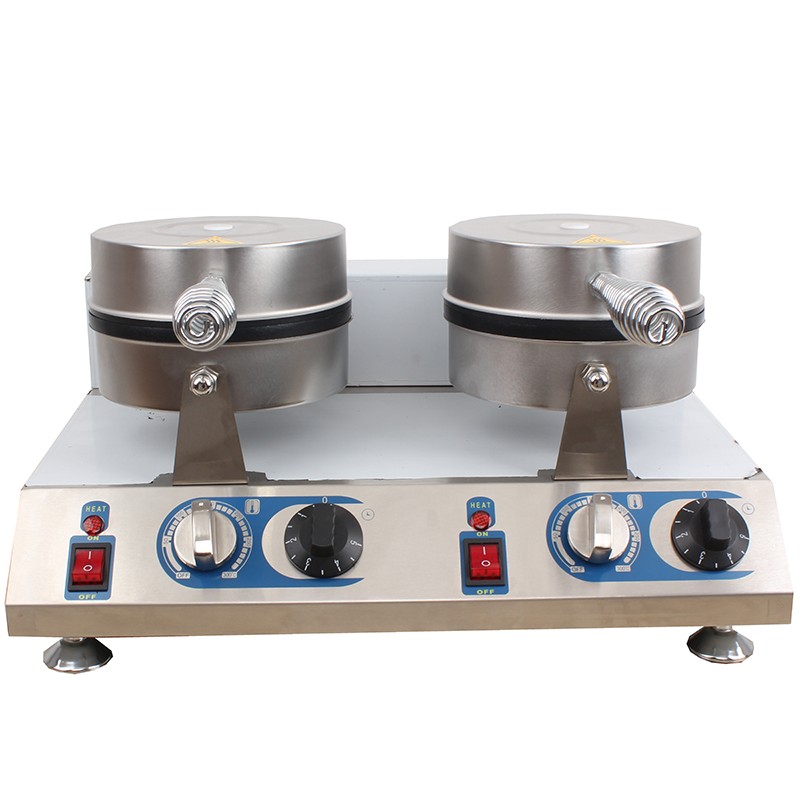
The baking plates are the most important part to maintain. A good non-stick surface helps waffles release cleanly, reduces broken products, and shortens cleaning time between batches. Dingfeng’s material guidance explains that many commercial waffle makers use aluminum plates with non-stick coating because this structure improves release, reduces residue buildup, and supports smoother workflow in busy kitchens.
Operators should not use knives, steel wool, metal scrapers, or abrasive pads on coated plates. These tools may remove residue quickly, but they can scratch the surface and make future batter stick more easily. For stuck batter, soften the residue with a warm damp cloth first, then wipe gently.
Use Machine Features Correctly
Good maintenance is also connected with correct operation. Preheat the machine fully, use a measured batter amount, avoid overflow, and set the right time and temperature. Dingfeng’s commercial waffle maker guidance highlights cast aluminum plates, non-stick surfaces, adjustable thermostats, timers, and indicator lights as key features for restaurant use. These features help operators keep waffle quality more repeatable when used properly.
Dingfeng’s Waffle Maker for Business uses non-stick plates designed for repeated commercial use. The coating reduces adhesion, shortens unloading time, lowers shell damage risk, and minimizes residue buildup between production cycles.
Professional Advice For Longer Service Life
Before daily service, operators should check whether the plates are clean, dry, and fully preheated. During service, remove loose crumbs before they burn. After service, unplug the machine, let it cool, wipe the plates, clean the corners, dry the body, and store it in a dry place.
For buyers planning bulk order supply, maintenance requirements should be reviewed together with plate material, coating quality, housing structure, thermostat design, timer control, voltage, packaging format, and spare part support. Dingfeng’s waffle maker category covers belgian waffle machines, sandwich waffle makers, pancake-related units, novelty-shape models, and multi-grid formats, helping customers choose suitable equipment for different food service projects.
Dingfeng can support Waffle Maker selection for snack shops, dessert kitchens, restaurants, breakfast counters, and commercial food service projects. Share your waffle style, expected output, voltage requirement, and bulk order plan with our team, and we can recommend a suitable Waffle Maker solution for stable supply and repeat orders.