


How to Select Commercial Kitchen Equipment for Different Restaurant Types
Choosing the right commercial kitchen equipment depends on more than the size of a restaurant. Different food concepts require different cooking processes, production capacity and workflow designs. A small café may focus on compact and efficient equipment, while a hotel kitchen may require a complete system with multiple functions and higher production capacity.
According to data from the National Restaurant Association, restaurant operators continue to prioritize operational efficiency and equipment reliability as key factors affecting long-term profitability. Selecting suitable equipment at the beginning of a project can help improve workflow, reduce maintenance costs and support stable daily operations.
As a professional commercial kitchen equipment manufacturer, we understand that every restaurant type has different requirements. Equipment selection should consider application scenarios, manufacturing quality, customization options and future expansion needs.
Match Equipment Selection With Restaurant Operations
Before purchasing equipment, it is important to analyze the restaurant concept, menu structure and expected workload. The same equipment configuration may not work effectively for every business model.
A basic project sourcing checklist includes:
| Restaurant Type | Recommended Equipment Focus |
|---|---|
| Fast Food Restaurants | High-efficiency fryers, griddles and cooking equipment |
| Cafés and Bakeries | Compact cooking equipment, snack machines and preparation equipment |
| Hotels | Large-capacity cooking systems and diversified kitchen solutions |
| Catering Services | Flexible equipment combinations and easy transportation |
| Food Courts | Multi-function equipment with fast production capability |
Understanding the operation model helps ensure every equipment choice supports actual kitchen requirements rather than unnecessary investment.
Different Restaurant Types Require Different Equipment Solutions
Fast food restaurants usually require equipment that supports quick preparation and continuous operation. Products such as commercial fryers, griddles and cooking machines need stable heating performance and easy cleaning features.
Cafés and dessert shops often focus on smaller equipment with flexible functions. Compact designs, energy efficiency and simple operation are important factors for limited kitchen spaces.
Hotels and catering kitchens usually require a wider range of equipment because they serve different menus and larger numbers of customers. Stable production capacity, durability and easy maintenance become essential considerations.
Our commercial kitchen equipment solutions cover different foodservice applications, helping restaurants, catering businesses and hospitality projects select suitable equipment configurations.
Manufacturer vs Trader: Why Factory Capability Matters
When selecting a supplier, understanding the difference between a manufacturer and a trader can directly influence project success. A factory-based supplier has better control over production, quality inspection and customization.
Working directly with a commercial kitchen equipment manufacturer provides advantages including:
Direct production management
Faster communication with engineering teams
Flexible OEM and ODM support
Better control of bulk order quality
More stable delivery schedules
A manufacturer can provide deeper technical support because the team understands the complete process from product design to final assembly.
OEM And ODM Support For Different Market Requirements
restaurant equipment requirements vary between countries due to different kitchen layouts, electrical standards and customer preferences. OEM and ODM services allow equipment to be adjusted according to specific market needs.
A professional customization process usually includes:
Requirement evaluation and product selection
Technical design confirmation
Prototype testing
Mass production preparation
Quality inspection and shipment
Customization options may include product appearance, functions, voltage specifications, logo printing and packaging solutions.
This flexibility allows commercial kitchen equipment to meet different project requirements while maintaining consistent manufacturing quality.
Manufacturing Process And Material Standards
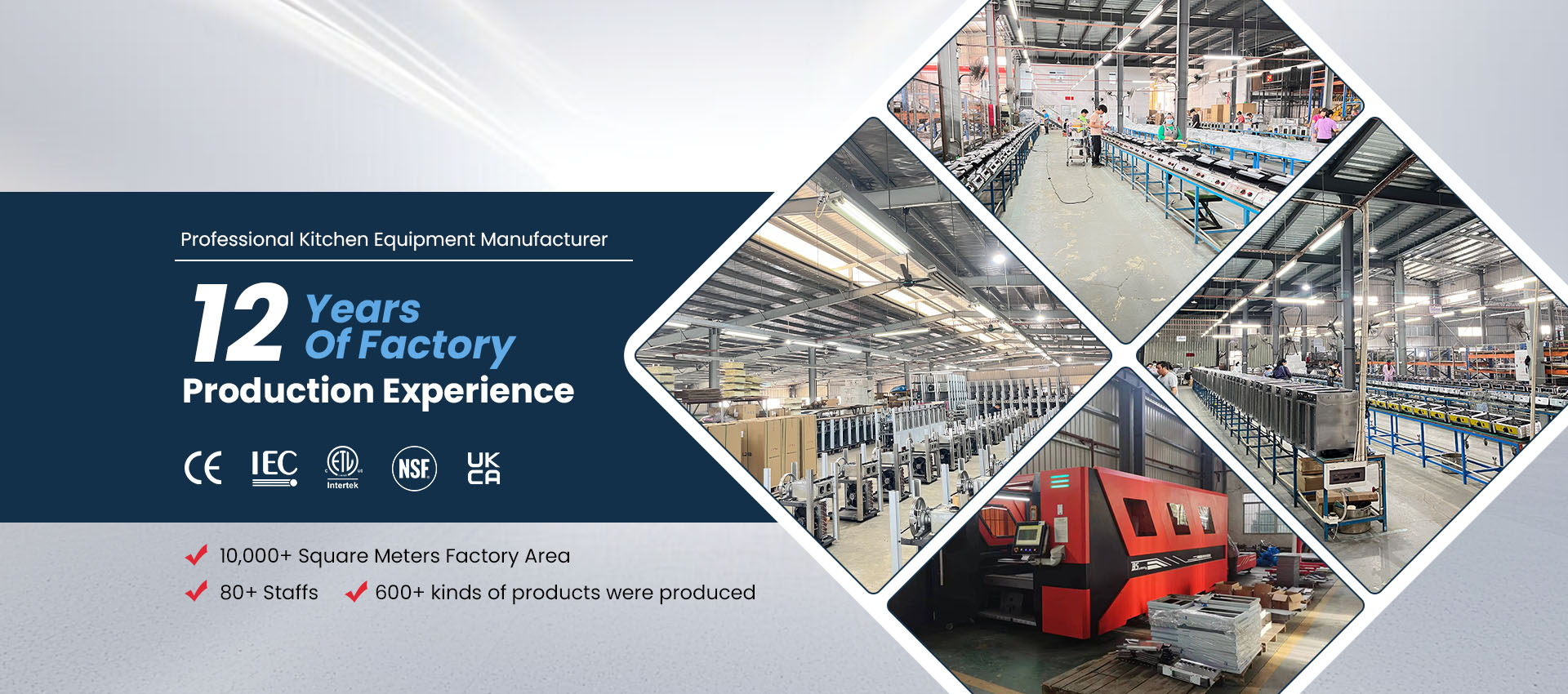
The production process determines the reliability and service life of commercial kitchen equipment. A professional factory should control every manufacturing stage, from raw materials to final inspection.
The typical manufacturing process includes:
Stainless steel material inspection
Cutting and forming
Welding and surface treatment
Component installation
Performance testing
Final quality inspection
Material standards are especially important for foodservice equipment. Stainless steel is widely used because it offers corrosion resistance, durability and easy cleaning characteristics. According to the U.S. Food and Drug Administration, stainless steel is commonly used in food contact equipment due to its hygienic performance.
For example, commercial griddles require strong structures and stable heating systems to handle frequent cooking operations: https://www.mlpkitchen.com/product-category/cooking-equipment/
Bulk Supply Considerations For Restaurant Projects
Large restaurant projects require more than product availability. Production capacity, quality consistency and delivery planning are equally important.
Before confirming bulk orders, key factors should be reviewed:
| Evaluation Area | Important Questions |
|---|---|
| Production Capacity | Can the factory support required quantities? |
| Quality Control | Are products inspected during production? |
| Packaging | Can products be protected during international transportation? |
| Delivery | Can production schedules match project timelines? |
A reliable supplier should have structured manufacturing management to ensure stable supply for different project scales.
Quality Control And Export Compliance
Quality control is essential for maintaining product consistency. Professional manufacturers should establish inspection checkpoints throughout the production process.
Important quality checks include:
Incoming material inspection
Welding quality verification
Electrical safety testing
Functional performance testing
Final appearance inspection
Packaging inspection
For global markets, export compliance is also a key consideration. Different countries may require specific electrical standards, safety certifications and documentation before equipment can be installed and used.
A supplier with export experience can help reduce compliance risks and improve project delivery efficiency.
Building Efficient Restaurant Kitchen Solutions
Selecting commercial kitchen equipment requires a complete understanding of restaurant operations, manufacturing capability and long-term supply reliability. Different restaurant types need different equipment combinations, and professional support can help create more efficient kitchen solutions.
With manufacturing experience in commercial kitchen equipment, we focus on product development, OEM and ODM services, quality control and global supply support. From material selection and production processes to inspection and export preparation, we provide reliable equipment solutions for restaurants, hotels and foodservice projects worldwide.