


How to Plan a Commercial Kitchen Equipment Layout for Better Efficiency
A well-planned commercial kitchen layout is essential for improving workflow, reducing operation delays and creating a safer working environment. Equipment placement affects how employees move, how quickly food can be prepared and how efficiently every area of the kitchen operates.
According to the National Restaurant Association, improving operational efficiency is one of the key priorities for restaurant operators as labor costs and customer expectations continue to increase. A practical kitchen layout combined with reliable commercial kitchen equipment can help businesses achieve smoother operations and better long-term performance.
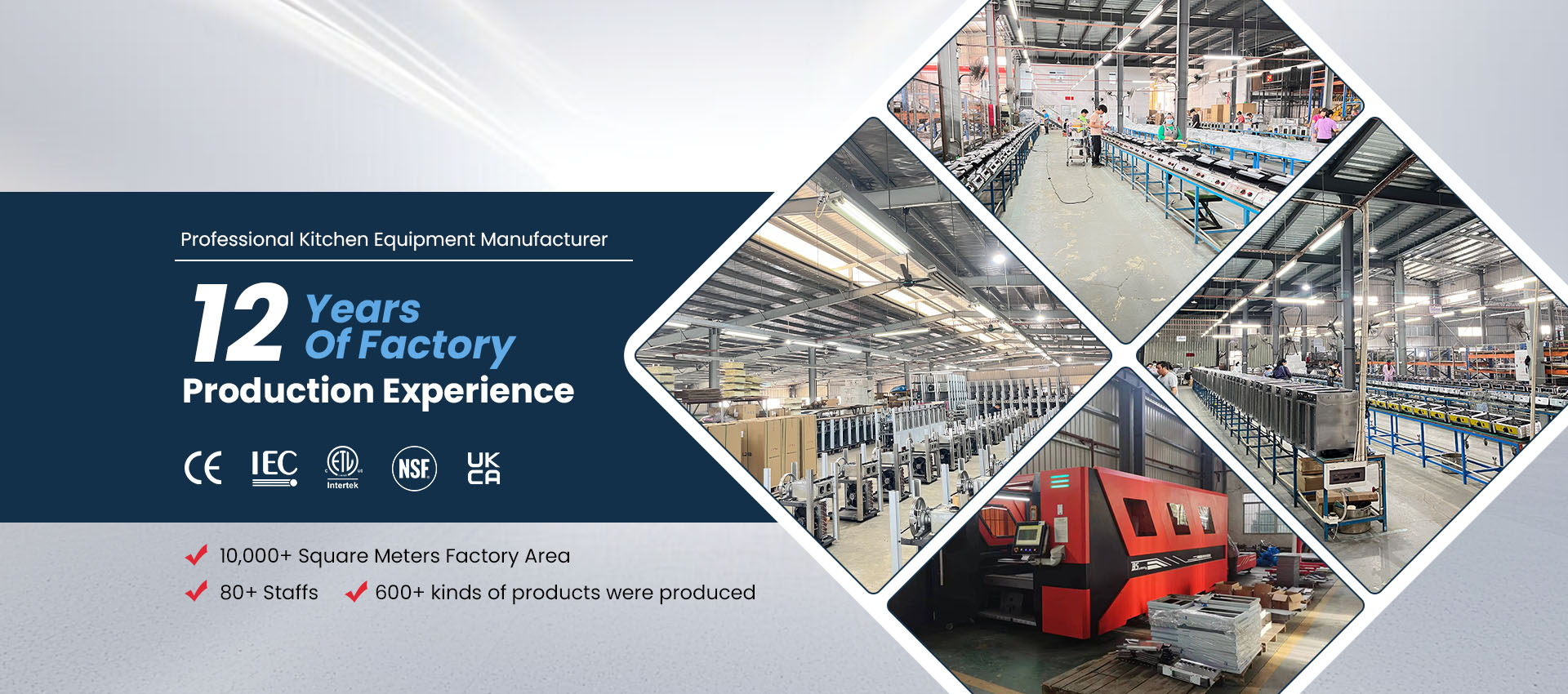
As a professional commercial kitchen equipment manufacturer, we understand that equipment selection and layout planning should work together. The right configuration allows cooking, preparation, storage and cleaning areas to connect naturally.
Start With A Practical Kitchen Workflow Plan
Before placing equipment, it is important to understand the complete food preparation process. A commercial kitchen should follow a logical workflow from receiving ingredients to final food service.
A typical kitchen workflow includes:
Food receiving and storage
Preparation area
Cooking area
Holding and serving area
Cleaning and waste management area
A clear workflow reduces unnecessary movement and improves staff efficiency. According to foodservice design principles, reducing travel distance between workstations can help improve productivity and reduce workplace pressure.
A project sourcing checklist should include:
| Planning Factor | Key Consideration |
|---|---|
| Kitchen Size | Available space and equipment arrangement |
| Menu Requirements | Cooking methods and production volume |
| Equipment Capacity | Daily output and peak demand |
| Safety Standards | Ventilation, electrical and operation requirements |
| Future Expansion | Additional equipment and business growth |
Choose Equipment Based On Kitchen Function
Different restaurant concepts require different layouts and equipment combinations. A fast-food kitchen may prioritize speed and continuous production, while a hotel kitchen may require multiple preparation and cooking zones.
Common commercial kitchen zones include:
Cooking Zone
The cooking area is usually the core of the kitchen. Equipment such as griddles, fryers and cooking machines should be arranged according to production flow.
Important factors include:
Easy access for operators
Efficient heat management
Simple cleaning procedures
Stable performance during long working hours
Our commercial cooking equipment is designed for restaurants, catering businesses and foodservice applications with a focus on durability, efficiency and consistent operation.
Product reference: https://www.mlpkitchen.com/product-category/cooking-equipment/
Preparation And Storage Zone
Preparation areas should be positioned close to storage and cooking sections. This reduces unnecessary movement and helps maintain food preparation efficiency.
Equipment selection should consider:
Available working space
Cleaning convenience
Material durability
Daily production requirements
Manufacturer vs Trader: Why Production Support Matters
Kitchen layout projects often require customized equipment combinations rather than simple product purchasing. Working with a commercial kitchen equipment manufacturer provides stronger technical support during planning.
Compared with traders who mainly coordinate orders, manufacturers can directly manage:
Product design adjustments
Production scheduling
Quality inspections
Custom specifications
Bulk supply planning
A factory-based supplier can better understand equipment structure and provide recommendations based on actual installation requirements.
OEM And ODM Support For Project-Based Solutions
Different markets may require different equipment designs due to kitchen space, electrical standards and customer preferences.
A professional OEM and ODM process usually includes:
Requirement analysis
Equipment configuration discussion
Product design confirmation
Sample testing
Mass production
Quality inspection before shipment
Customization options may include equipment dimensions, functions, appearance, voltage specifications, logo and packaging solutions.
This flexibility helps create kitchen layouts that match specific project requirements.
Manufacturing Process And Material Standards
The quality of commercial kitchen equipment depends heavily on manufacturing control. Reliable equipment should be produced through standardized processes with strict inspection at every stage.
A complete manufacturing process includes:
Stainless steel material selection
Sheet metal cutting
Welding and forming
Surface finishing
Component installation
Performance testing
Stainless steel is widely used in foodservice equipment because it offers corrosion resistance, durability and easy cleaning properties. The U.S. Food and Drug Administration recognizes stainless steel as a commonly used material for food equipment due to its hygienic characteristics.
Quality Control During Production And Delivery
A good kitchen layout requires equipment that performs consistently after installation. Quality control should cover the entire production process rather than only the final stage.
Key quality control checkpoints include:
| Production Stage | Inspection Focus |
|---|---|
| Material Inspection | Stainless steel quality and specifications |
| Production Process | Welding accuracy and assembly quality |
| Function Testing | Heating performance and operation stability |
| Final Inspection | Appearance, safety and packaging |
For bulk supply projects, manufacturers should also ensure stable production capacity, accurate delivery schedules and secure international packaging.
Consider Export Compliance Before Installation
Commercial kitchen equipment for international projects must meet different market requirements. Electrical standards, safety regulations and documentation requirements may vary between countries.
Before shipment, manufacturers should consider:
Voltage and frequency requirements
Product safety standards
Export documentation
Packaging protection
Installation instructions
A supplier with export experience can help reduce compliance risks and improve project efficiency.
Building An Efficient Commercial Kitchen Through Smart Planning
A successful commercial kitchen layout combines workflow design, equipment selection and manufacturing reliability. Every equipment position should support better efficiency, easier operation and long-term performance.
With professional manufacturing capabilities, we provide commercial kitchen equipment solutions including cooking equipment, Snack Equipment and customized foodservice products. Through OEM and ODM services, controlled production processes, quality inspections and export support, we help customers create efficient kitchen environments for restaurants and foodservice projects worldwide.