


What Are the Key Steps in a Commercial Kitchen Equipment OEM Project
A successful commercial kitchen equipment OEM project requires much more than producing equipment based on simple specifications. It involves product planning, engineering communication, material selection, manufacturing control, quality verification, and export preparation.
For restaurants, catering projects, hotels, and foodservice operations, customized equipment must match specific workflows, space requirements, performance expectations, and regional standards. A professional OEM process helps transform an initial idea into reliable commercial equipment through systematic development and production management.
According to NSF commercial food equipment standards, equipment quality depends on multiple factors including materials, construction, sanitation design, and performance verification. This shows why a complete OEM development process is essential for ensuring equipment reliability in professional kitchen environments. (DINGFENG)
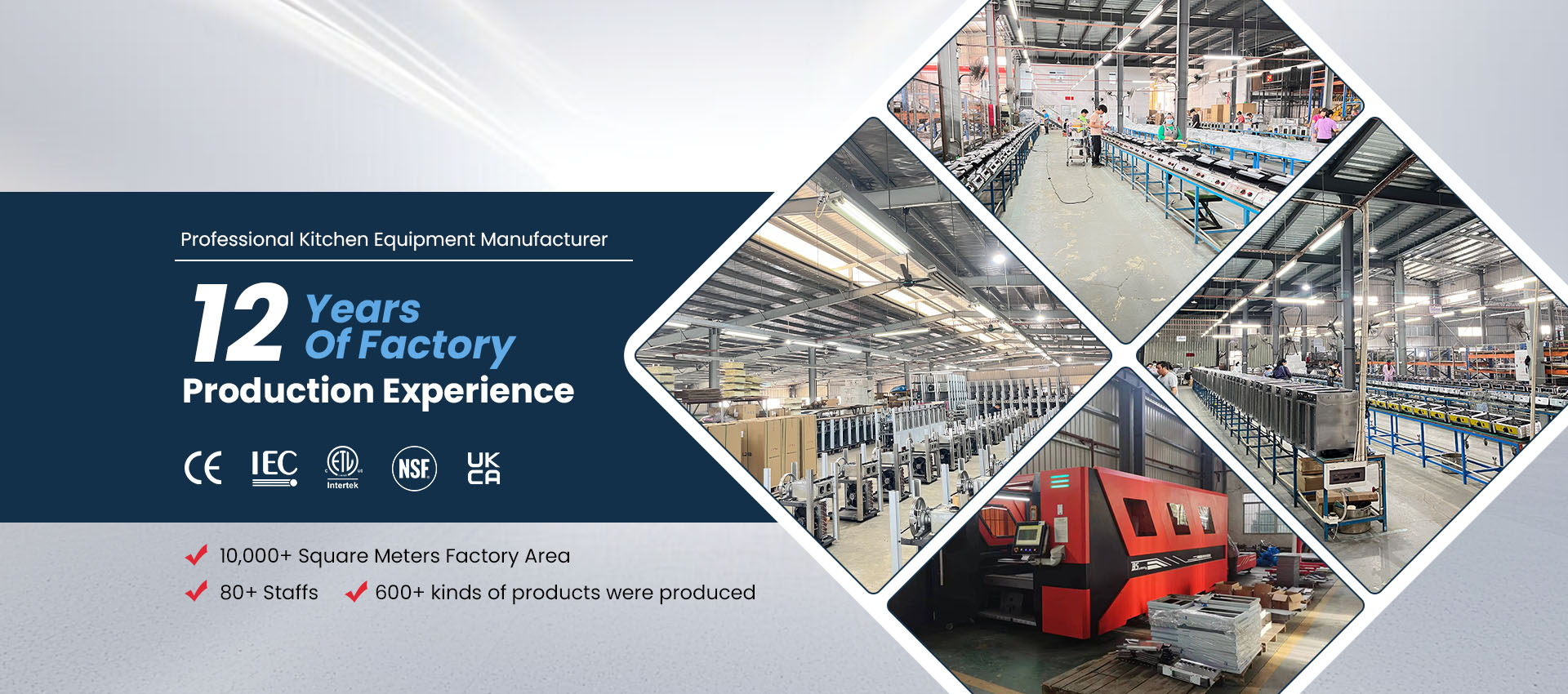
As an experienced commercial kitchen equipment manufacturer, DINGFENG provides OEM and ODM solutions covering cooking equipment, Snack Equipment, Refrigeration Equipment, and customized foodservice products. Through factory-controlled production and engineering support, DINGFENG helps develop equipment solutions suitable for different markets.
Step 1: Requirement Analysis And Project Planning
The first step of an OEM project is defining clear product requirements.
Before manufacturing begins, the manufacturer needs to understand:
Equipment application
Kitchen environment
Required functions
Product dimensions
Production capacity
Market requirements
Installation conditions
A detailed project sourcing checklist helps avoid problems during later production stages.
| Project Factor | Main Consideration |
|---|---|
| Equipment Type | Cooking, heating, refrigeration, preparation |
| Usage Environment | Restaurant, hotel, catering, commercial kitchen |
| Capacity Requirement | Daily production volume |
| Space Planning | Equipment size and layout |
| Market Standard | Voltage, safety, and compliance requirements |
A professional restaurant equipment manufacturer does not only follow specifications but also provides engineering suggestions based on practical applications.
DINGFENG evaluates project requirements before production to ensure customized solutions are technically feasible and suitable for commercial use.
Step 2: Engineering Evaluation And Product Design
After requirements are confirmed, engineers begin the design evaluation stage.
This step determines whether the proposed product can be manufactured efficiently while maintaining performance and durability.
Engineering teams usually review:
Product structure
Component selection
Manufacturing methods
Functional requirements
Maintenance convenience
For OEM projects, design accuracy is important because even small changes can affect production methods and final performance.
The engineering process usually includes:
| Development Stage | Purpose |
|---|---|
| Technical Review | Confirm product requirements |
| Design Adjustment | Optimize structure and functions |
| Prototype Development | Verify product concept |
| Performance Testing | Confirm reliability |
Unlike a trader that mainly coordinates existing products, a factory-based manufacturer can directly involve engineers in product improvement and production planning.
Step 3: Material Selection And Production Preparation
Material standards directly influence the service life and performance of commercial kitchen equipment.
Professional manufacturers evaluate materials based on:
Durability
Corrosion resistance
Cleaning requirements
Operating temperature
Foodservice environment
Stainless steel is widely used in commercial kitchen equipment because of its durability, corrosion resistance, and hygienic characteristics.
Important material control points include:
| Material Control | Quality Impact |
|---|---|
| Stainless Steel Grade | Determines corrosion resistance |
| Material Thickness | Affects structural strength |
| Surface Finish | Influences cleaning performance |
| Component Quality | Affects equipment stability |
A professional OEM commercial kitchen equipment manufacturer should establish material inspection procedures before production begins.
DINGFENG manages material selection and incoming inspection to ensure customized equipment meets commercial application requirements.
Step 4: Prototype Development And Sample Confirmation
Before mass production, OEM projects usually require prototype development.
The prototype stage allows manufacturers and project teams to verify:
Product appearance
Equipment structure
Functional performance
Operating experience
Technical specifications
A typical OEM development process includes:
Requirement confirmation
Engineering design
Prototype manufacturing
Function testing
Design improvement
Production approval
Prototype testing reduces production risks and ensures that the final product matches the approved requirements.
Step 5: Manufacturing Process Overview
After prototype approval, the project enters mass production.
A professional manufacturing process includes multiple controlled stages:
Raw Material Inspection
Materials and components are checked before entering production.
Metal Fabrication
Production teams complete:
Cutting
Bending
Welding
Surface treatment
Component Assembly
Heating systems, electrical parts, controls, and mechanical components are installed.
Performance Testing
Finished equipment is tested for:
Operating stability
Temperature control
Safety functions
Structural reliability
Factory-based production control allows manufacturers to maintain consistency throughout the entire manufacturing process. DINGFENG emphasizes standardized production procedures to improve quality consistency from prototype to mass production. (DINGFENG)
Step 6: Quality Control During OEM Production
Quality control is one of the most important stages in an OEM project.
A reliable manufacturer should establish inspection checkpoints throughout production rather than only checking finished products.
| Quality Checkpoint | Inspection Focus |
|---|---|
| Incoming Inspection | Verify raw materials and components |
| Production Inspection | Check fabrication accuracy |
| Assembly Inspection | Confirm installation quality |
| Functional Testing | Verify equipment performance |
| Final Inspection | Approve shipment quality |
Typical quality control procedures include material inspection, assembly checks, functional testing, appearance inspection, and packaging verification.
DINGFENG integrates quality checkpoints into production to reduce potential issues before shipment.
Step 7: Bulk Production And Supply Management
OEM projects often move from prototype development to large-scale production. At this stage, manufacturing consistency becomes critical.
A reliable bulk supply commercial kitchen equipment supplier needs:
Stable production capacity
Standardized manufacturing procedures
Consistent material supply
Production scheduling capability
Batch quality control
Large orders require every unit to maintain the same:
Dimensions
Functions
Appearance
Performance standards
DINGFENG combines OEM customization with factory production management to support different project volumes while maintaining product consistency.
Step 8: Export Market Compliance And Shipment Preparation
International OEM projects require additional preparation before shipment.
Manufacturers need to consider:
Electrical specifications
Safety requirements
Product documentation
Packaging standards
Transportation conditions
Different markets may have different compliance requirements, so export planning should be included during the design stage.
A manufacturer with export experience can adjust product specifications and documentation according to different market requirements.
DINGFENG supports international commercial kitchen equipment projects through professional manufacturing management and export preparation.
OEM Project Evaluation Checklist
Before starting an OEM cooperation, evaluate the manufacturer's capability through the following checklist:
| Evaluation Area | Key Questions |
|---|---|
| Factory Capability | Does the supplier control production internally? |
| Engineering Support | Can the manufacturer optimize product designs? |
| Material Standards | Are commercial-grade materials used? |
| Manufacturing Process | Are production steps standardized? |
| Quality Control | Are inspection systems established? |
| Supply Capability | Can bulk orders be managed? |
| Export Experience | Can international requirements be supported? |
A complete evaluation helps identify manufacturers with real OEM capability.
Building Reliable Equipment Through A Complete OEM Process
A successful commercial kitchen equipment OEM project depends on every stage working together. From requirement analysis and engineering design to manufacturing control, quality inspection, and export preparation, each step influences the final equipment performance.
Choosing a professional foodservice equipment manufacturer with OEM and ODM capabilities provides stronger control over customization, product consistency, and long-term supply reliability.
With factory-controlled production, engineering support, strict quality management, and experience in commercial kitchen equipment manufacturing, DINGFENG continues to provide customized solutions for restaurants, catering projects, and foodservice applications worldwide.