


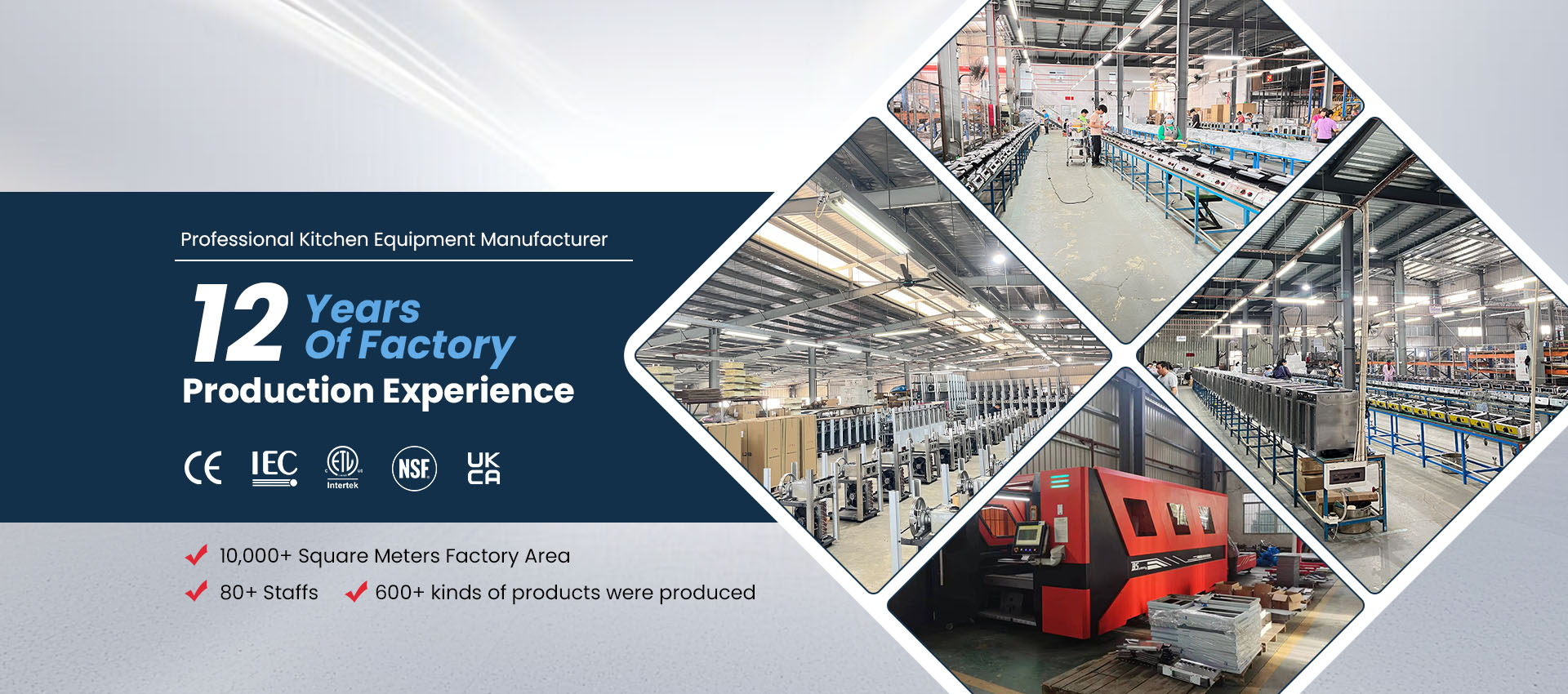
What Quality Control Checks Are Used in Commercial Kitchen Equipment Production?
commercial kitchen equipment production uses material inspection, dimensional checks, welding inspection, surface evaluation, performance testing, and final quality verification to ensure reliable performance.
Why Is Quality Control Important in commercial kitchen equipment Manufacturing?
Quality control is a critical part of commercial kitchen equipment production because these products operate in demanding environments where durability, hygiene, and safety are essential. Equipment such as stainless steel work tables, sinks, storage racks, preparation counters, and custom kitchen solutions must withstand frequent use, moisture exposure, temperature changes, and regular cleaning.
For manufacturers, quality control is not limited to checking finished products. A reliable quality system covers every production stage, from raw material selection to fabrication, assembly, and final inspection.
A professional manufacturing process ensures that each piece of equipment meets expected standards for structural strength, surface quality, and long-term commercial performance.
What Material Quality Checks Are Performed Before Production?
The first quality control stage begins with incoming material inspection. Stainless steel is widely used in commercial kitchen equipment, but different material grades and specifications can affect product performance.
Manufacturers typically check:
Stainless steel grade and material specifications
Sheet thickness consistency
Surface condition and appearance
Material defects or contamination
Supplier documentation and traceability
Proper material inspection helps prevent issues such as corrosion, weak structures, and inconsistent product quality during later manufacturing processes.
For commercial kitchen equipment, selecting suitable raw materials is the foundation of producing durable and hygienic products.
How Are Dimensions Checked During Kitchen Equipment Production?
Dimensional accuracy directly affects equipment installation, functionality, and overall appearance. Commercial kitchens often require equipment to fit specific layouts, making precise manufacturing essential.
Quality control teams commonly inspect:
Product length, width, and height
Component dimensions
Hole positions and connection points
Assembly accuracy
Custom specifications
Advanced measurement tools and production standards help manufacturers maintain consistency across large-volume orders and customized projects.
Accurate dimensions reduce installation difficulties and improve compatibility with other kitchen systems.
What Welding Quality Checks Are Used for Stainless Steel Equipment?
Welding is one of the most important processes in stainless steel kitchen equipment manufacturing. Poor welding quality can affect strength, appearance, and hygiene performance.
Common welding inspections include:
Weld Strength Inspection
Manufacturers check whether welded joints can withstand expected loads and daily operational pressure.
Weld Appearance Inspection
Smooth and uniform weld lines help improve product appearance and reduce areas where dirt or food residue may accumulate.
Weld Surface Treatment Inspection
After welding, polishing and finishing processes are evaluated to ensure smooth surfaces that are easier to clean.
High-quality welding contributes to equipment durability and supports food safety requirements in commercial environments.
How Do Manufacturers Check Stainless Steel Surface Quality?
Surface quality affects both appearance and practical performance. Commercial kitchen equipment requires smooth surfaces because they are easier to clean and maintain.
Surface inspections usually focus on:
Smoothness of polished areas
Consistency of finishing
Absence of scratches or dents
Edge safety
Clean appearance
A properly finished stainless steel surface helps reduce cleaning difficulty and improves the overall user experience.
For kitchen equipment manufacturers, surface treatment is not only an aesthetic process but also an important part of hygiene control.
What Functional Tests Are Performed Before Shipment?
Before commercial kitchen equipment leaves the factory, manufacturers perform functional checks to confirm that products work as designed.
Depending on the product type, inspections may include:
| Quality Check | Purpose |
|---|---|
| Load Testing | Verify structural stability under working conditions |
| Assembly Check | Ensure all components fit correctly |
| Water Leakage Test | Confirm sealing performance for sinks and wet equipment |
| Door and Drawer Testing | Check smooth operation and durability |
| Safety Inspection | Verify safe edges and stable structures |
These tests help identify potential problems before products reach installation sites.
How Does Final Inspection Ensure Product Consistency?
Final inspection is the last quality control stage before packaging and shipment. It ensures that completed equipment matches production requirements and customer expectations.
Final inspection typically includes:
Product appearance review
Size confirmation
Function verification
Accessory checking
Packaging inspection
Manufacturers use final inspections to prevent incomplete products, transportation risks, or quality issues from affecting customers.
A complete inspection process improves reliability, especially for international shipments where replacement or repair can be costly and time-consuming.
Why Is Production Process Control Important for Commercial Kitchen Equipment?
Quality control is most effective when it is integrated throughout the production process instead of relying only on final inspection.
A professional manufacturing workflow usually includes:
Material inspection before production
Precision cutting and forming control
Welding quality monitoring
Surface finishing evaluation
Assembly verification
Final product inspection
This process-based approach helps maintain consistent quality across different batches and product models.
How Can Buyers Evaluate a commercial kitchen equipment manufacturer’s Quality System?
When selecting a manufacturing partner, buyers should evaluate more than product appearance. A reliable manufacturer should have clear quality control procedures and production experience.
Important evaluation points include:
Manufacturing Capability
Check whether the factory has professional equipment, skilled workers, and experience producing commercial kitchen products.
Quality Inspection System
Understand whether the manufacturer performs inspections at multiple production stages.
Material Control
Confirm whether raw materials are controlled and verified before manufacturing.
Production Transparency
Manufacturers with clear processes can provide better confidence in product consistency and long-term cooperation.
Why Does Quality Control Improve the Value of Commercial Kitchen Equipment?
Effective quality control helps manufacturers produce equipment with better durability, safety, and reliability.
High-quality commercial kitchen equipment provides:
Longer service life
Reduced maintenance requirements
Better hygiene performance
More stable daily operation
Lower replacement costs
For restaurants, hotels, catering businesses, and professional kitchens, equipment reliability directly affects operational efficiency.
Conclusion: What Quality Control Checks Are Used in Commercial Kitchen Equipment Production?
Commercial kitchen equipment production relies on multiple quality control checks, including material inspection, dimensional accuracy verification, welding evaluation, surface inspection, functional testing, and final product review.
A complete quality control system ensures that stainless steel kitchen equipment delivers consistent performance, durability, and safety for demanding commercial environments.