


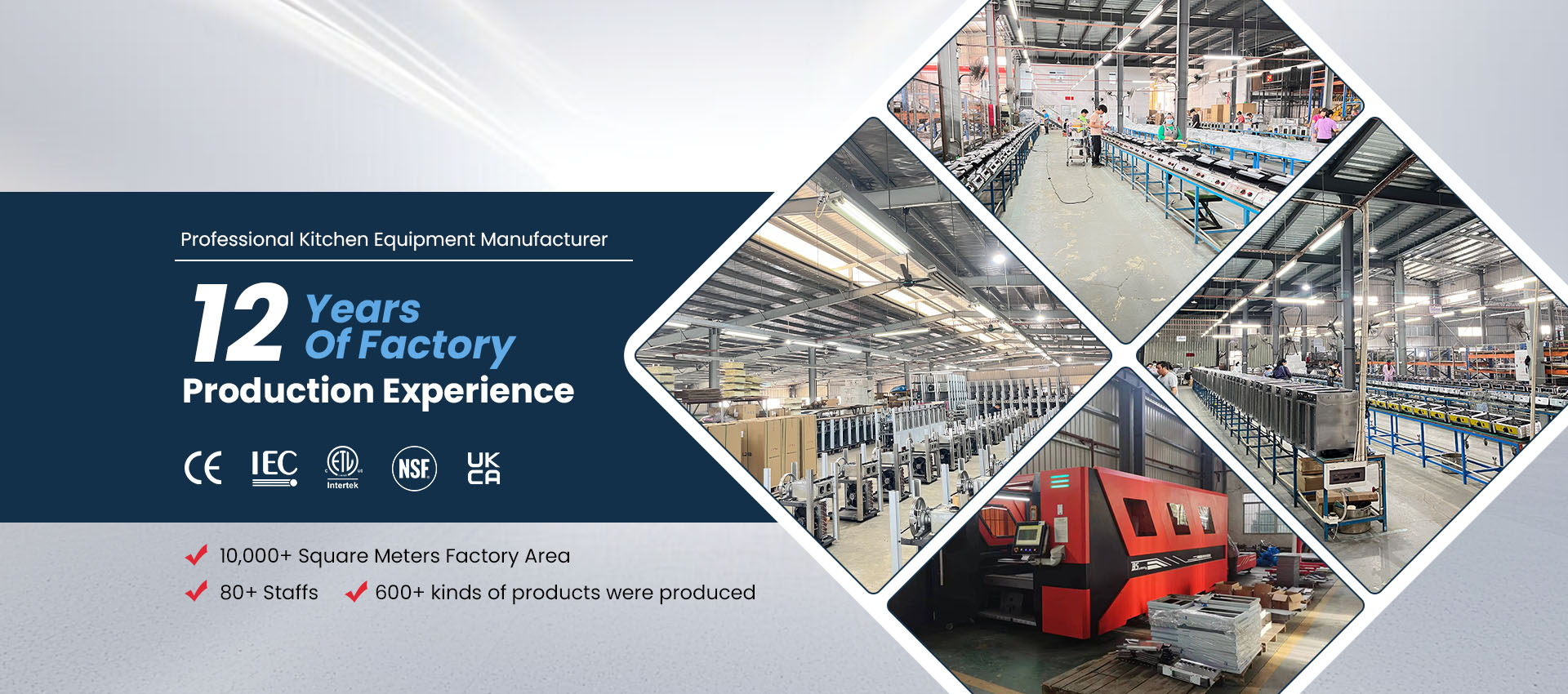
How Do Manufacturers Prevent Quality Problems in Stainless Steel Kitchen Equipment?
Manufacturers prevent quality problems in stainless steel kitchen equipment through strict material control, precision fabrication, process inspection, and final product testing.
Why Is Quality Prevention Important in Stainless Steel Kitchen Equipment Production?
Stainless steel kitchen equipment is designed for demanding commercial environments where durability, hygiene, and reliability are essential. Restaurants, hotels, catering facilities, and food service operations require equipment that can withstand moisture, heat, frequent cleaning, and continuous daily use.
Quality problems such as corrosion, welding defects, surface damage, dimensional errors, and structural weakness can affect equipment performance and increase maintenance costs.
Professional manufacturers focus on preventing problems before they occur rather than relying only on final inspections. A complete quality management approach starts from raw materials and continues through every production stage.
How Do Manufacturers Control Stainless Steel Material Quality?
The first step in preventing quality problems is controlling raw material quality. Stainless steel specifications directly influence corrosion resistance, strength, and service life.
Manufacturers usually evaluate:
Stainless steel grade and material composition
Sheet thickness consistency
Surface condition
Material defects
Supplier quality records
Using unsuitable materials can lead to problems such as rusting, deformation, and reduced durability. Proper material inspection ensures that stainless steel meets the requirements of commercial kitchen applications before fabrication begins.
For equipment exposed to water, salt, or cleaning chemicals, material selection becomes especially important because corrosion resistance directly affects product lifespan.
How Do Manufacturers Prevent Fabrication Errors?
Precision fabrication plays an important role in maintaining stainless steel equipment quality. Even high-quality materials can experience performance problems if manufacturing processes are not properly controlled.
Manufacturers prevent fabrication issues through:
Accurate Cutting
Precise cutting ensures that components match design specifications and reduces assembly problems.
Controlled Bending
Proper forming techniques help maintain structural strength and prevent cracks or deformation.
Consistent Welding
Professional welding processes create stronger joints and reduce risks such as weak connections or uneven surfaces.
Correct Assembly
Accurate component assembly ensures equipment stability and proper functionality.
Process control during fabrication helps maintain consistency across different production batches.
How Do Manufacturers Avoid Stainless Steel Welding Problems?
Welding quality directly affects the durability and hygiene performance of stainless steel kitchen equipment.
Common welding problems include:
Weak joints
Uneven weld lines
Excessive heat damage
Rough surface areas
Difficult-to-clean connections
Manufacturers prevent these issues through:
Skilled Welding Operations
Experienced workers understand how stainless steel reacts during welding and how to maintain strong connections.
Welding Inspection
Joints are checked for appearance, strength, and consistency before moving to the next production stage.
Surface Treatment After Welding
Proper polishing and finishing remove rough areas and create smoother surfaces that are easier to clean.
High-quality welding improves both product durability and food safety performance.
How Is Surface Quality Controlled During Production?
The surface of stainless steel equipment affects appearance, cleaning efficiency, and hygiene performance.
Manufacturers control surface quality by checking:
Polishing consistency
Surface smoothness
Scratches or dents
Edge finishing
Overall appearance
A properly finished stainless steel surface reduces areas where food residue and dirt can accumulate.
For commercial kitchen equipment, surface treatment is not only about aesthetics. It is an important part of creating equipment that is easier to maintain in daily operations.
How Do Manufacturers Ensure Dimensional Accuracy?
Dimensional accuracy is essential for commercial kitchen equipment because products often need to fit specific layouts and installation spaces.
Manufacturers prevent size-related problems through:
Technical drawing verification
Production measurement checks
Component inspection
Assembly testing
Incorrect dimensions can cause installation difficulties, uneven alignment, or reduced functionality.
Strict dimensional control ensures that equipment matches customer requirements and performs properly after installation.
What Quality Inspections Are Conducted Before Shipment?
Final inspection is a critical stage for identifying potential problems before products leave the factory.
Manufacturers commonly perform checks such as:
| Inspection Item | Quality Purpose |
|---|---|
| Appearance Check | Identify scratches, dents, or finishing issues |
| Dimension Check | Confirm product specifications |
| Structural Inspection | Verify stability and strength |
| Function Test | Ensure proper operation |
| Packaging Inspection | Reduce transportation risks |
These inspections help ensure that finished stainless steel kitchen equipment meets production requirements before delivery.
How Does Production Experience Help Prevent Quality Issues?
Manufacturing experience allows companies to identify potential problems earlier in the production process.
Experienced manufacturers understand:
Which materials fit different applications
How stainless steel behaves during fabrication
Which processes require additional inspection
How to improve product consistency
Practical manufacturing knowledge helps transform quality control from a final checking process into a complete prevention system.
How Can Buyers Evaluate a Stainless Steel Kitchen Equipment Manufacturer?
When selecting a manufacturing partner, buyers should evaluate the manufacturer's quality control capabilities.
Important evaluation factors include:
Material Management
A reliable manufacturer should have clear procedures for material selection and inspection.
Production Capability
Professional equipment and experienced workers help maintain consistent manufacturing quality.
Inspection System
Multiple inspection points indicate stronger quality control.
Manufacturing Experience
Factories with long-term stainless steel fabrication experience are usually better prepared to handle customized requirements and complex projects.
Why Does Quality Prevention Improve commercial kitchen equipment Value?
Preventing quality problems during manufacturing creates better long-term value for customers.
Effective quality control helps provide:
Longer equipment lifespan
Lower maintenance requirements
Improved hygiene performance
More stable operation
Reduced replacement costs
For commercial kitchens, reliable equipment directly supports efficient daily operations.
Conclusion: How Do Manufacturers Prevent Quality Problems in Stainless Steel Kitchen Equipment?
Manufacturers prevent quality problems in stainless steel kitchen equipment through comprehensive control of materials, fabrication processes, welding quality, surface treatment, dimensional accuracy, and final inspection.
A professional quality management system ensures that stainless steel kitchen equipment delivers reliable performance, durability, and safety in demanding commercial environments.