


What Features Should Buyers Check Before Purchasing a Commercial Grill?
Buyers should check heating performance, cooking surface quality, construction materials, temperature control, safety features, and maintenance requirements before purchasing a commercial grill.
Why Is Feature Selection Important When Buying a Commercial Grill?
A commercial grill is a key piece of equipment for restaurants, hotels, catering businesses, and food service operations. The right grill can improve cooking efficiency, maintain food consistency, and support high-volume kitchen workflows.
However, commercial grills operate under demanding conditions, including continuous use, high temperatures, grease exposure, and frequent cleaning. Selecting equipment based only on price or appearance may lead to performance issues and higher maintenance costs.
Professional buyers should evaluate the technical features, manufacturing quality, and application suitability of a commercial grill before making a purchase decision.
What Heating Performance Should Buyers Evaluate?
Heating performance is one of the most important factors affecting commercial grill efficiency.
A reliable commercial grill should provide:
Fast heating capability
Stable temperature maintenance
Even heat distribution
Efficient heat recovery
Consistent heating helps ensure that different food products are cooked evenly and reduces preparation delays during busy service periods.
For restaurants with high order volumes, strong heating performance directly influences productivity and customer service speed.
Why Does Cooking Surface Material Matter?
The cooking surface directly contacts food, making material quality an important consideration.
A high-quality cooking surface should provide:
Durability
The surface should withstand frequent cooking, cleaning, and daily commercial use.
Heat Performance
Suitable materials help maintain stable cooking temperatures.
Easy Maintenance
Smooth surfaces are easier to clean and help reduce residue buildup.
Commercial grills made with reliable materials can provide better long-term performance and reduce replacement frequency.
What Stainless Steel Features Should Buyers Check?
Stainless steel is commonly used in commercial grills because of its durability and corrosion resistance.
When evaluating stainless steel construction, buyers should consider:
Material grade
Thickness
Welding quality
Surface finishing
Structural stability
High-quality stainless steel construction helps equipment withstand moisture, grease, heat, and frequent cleaning.
The overall fabrication quality is just as important as the material itself.
How Important Is Temperature Control in a Commercial Grill?
Temperature control affects cooking consistency and operational efficiency.
A quality commercial grill should allow operators to:
Adjust cooking temperatures accurately
Maintain stable heat levels
Prepare different food types effectively
Reduce cooking errors
Precise temperature management helps restaurants maintain consistent food quality across different shifts and locations.
What Size and Cooking Capacity Should Buyers Consider?
Grill size should match the restaurant’s production requirements.
Important considerations include:
Menu Requirements
Different foods require different cooking areas and temperature settings.
Daily Volume
High-volume kitchens typically require larger cooking surfaces.
Available Space
Equipment size must fit the kitchen layout without limiting workflow.
Choosing the correct capacity helps avoid problems such as insufficient cooking space or unnecessary equipment costs.
What Safety Features Should a Commercial Grill Include?
Safety is an essential consideration in professional kitchens.
Important safety features may include:
Stable equipment structure
Safe surface design
Reliable temperature control
Proper heat management
Easy-to-operate controls
Well-designed equipment helps reduce operational risks and supports safer kitchen environments.
How Does Cleaning Design Affect Commercial Grill Performance?
Cleaning efficiency affects both hygiene and daily productivity.
Buyers should look for features such as:
Smooth cooking surfaces
Easy-access cleaning areas
Removable components
Grease management systems
Equipment that is easier to clean helps reduce downtime and supports better kitchen hygiene practices.
What Manufacturing Quality Indicators Should Buyers Check?
Manufacturing quality determines whether a commercial grill can maintain performance over time.
Important indicators include:
| Quality Factor | Why It Matters |
|---|---|
| Material Quality | Influences durability and corrosion resistance |
| Welding Quality | Determines structural strength |
| Surface Finishing | Affects hygiene and maintenance |
| Component Assembly | Ensures stable operation |
| Inspection Process | Improves product consistency |
A professional manufacturer applies quality control throughout production to reduce potential equipment issues.
How Should Buyers Compare Different Commercial Grill Models?
Before purchasing, buyers should compare products based on actual operational requirements.
Key comparison points include:
Performance Requirements
Evaluate heating speed, temperature stability, and cooking capacity.
Kitchen Environment
Consider available space, energy supply, and installation conditions.
Long-Term Costs
Review maintenance needs, durability, and expected service life.
Manufacturer Support
Reliable manufacturers can provide technical guidance and customized solutions.
Why Does Manufacturer Experience Matter When Purchasing Commercial Grills?
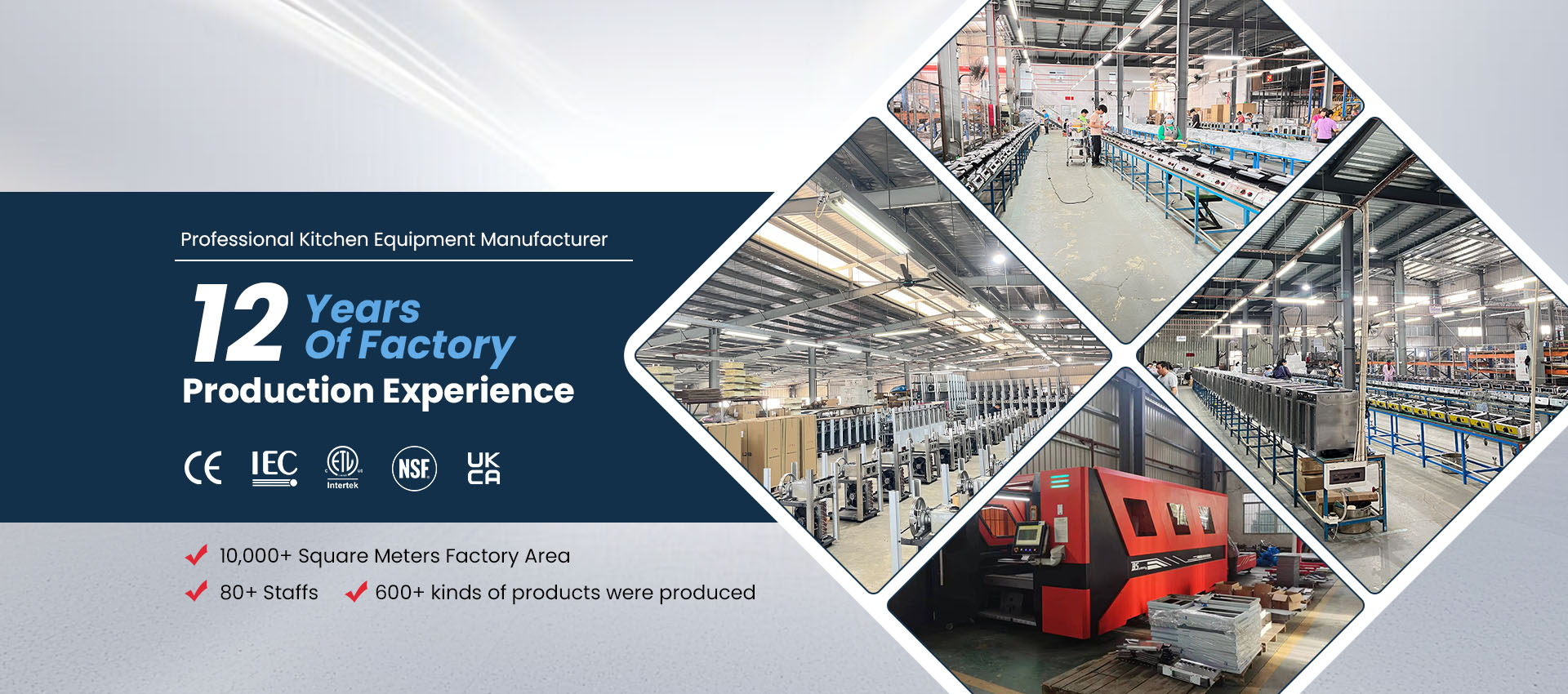
Commercial grill performance depends not only on product specifications but also on manufacturing expertise.
Experienced manufacturers understand:
Stainless steel fabrication
Heating system integration
Commercial kitchen requirements
Quality control processes
Professional manufacturing helps ensure that equipment delivers stable performance in demanding environments.
Why Is Choosing the Right Commercial Grill a Long-Term Investment?
A commercial grill is not only a cooking appliance but also an important part of restaurant operations.
The right equipment provides:
Improved cooking efficiency
More consistent food quality
Lower maintenance requirements
Longer service life
Better operational value
Selecting a grill based on features, quality, and application needs helps businesses achieve better long-term performance.
Conclusion: What Features Should Buyers Check Before Purchasing a Commercial Grill?
Before purchasing a commercial grill, buyers should evaluate heating performance, cooking surface quality, stainless steel construction, temperature control, safety features, cleaning design, and manufacturing quality.
A well-selected commercial grill helps restaurants improve efficiency, maintain consistent cooking results, and achieve reliable performance in demanding kitchen environments.