


How Do You Choose the Right Commercial Deep Fryer for Food Businesses?
The right commercial deep fryer should be selected based on frying capacity, heating performance, oil management, energy efficiency, safety features, and the specific needs of the food business.
Why Is Choosing the Right Commercial Deep Fryer Important?
A commercial deep fryer is a critical piece of equipment for restaurants, fast food businesses, hotels, catering operations, and food service facilities. It directly affects cooking speed, food consistency, oil usage, and daily kitchen efficiency.
Different food businesses have different frying requirements. A small cafe may need compact equipment for occasional frying, while a high-volume restaurant may require a larger fryer with faster recovery and higher production capacity.
Choosing the wrong fryer can lead to problems such as slow cooking speed, inconsistent food quality, excessive oil consumption, and increased operating costs.
Professional buyers should evaluate fryer performance based on actual menu requirements and kitchen conditions.
What Capacity Should a Commercial Deep Fryer Have?
Capacity is one of the first factors to consider when selecting a commercial deep fryer.
The right capacity depends on:
Daily food production volume
Peak service demand
Menu types
Available kitchen space
A larger fryer allows more food to be prepared at once, which is beneficial for high-volume operations.
However, oversized equipment may increase energy consumption and occupy unnecessary kitchen space. The ideal capacity should match the expected workload rather than simply choosing the largest available model.
How Does Heating Performance Affect Deep Fryer Efficiency?
Heating performance directly influences cooking speed and food quality.
A reliable commercial deep fryer should provide:
Fast heat-up capability
Stable oil temperature
Quick temperature recovery
Efficient energy use
When frozen or cold food is added, the oil temperature naturally drops. A fryer with strong heat recovery can restore the temperature quickly and maintain consistent frying results.
Stable heating helps improve productivity during busy operating periods.
Why Is Temperature Control Important for Commercial Fryers?
Accurate temperature control is essential for achieving consistent frying results.
Proper temperature management helps:
Maintain food texture
Prevent undercooking
Reduce excessive oil absorption
Improve product consistency
Different foods require different frying temperatures. A commercial fryer with reliable control systems allows operators to adjust settings according to menu requirements.
Consistent temperature performance is especially important for restaurants that need to maintain the same food quality across multiple batches.
What Oil Management Features Should Buyers Consider?
Oil quality directly affects food taste, operating costs, and kitchen efficiency.
Important oil management features include:
Efficient Filtration
Filtering systems help remove food particles and extend oil usability.
Easy Oil Drainage
A practical drainage design simplifies cleaning and oil replacement.
Oil Temperature Stability
Maintaining stable temperatures helps reduce unnecessary oil degradation.
Effective oil management can lower operating costs and improve overall kitchen performance.
What Materials Should a Quality Commercial Deep Fryer Use?
Material quality influences durability, hygiene, and long-term performance.
Buyers should consider:
Stainless steel construction
Material thickness
Welding quality
Surface finishing
Structural stability
Stainless steel is commonly used in commercial kitchens because it provides corrosion resistance and supports easier cleaning.
High-quality fabrication helps fryers withstand daily exposure to heat, oil, moisture, and frequent maintenance.
How Does Fryer Size Affect Kitchen Space and Workflow?
Kitchen space is an important consideration when selecting commercial cooking equipment.
Before purchasing, buyers should evaluate:
Available installation area
Operator movement space
Equipment placement
Ventilation conditions
A properly sized fryer improves workflow efficiency by allowing staff to operate comfortably without creating unnecessary congestion.
Good equipment planning helps restaurants create safer and more productive kitchens.
What Safety Features Should a Commercial Deep Fryer Have?
Safety is essential when working with high-temperature oil.
Important safety considerations include:
Stable equipment structure
Reliable temperature control
Safe operating design
Easy cleaning access
Proper heat management
Well-designed fryers help reduce operational risks and create safer working environments for kitchen staff.
How Do Different Food Businesses Choose Deep Fryers?
Different businesses have different fryer requirements.
| Business Type | Important Considerations |
|---|---|
| Fast Food Restaurants | High capacity and fast recovery |
| Cafes | Compact design and efficiency |
| Hotels | Large production capability |
| Catering Services | Flexible capacity and mobility |
| Food Processing Businesses | Continuous operation performance |
Selecting equipment based on business type helps improve productivity and reduce unnecessary investment.
How Can Buyers Compare Different Commercial Deep Fryer Models?
Before purchasing, buyers should compare products based on actual operational needs.
Important comparison factors include:
Production Capacity
Determine whether the fryer can support expected food volume.
Heating Efficiency
Evaluate heat-up speed and temperature recovery.
Maintenance Requirements
Consider cleaning procedures and long-term care.
Manufacturing Quality
Check materials, fabrication quality, and inspection processes.
A balanced evaluation helps buyers select equipment that provides better long-term value.
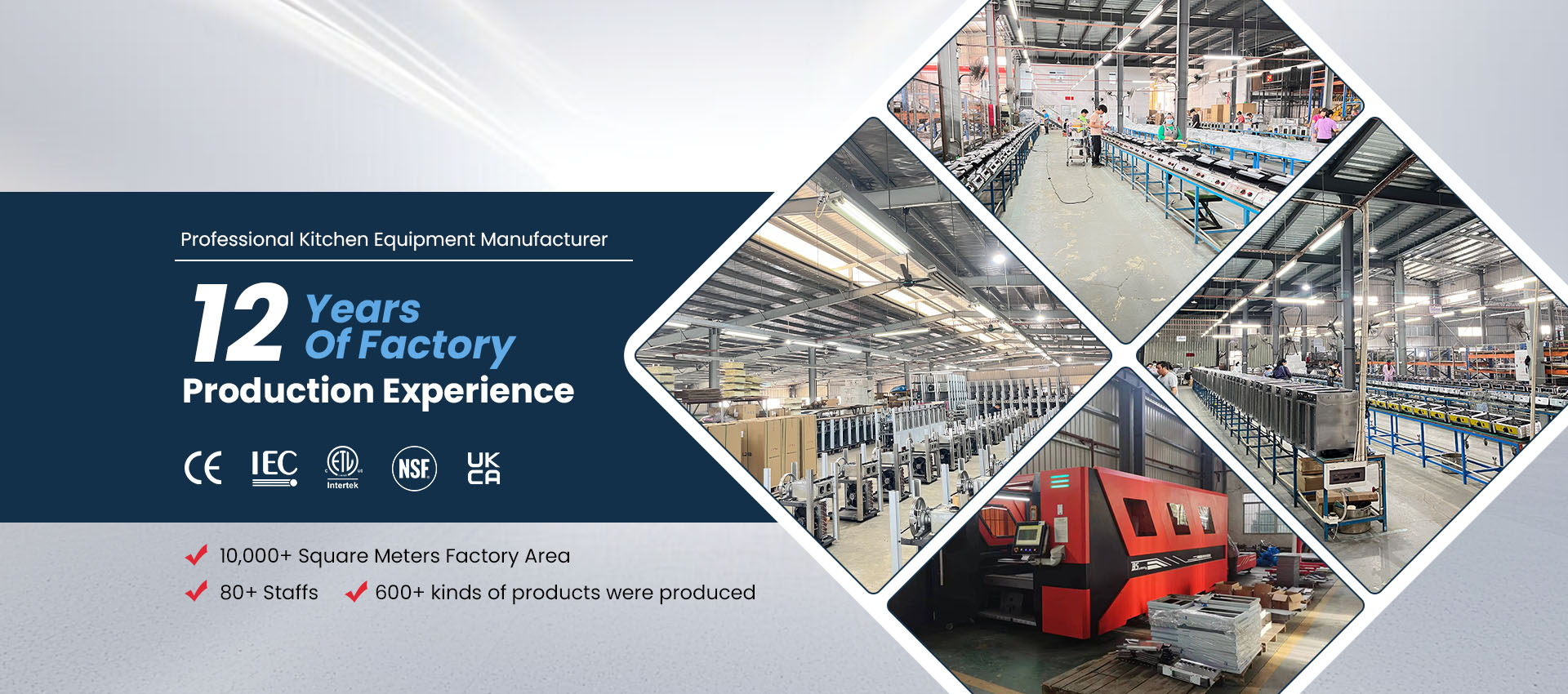
Why Does Manufacturer Experience Matter When Choosing a Deep Fryer?
commercial kitchen equipment requires professional manufacturing knowledge to achieve reliable performance.
Experienced manufacturers understand:
Stainless steel fabrication
Heating system design
Commercial kitchen requirements
Quality control processes
A manufacturer with strong production capability can provide more consistent equipment quality and better support for customized requirements.
Why Is the Right Commercial Deep Fryer a Long-Term Investment?
A commercial deep fryer is not only cooking equipment but also an important part of business efficiency.
The right fryer can provide:
Faster food preparation
More consistent cooking results
Better oil utilization
Lower maintenance requirements
Longer service life
For food businesses, selecting equipment that matches operational needs helps improve productivity and control long-term costs.
Conclusion: How Do You Choose the Right Commercial Deep Fryer for Food Businesses?
Choosing the right commercial deep fryer requires evaluating capacity, heating performance, temperature control, oil management, materials, safety features, and business requirements.
A properly selected fryer helps restaurants and food businesses improve cooking efficiency, maintain consistent food quality, and achieve reliable long-term performance.
Previous:
Next: How Do Manufacturers Test Commercial Griddle Performance?