


What Is the Best Way to Source Commercial Kitchen Equipment From China?
The best way to source commercial kitchen equipment from China is to select experienced manufacturers, verify production capability, confirm product requirements, control quality, and build reliable long-term cooperation.
Why Is Choosing the Right Sourcing Method Important?
China has become an important manufacturing base for commercial kitchen equipment, offering a wide range of products, flexible customization options, and competitive production capabilities.
However, successful sourcing requires more than finding a supplier with a low price. commercial kitchen equipment involves technical requirements related to materials, fabrication, heating systems, electrical components, safety standards, and long-term durability.
Poor supplier selection may lead to:
Inconsistent product quality
Delayed delivery
Compliance problems
Communication difficulties
Higher maintenance costs
A professional sourcing approach helps buyers find reliable manufacturers and reduce risks throughout the purchasing process.
Should Buyers Source Directly From Manufacturers or Trading Companies?
One of the first decisions when sourcing from China is choosing between manufacturers and trading companies.
Direct cooperation with manufacturers can provide advantages such as:
Better production control
More customization flexibility
Direct technical communication
Better understanding of manufacturing processes
Manufacturers with their own production capabilities can usually provide more detailed support regarding materials, product structures, and quality requirements.
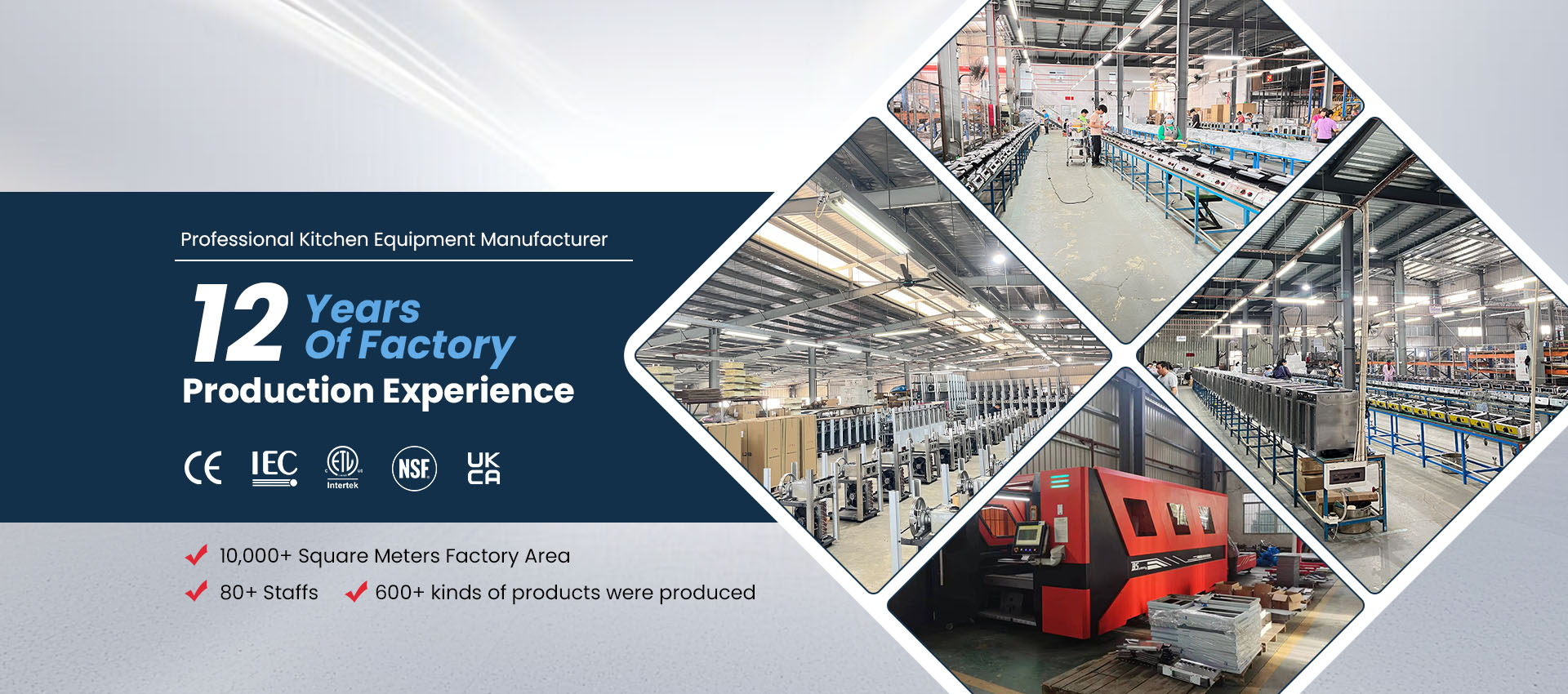
However, buyers should verify whether a supplier is a genuine manufacturer by reviewing factory information, production capability, and manufacturing experience.
How Can Buyers Find Reliable commercial kitchen equipment manufacturers?
Finding reliable suppliers requires systematic evaluation.
Common sourcing methods include:
Industry exhibitions
Professional B2B platforms
Manufacturer websites
Industry referrals
Online supplier research
After identifying potential suppliers, buyers should evaluate:
Manufacturing Experience
Check how long the company has produced commercial kitchen equipment.
Product Range
Review whether the supplier specializes in relevant equipment categories.
Export Capability
Confirm whether the manufacturer has experience serving international markets.
Factory Capability
Understand production processes, equipment, and quality systems.
A thorough supplier evaluation helps buyers avoid unreliable sources.
What Should Buyers Verify Before Placing an Order?
Before ordering commercial kitchen equipment, buyers should confirm detailed product information.
Important details include:
Equipment dimensions
Materials
Functions
Power specifications
Voltage requirements
Production capacity
Packaging standards
Delivery schedule
Clear communication at the beginning reduces misunderstandings during production.
Technical drawings, product specifications, and samples can help ensure both sides have the same expectations.
Why Is Factory Verification Important When Sourcing From China?
Factory verification helps buyers understand whether a supplier can actually deliver the required products.
Important verification points include:
Production Facilities
Check whether the factory has suitable equipment for fabrication and assembly.
Manufacturing Processes
Review processes such as cutting, welding, polishing, assembly, and testing.
Quality Control
Understand how the manufacturer manages product inspections.
Production Capacity
Evaluate whether the supplier can support expected order volumes.
A capable factory provides stronger confidence in product consistency and delivery reliability.
How Can Buyers Control Quality During Production?
Quality control should not wait until products are shipped.
Effective quality management includes:
Pre-Production Confirmation
Confirm specifications, materials, and production requirements before manufacturing begins.
During Production Inspection
Monitor important manufacturing stages to identify issues early.
Final Inspection
Check finished equipment before shipment.
Quality inspection may include:
| Inspection Area | Purpose |
|---|---|
| Material Check | Confirm specifications |
| Fabrication Check | Verify workmanship |
| Welding Inspection | Ensure structural quality |
| Function Testing | Confirm equipment performance |
| Appearance Review | Check finishing quality |
Production control reduces the risk of receiving unsuitable equipment.
Why Should Buyers Consider Customization Capability?
Commercial kitchens often have unique requirements based on:
Kitchen layout
Menu type
Production volume
Local operating conditions
Brand requirements
Manufacturers with customization ability can modify:
Equipment size
Structure
Functions
Surface finishing
Product configuration
Customization helps buyers receive equipment that better fits their actual business needs.
How Important Are Certifications When Sourcing Kitchen Equipment From China?
Certification requirements depend on the destination market and product category.
Buyers should confirm whether equipment requires:
Electrical safety certifications
Food contact compliance
Regional approvals
Technical documentation
Manufacturers with export experience usually understand different market requirements and can provide appropriate support.
Confirming compliance before production helps reduce customs and installation risks.
What Role Does Communication Play in Successful Sourcing?
Communication is one of the most important factors in international sourcing.
Clear communication should cover:
Product specifications
Design requirements
Production progress
Inspection arrangements
Shipping details
After-sales expectations
Good communication helps manufacturers better understand buyer requirements and reduces project delays.
How Should Buyers Handle Shipping and Delivery From China?
International shipping requires careful preparation.
Buyers should consider:
Equipment size and weight
Packaging methods
Transportation options
Delivery timeline
Import procedures
Professional manufacturers usually provide export packaging and shipping preparation to protect equipment during transportation.
Proper logistics planning helps ensure smoother delivery.
How Can Buyers Compare Different Suppliers?
Supplier comparison should focus on overall value rather than only price.
Important comparison factors include:
| Evaluation Factor | Importance |
|---|---|
| Manufacturing Capability | Determines production reliability |
| Product Quality | Affects equipment lifespan |
| Customization Ability | Supports project requirements |
| Export Experience | Reduces international purchasing risks |
| Service Support | Helps long-term operation |
The lowest quotation is not always the most cost-effective option. Reliability and long-term performance should also be considered.
What Common Mistakes Should Buyers Avoid When Sourcing From China?
Several mistakes can increase sourcing risks.
Choosing Only the Cheapest Supplier
Low prices may involve compromises in materials, quality, or service.
Not Verifying Factory Capability
Without verification, buyers may misunderstand supplier abilities.
Ignoring Technical Details
Unclear requirements may result in unsuitable products.
Skipping Quality Inspection
Problems may only appear after delivery.
Not Planning After-Sales Support
Lack of support may create difficulties during operation.
Avoiding these mistakes helps create a more successful sourcing process.
Why Is Long-Term Cooperation Valuable When Sourcing Equipment?
Commercial kitchen equipment is a long-term investment. Building relationships with reliable manufacturers creates additional value.
Long-term cooperation can provide:
Better communication
Faster problem solving
More efficient customization
Stable product quality
Improved purchasing efficiency
A trusted manufacturing partner becomes an important part of long-term business development.
Conclusion: What Is the Best Way to Source Commercial Kitchen Equipment From China?
The best way to source commercial kitchen equipment from China is to identify reliable manufacturers, verify factory capability, define product requirements clearly, control quality throughout production, and maintain effective communication.
A professional sourcing process helps international buyers obtain reliable equipment, reduce risks, and build long-term partnerships with experienced Chinese manufacturers.