


Heavy Duty Restaurant Equipment vs Standard Kitchen Equipment: Which Supports Higher Demand?
Heavy duty restaurant equipment is designed for continuous operation, higher production capacity, and demanding commercial environments, while standard kitchen equipment is better suited for lighter usage and smaller operations.
What Is the Difference Between Heavy Duty restaurant equipment and Standard Kitchen Equipment?
Heavy duty restaurant equipment and standard kitchen equipment may perform similar functions, but they are designed for different operating conditions.
The main difference is their ability to handle workload, frequency of use, and commercial requirements.
| Comparison Factor | Heavy Duty Restaurant Equipment | Standard Kitchen Equipment |
|---|---|---|
| Usage Frequency | Continuous commercial operation | Moderate daily use |
| Capacity | Higher production capability | Lower output capacity |
| Structure | Reinforced construction | Standard construction |
| Durability | Designed for long-term operation | Designed for lighter use |
| Application | Restaurants, hotels, catering | Small kitchens, limited operations |
Choosing the right equipment depends on business scale, menu demand, and expected workload.
Why Do High-Demand Restaurants Choose Heavy Duty Equipment?
Restaurants with large customer volumes require equipment that can maintain stable performance during long operating hours.
Heavy duty equipment provides advantages including:
Higher production capacity
Stronger structural performance
Better heat recovery
Longer service life
It is commonly used in:
Fast-food chains
Hotels
Catering businesses
Large restaurants
Commercial kitchens
For businesses with continuous orders, equipment reliability directly affects operational efficiency.
Why Is Standard Kitchen Equipment Used by Smaller Businesses?
Standard kitchen equipment is suitable for businesses with lower production requirements.
Its advantages include:
Lower investment cost
Compact design
Easier installation
Suitable performance for moderate use
It is commonly used in:
Small cafes
Small restaurants
Start-up food businesses
For businesses with limited demand, standard equipment can provide practical value without unnecessary investment.
Which Equipment Supports Higher Cooking Demand?
Cooking demand is one of the most important factors when selecting equipment.
Heavy duty restaurant equipment supports:
Large food quantities
Long operating hours
Peak service periods
Continuous production
Standard equipment supports:
Smaller batches
Lower customer volume
Shorter operating periods
For high-demand food businesses, heavy duty equipment generally provides better long-term performance.
How Does Equipment Capacity Affect Restaurant Efficiency?
Equipment capacity directly influences kitchen workflow.
Heavy duty equipment helps improve efficiency through:
Faster production
Reduced waiting time
Better support during busy periods
Consistent output
For example:
Commercial fryers with larger oil capacity support continuous frying.
Commercial griddles with stronger heating systems maintain cooking performance.
Commercial grills support repeated cooking cycles.
Matching equipment capacity with business demand helps avoid production limitations.
Why Is Durability Important for Commercial Kitchens?
Commercial kitchens operate under challenging conditions, including:
High temperatures
Frequent cleaning
Long working hours
Heavy daily usage
Heavy duty equipment is designed with:
Stronger materials
More durable components
Reinforced structures
Professional-grade designs
Standard equipment may not provide the same reliability under continuous commercial workloads.
Which Equipment Provides Better Long-Term Value?
Initial purchase cost is not the only factor when selecting kitchen equipment.
Heavy duty equipment may provide better long-term value through:
Reduced replacement frequency
Lower downtime risks
More stable performance
Better support for business growth
Standard equipment may have lower upfront costs but may not be suitable for businesses with rapidly increasing demand.
How Are Materials Different Between Heavy Duty and Standard Equipment?
Material selection affects equipment lifespan.
Heavy duty restaurant equipment often uses:
High-quality stainless steel
Strong structural components
Durable heating systems
These materials improve:
Corrosion resistance
Heat resistance
Structural strength
Long-term reliability
Standard equipment may use lighter materials because it is designed for less intensive operation.
Which Equipment Is Easier to Maintain?
Maintenance requirements depend on equipment design and usage.
Heavy duty equipment often includes:
Durable components
Easy-access maintenance structures
Professional cleaning designs
Standard equipment may be easier to manage because of its simpler structure.
However, heavy duty equipment can reduce maintenance frequency when used in demanding environments.
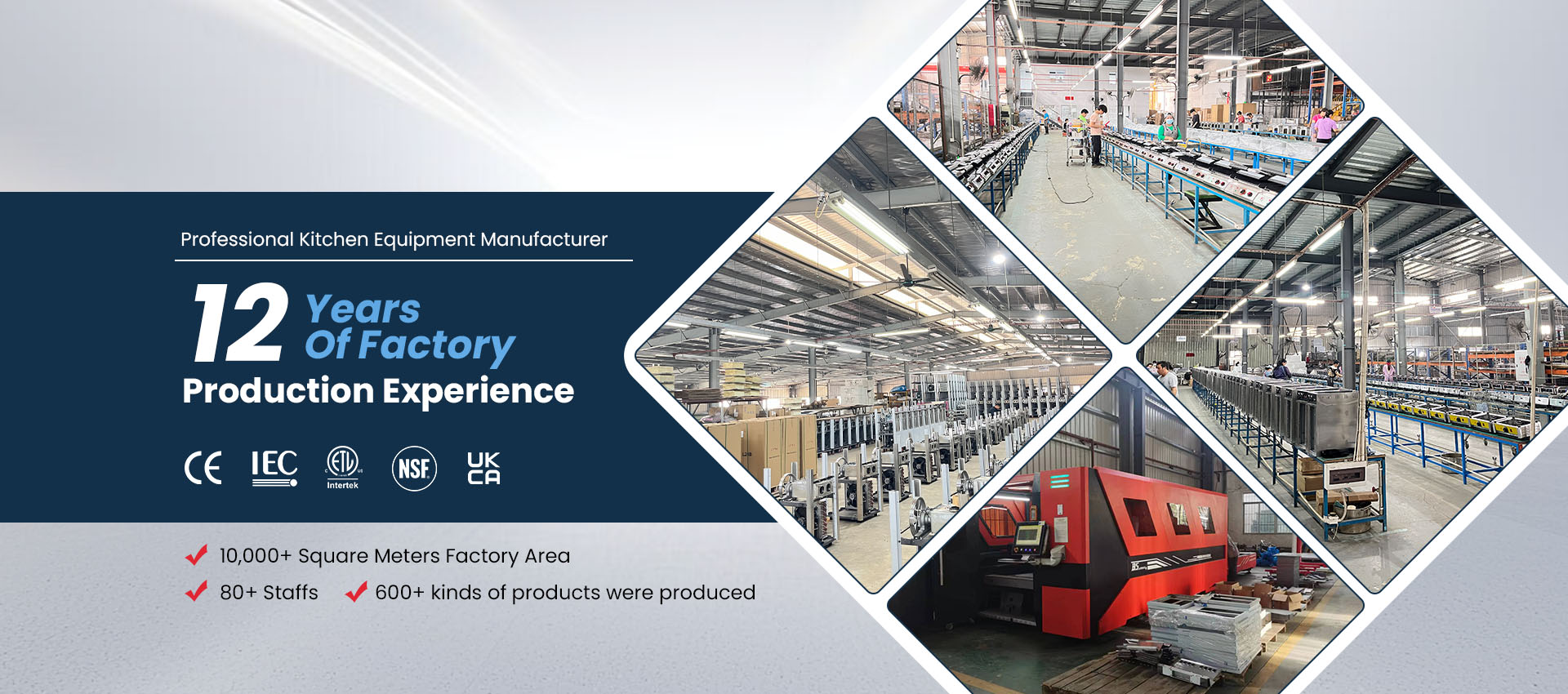
How Does Manufacturing Quality Affect Restaurant Equipment Performance?
Equipment category alone does not determine quality. Manufacturing processes directly affect reliability.
Professional production focuses on:
Material Inspection
Ensuring raw materials meet strength and durability requirements.
Welding Quality
Creating stable and long-lasting structures.
Heating System Testing
Checking temperature performance and efficiency.
Component Inspection
Ensuring reliable operation.
Final Quality Control
Confirming equipment performance before shipment.
For international buyers, selecting an experienced manufacturer helps reduce equipment risks.
How Do Manufacturers Test Heavy Duty Restaurant Equipment?
Professional testing includes:
Performance Testing
Checking cooking, heating, and operating functions.
Continuous Operation Testing
Evaluating equipment stability during extended use.
Safety Inspection
Confirming electrical, gas, and structural safety.
Durability Inspection
Checking components and construction quality.
Export Quality Inspection
Ensuring products meet international customer requirements.
These processes help commercial kitchens receive reliable equipment.
Which Equipment Is Better for Different Food Businesses?
| Business Type | Recommended Equipment |
|---|---|
| Small Cafe | Standard Kitchen Equipment |
| Small Restaurant | Standard or Medium Commercial Equipment |
| Fast Food Chain | Heavy Duty Restaurant Equipment |
| Hotel Kitchen | Heavy Duty Equipment |
| Catering Company | Heavy Duty Equipment |
| Large Restaurant | Heavy Duty Equipment |
The right equipment should match current workload and future business plans.
Should Restaurants Invest in Heavy Duty Equipment?
Heavy duty equipment is a better choice when businesses require:
High production capacity
Frequent daily operation
Long service life
Stable performance
Standard equipment may be more suitable when businesses require:
Lower investment
Moderate production
Smaller kitchen operations
Selecting equipment based on actual demand helps improve cost efficiency.
Heavy Duty Restaurant Equipment vs Standard Kitchen Equipment: Which Supports Higher Demand?
Heavy duty restaurant equipment provides stronger support for high-demand operations because it is designed for continuous use, larger production volumes, and more challenging commercial environments.
Standard kitchen equipment is suitable for smaller businesses with moderate workloads and lower production requirements.
The best choice depends on restaurant size, menu type, customer volume, and long-term operational goals.
Conclusion: Heavy Duty Restaurant Equipment vs Standard Kitchen Equipment: Which Supports Higher Demand?
Heavy duty and standard kitchen equipment serve different business needs.
Heavy duty restaurant equipment provides stronger durability, higher capacity, and better reliability for demanding food service operations.
Standard kitchen equipment offers practical solutions for smaller businesses with lighter workloads.
For restaurant owners and global buyers, selecting equipment based on actual demand helps improve efficiency, reduce operational risks, and support business growth.