


What Documentation Is Needed for International Gas Griddle Shipments?
Shipping a commercial Gas Griddle across borders is not just a logistics task. It is a compliance-driven process where documentation determines whether the product clears customs, enters the market, and passes inspection. For gas appliances, export market compliance is tightly linked to safety regulations, certification systems, and traceability requirements. According to EU regulations, manufacturers must maintain technical documentation and a Declaration of Conformity for at least 10 years after placing the product on the market, and authorities can request these documents at any time.
Core export documentation for gas griddles
For international shipments, documentation can be grouped into three layers: regulatory compliance, commercial shipping documents, and technical production records. Each layer supports a different part of the export process.
Regulatory compliance documents are the most critical. For EU shipments, CE marking is mandatory for gas appliances under Regulation EU 2016/426, which defines essential safety requirements and requires third-party conformity assessment.
Commercial shipping documents ensure customs clearance and transaction transparency.
Technical documents prove that the product is designed, tested, and manufactured according to required standards.
| Document Category | Key Documents | Purpose |
|---|---|---|
| Compliance | CE marking, EU Declaration of Conformity, test reports | Market access and legal compliance |
| Technical | Technical file, drawings, BOM, risk assessment | Proof of design and safety |
| Commercial | Invoice, packing list, bill of lading | Customs clearance and logistics |
| Quality | Inspection reports, QC checklist, test records | Shipment reliability and consistency |
CE documentation requirements for EU shipments
For gas griddles entering the EU, CE documentation forms the backbone of the export package. The CE process requires identifying all applicable directives, compiling technical documentation, and issuing a Declaration of Conformity.
A complete CE documentation package typically includes:
EU Declaration of Conformity with product identification and manufacturer details
Technical file describing design, materials, and safety measures
Risk assessment covering combustion, gas leakage, and temperature hazards
Test reports from notified bodies verifying compliance
Product labeling details including gas category and pressure
The technical file itself is a structured document set that demonstrates compliance with relevant directives and must include design drawings, material specifications, and test results.
Documentation expectations for the US market
Unlike the EU, the US does not rely on CE marking. Instead, documentation focuses on certification and traceability. Gas food service equipment is typically evaluated under recognized standards, and certification bodies provide testing, inspection, and approval services for global market access.
For US shipments, documentation often includes:
Certification reports aligned with gas appliance standards
Product specification sheets and installation manuals
Electrical and gas component certifications where applicable
Labeling documentation matching regulatory and buyer requirements
In many projects, sanitation documentation and material declarations are also requested, especially for food-contact equipment.
Manufacturer vs trader in documentation control
Documentation quality often reveals whether the supplier is a manufacturer or a trader. A manufacturer can generate and control the full documentation chain, from design drawings to final inspection reports. This is critical for OEM gas griddle projects where specifications change across markets.
A trader may provide basic certificates, but gaps can appear in technical files, revision records, or production traceability. For bulk supply considerations, missing documentation can delay shipments, trigger re-inspection, or even cause customs rejection.
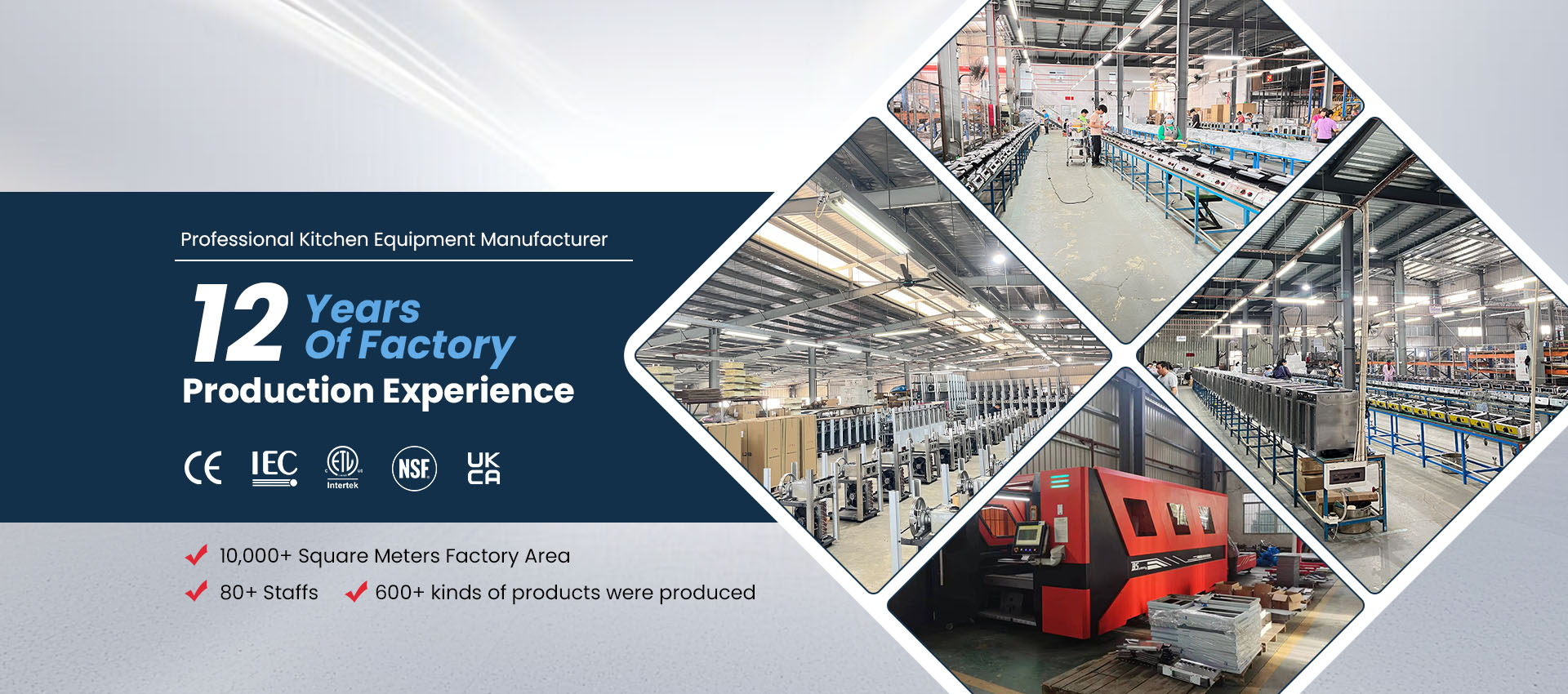
Dingfeng operates as a factory-based manufacturer with integrated production capabilities. Its structured production environment allows alignment between engineering design, certification files, and actual manufacturing output. This is essential for maintaining consistency between approved samples and large-scale shipments.
OEM / ODM process and documentation alignment
In OEM and ODM projects, documentation is not static. Every change in burner configuration, gas type, ignition system, or control layout may affect compliance. That is why documentation must evolve together with product development.
A reliable OEM process includes:
Design confirmation linked to certification scope
Updated technical file for each model variation
Controlled bill of materials for certified components
Label and manual adaptation for target markets
Without this alignment, even small design changes can invalidate previous certifications or require re-testing.
Manufacturing process overview and quality checkpoints
Documentation is closely tied to the manufacturing process overview. Each stage of production generates records that support compliance and shipment approval.
Typical quality control checkpoints include:
Incoming material inspection for stainless steel and gas components
Welding and assembly verification based on approved drawings
Gas leakage testing and combustion performance checks
Final inspection with labeling and documentation verification
Under the Gas Appliances Regulation, conformity assessment includes laboratory testing and ongoing production surveillance to ensure continued compliance.
These checkpoints are not only internal quality measures. They directly support export documentation such as inspection reports, test records, and shipment certificates.
Material standards and traceability documentation
Material standards used in gas griddles must be documented clearly. Stainless steel grades, surface treatments, and food-contact components must meet regulatory expectations. Documentation typically includes:
Material certificates for stainless steel components
Supplier declarations for critical parts
Surface treatment and coating specifications
Traceability records linking materials to production batches
This level of detail is often required in project sourcing checklists, especially for commercial kitchen installations and large procurement contracts.
Practical checklist before shipment
Before releasing a gas griddle shipment for export, documentation should be reviewed as a complete package:
Confirm target market compliance documents are complete
Verify technical file matches the shipped model
Ensure labeling and manuals align with certification
Check inspection and testing records are included
Confirm commercial documents match shipment details
Export success depends on whether documentation, design, and production remain consistent from sample approval to final delivery.
International gas griddle shipments are not just about moving products. They are about proving compliance, ensuring traceability, and delivering repeatable quality through a controlled manufacturing system.