


How To Select A Commercial Waffle Maker for Restaurant Use
Selecting a commercial Waffle Maker for restaurant use starts with service reality, not with appearance. The right machine should match daily volume, menu style, kitchen workflow, cleaning standards, and long-term replacement planning. Commercial selection guides note that single waffle makers are better suited to lower-volume operations focused on presentation, while double waffle makers are often the better fit for medium-volume restaurant use because they balance speed and consistency more effectively.
Start with restaurant volume and menu structure
The first step is to define how waffles fit into the menu. If waffles are a signature plated item served in moderate numbers, a single-unit machine may be enough. If they are part of a breakfast program, brunch line, or dessert menu with repeated orders, output capacity becomes more important. One commercial guide breaks restaurant demand into under 50 waffles per day for lower-volume use, 50 to 200 waffles per day for medium-volume use, and 200 or more waffles per day for high-volume operations. That framework is useful because it turns equipment selection into a measurable production decision instead of a guess.
For most restaurant applications, a double-unit commercial waffle maker is often the most practical choice. The same guide notes that double waffle makers offer the best balance of quality and efficiency for many restaurant environments, especially where service speed matters but full production equipment is unnecessary.
Choose the waffle style before choosing the machine
A restaurant should also decide what type of waffle it wants to serve. Thick Belgian waffles, sandwich waffles, and novelty formats all require different plate structures and different cooking behavior. Dingfeng’s waffle maker category includes 38 waffle-related products, including belgian waffle machines, sandwich waffle makers, and specialty-shape models, which shows that the best commercial waffle maker depends on the intended menu direction rather than one universal machine style.
Dingfeng’s 2 Grids Commercial Belgian Waffles Machine is clearly positioned for restaurant-scale service. Its product page describes it as a robust appliance for high-volume production of thick Belgian waffles, with two large deep-grid plates, commercial-grade stainless steel construction, and a 1.6 kW configuration intended for commercial kitchen use.
Temperature control is one of the most important features
In restaurant operations, consistent temperature control matters more than almost any cosmetic feature. A commercial guide states directly that consistent temperature control is the most critical feature in a commercial waffle maker, because even heat distribution determines whether every waffle reaches the same color, texture, and finish.
Dingfeng’s Belgian waffle machine includes an adjustable temperature thermostat and power indicator light, while its sandwich waffle machine adds an adjustable thermostat and built-in digital timer for more precise cycle control. Those features are valuable in restaurant use because they reduce guesswork during peak periods and make output easier to standardize across staff shifts.
Plate material and coating affect daily performance
The next point to review is plate construction. Commercial equipment guidance notes that cast aluminum grids are the most common choice for commercial waffle makers because they provide excellent heat distribution and stand up well to heavy use. The same reference also notes that non-stick coated surfaces improve cleanup, support more consistent release, and reduce the need for extra fats or oils, though the coating should be inspected regularly over time.
Dingfeng’s Belgian waffle machine uses precision-cast aluminum plates with a non-stick Teflon surface, and its sandwich waffle model uses heavy-duty aluminum plates with a non-stick coating as well. For restaurants, this combination is practical because it supports even browning, faster release, and shorter cleanup cycles between batches.
Housing strength matters in commercial kitchens
A restaurant waffle maker is opened, closed, heated, cleaned, and moved repeatedly. That makes body material and hinge durability more important than they may seem on a product page. Dingfeng describes its Belgian waffle machine as having a heavy-duty exterior made from commercial-grade stainless steel, with heavy-gauge housing and components rated for continuous operation. Its sandwich waffle machine also uses a brushed stainless steel exterior and commercial-grade housing designed for frequent use.
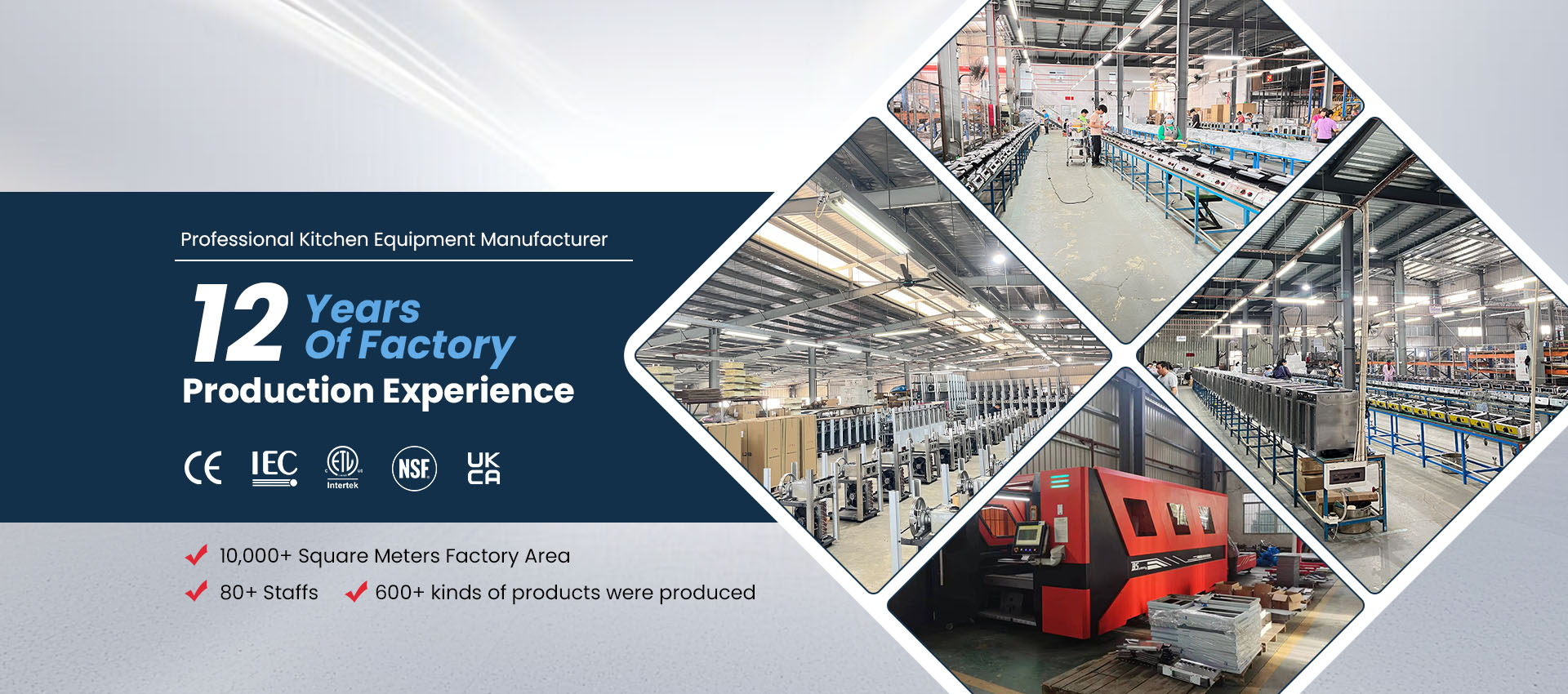
This is one place where manufacturer vs trader becomes important. A true manufacturer is more likely to control the housing material, hinge structure, and assembly consistency across repeated batches, while a trader may depend on changing upstream suppliers for the same-looking model. For restaurant buyers planning repeat orders or chain expansion, stable construction quality matters more than a one-time low quotation. Dingfeng’s factory profile supports this manufacturer position, stating that it operates a modern factory of over 10,000 square meters with more than 80 trained employees and more than 1,000 product types produced.
Electrical setup should fit restaurant installation
Commercial waffle makers also need to match the restaurant’s electrical conditions. One commercial buying guide notes that standard specifications often include 120V models for many restaurant applications, 15 to 20 amp circuits, around 1800 to 2000 watts for single waffle makers, and around 3000 to 3600 watts for double waffle makers. It also recommends dedicated circuits, adequate ventilation, stable surfaces, and proper clearance for safe operation.
That is why project sourcing should include more than the machine itself. The buyer should confirm voltage, frequency, installation area, and intended operating hours before approving a model. Dingfeng’s Belgian waffle machine is listed at 220 to 240V and 1.6 kW, so destination-market versioning should be reviewed carefully in any OEM or export order.
OEM and ODM capability helps long-term restaurant programs
For restaurant groups, distributors, or private-label projects, the OEM and ODM process matters as much as the base machine. Branding, plug type, packaging, language, control layout, and even plate shape may need to be adapted to the target market or concept. Dingfeng’s broad waffle maker category and its factory investment in CNC punching, cutting, bending, and welding equipment suggest stronger support for product development and technical adaptation than a simple catalog reseller.
A supplier with real development capability is usually better at keeping those changes under control. That reduces the risk of one batch performing differently from the approved sample.
A practical comparison for restaurant selection
| Selection point | What to check | Why it matters |
|---|---|---|
| Daily output | Single or double unit | Matches peak-hour demand |
| Waffle format | Belgian, sandwich, specialty | Determines menu fit |
| Temperature control | Thermostat, timer, even heating | Supports consistent results |
| Plate material | Cast aluminum with non-stick coating | Improves browning and cleanup |
| Housing | Stainless steel commercial body | Better for repeated use |
| Supplier type | Manufacturer rather than trader | Stronger batch consistency |
| Electrical fit | Voltage, power, circuit needs | Avoids installation problems |
The strongest commercial choice is usually the machine that fits real restaurant workflow while staying easy to maintain and reproduce in future orders.
What buyers should confirm before placing the order
A practical project sourcing checklist should cover menu type, expected daily volume, plate format, thermostat control, body material, electrical configuration, cleaning convenience, and supplier manufacturing capability. It should also review quality control checkpoints, because coating condition, plate alignment, heat consistency, and final inspection all affect long-term restaurant performance.
For restaurant use, the best commercial waffle maker is not simply the largest or the cheapest model. It is the one that aligns with the menu, handles peak demand without losing consistency, and comes from a manufacturer that can support stable supply over time. Dingfeng’s combination of factory scale, broad waffle maker range, stainless steel construction, cast aluminum plates, and commercial control features makes it a stronger fit for restaurant-oriented waffle equipment sourcing.