


What Else Can You Cook in A Waffle Maker
A Waffle Maker is commonly known for producing classic breakfast waffles, but commercial waffle makers can offer much more value in professional kitchens. With the right design, heating system and cooking plates, this equipment can support different food applications and help restaurants, cafés and snack businesses expand their menus.
According to the National Restaurant Association, menu flexibility and operational efficiency are important factors for foodservice businesses when improving profitability. Multi-purpose commercial kitchen equipment allows operators to create more food options while reducing the need for additional equipment investment.
As a professional commercial kitchen equipment manufacturer, we focus on developing reliable equipment solutions with stable performance, practical designs and customization support for different foodservice applications.
More Than Traditional Waffles: Expanding Food Applications
A commercial waffle maker can be used for many food applications beyond standard waffles. The final cooking result depends on equipment structure, temperature control and the selected cooking plate design.
| Food Application | Advantages |
|---|---|
| Traditional Waffles | Consistent shape and fast production |
| Sandwich Products | Quick heating and pressed texture |
| Hash Browns | Crispy surface with even cooking |
| Cookies and Desserts | Efficient preparation for snack menus |
| Specialty Snacks | Supports creative menu development |
For cafés, hotels and snack shops, using versatile equipment can help improve kitchen efficiency while providing more choices for customers.
How Restaurants Can Maximize A Commercial Waffle Maker
Different foodservice businesses have different requirements for equipment performance.
Cafés and dessert shops usually focus on product appearance, consistency and easy operation. A professional commercial waffle maker should provide accurate temperature control, durable materials and convenient cleaning features.
Fast-food restaurants often require equipment that can handle continuous operation. Stable heating performance and strong construction help maintain consistent production during busy service periods.
Hotels and catering businesses may need flexible equipment solutions that support different menu items during breakfast services, events and large-scale food preparation.
Selecting equipment based on the actual menu and workflow helps improve long-term efficiency.
Manufacturer vs Trader: Why Production Capability Matters
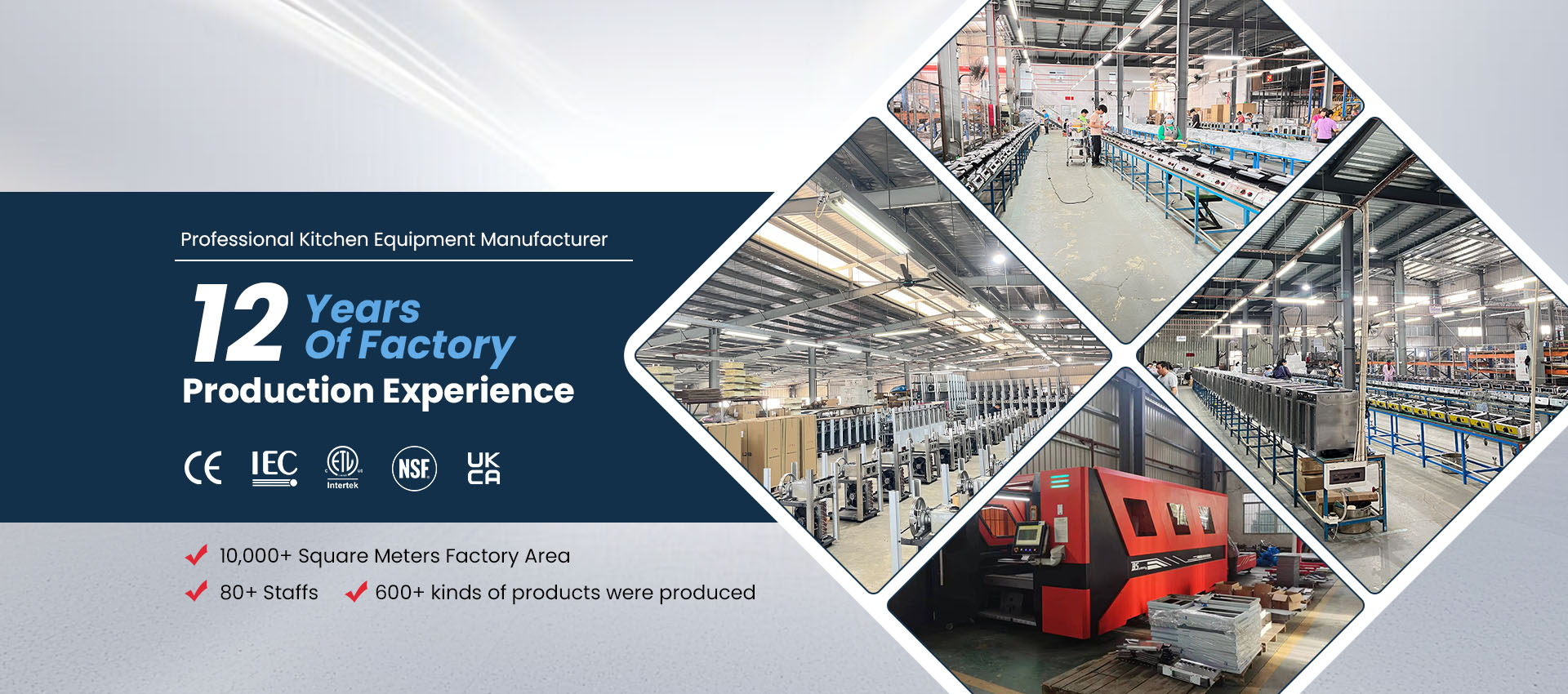
When purchasing commercial kitchen equipment, choosing a manufacturer with direct production capability provides better control over quality, customization and delivery.
A factory-based commercial kitchen equipment manufacturer can manage:
Product design and engineering development
Material selection and processing
Production scheduling
Quality inspections
OEM and ODM customization
Compared with traders who mainly coordinate orders, manufacturers have deeper knowledge of equipment structures and production processes. This allows them to provide more professional suggestions for product selection and customization.
With our own manufacturing experience, we support customers with reliable foodservice equipment solutions designed for different market requirements.
OEM And ODM Process For Customized Equipment
Different markets may require different equipment specifications due to menu concepts, electrical standards and customer preferences.
A professional OEM and ODM process usually includes:
Requirement analysis
Product design confirmation
Prototype testing
Production adjustment
Mass manufacturing
Quality inspection before shipment
Customization options may include product appearance, logo printing, packaging design, voltage specifications and functional adjustments.
This flexibility helps create equipment that matches different restaurant concepts and regional requirements.
Manufacturing Process And Material Standards
The manufacturing process directly affects equipment durability, safety and service life. Reliable commercial kitchen equipment requires strict control from raw material inspection to final production.
A complete manufacturing process includes:
Stainless steel material inspection
Metal cutting and forming
Welding and surface finishing
Component installation
Electrical testing
Final product inspection
Material selection is also essential for foodservice equipment. Stainless steel is widely used because of its corrosion resistance, durability and easy cleaning characteristics. The U.S. Food and Drug Administration recognizes stainless steel as a commonly used material for food equipment due to its hygienic performance.
High-quality materials and controlled manufacturing processes help ensure equipment can withstand frequent commercial use.
Quality Control For Consistent Performance
Commercial kitchen equipment must deliver stable results every day. Quality control should cover every production stage instead of only checking finished products.
Important quality control checkpoints include:
| Production Stage | Inspection Focus |
|---|---|
| Raw Material Inspection | Material quality and specifications |
| Production Process | Assembly accuracy and manufacturing consistency |
| Function Testing | Heating performance and operation stability |
| Final Inspection | Appearance, safety and packaging quality |
For bulk supply projects, consistent quality control helps ensure every unit performs reliably after installation.
Bulk Supply Considerations For Restaurant Projects
Large-scale restaurant projects require more than product availability. Production capacity, delivery planning and packaging protection are equally important.
Before confirming bulk orders, key factors should be evaluated:
Factory production capacity
Quality consistency between batches
Lead time management
Export packaging standards
After-sales support
A professional manufacturer with structured production management can provide more stable supply support for different project sizes.
Export Compliance Requirements For Global Markets
Commercial kitchen equipment supplied internationally must meet different market requirements. Electrical standards, safety regulations and documentation requirements may vary depending on the destination country.
Important export considerations include:
Voltage and frequency requirements
Safety testing standards
Product documentation
Packaging protection
Installation guidance
Manufacturers with international export experience can help reduce compliance risks and improve delivery efficiency.
Creating More Value With Versatile Kitchen Equipment
A commercial waffle maker is not limited to making traditional waffles. With suitable design and reliable performance, it can support different food applications and become an important part of a professional kitchen.
Choosing the right equipment requires evaluating manufacturing capability, customization services, material quality and long-term supply reliability.
As a commercial kitchen equipment manufacturer, we provide cooking equipment, Snack Equipment and customized foodservice solutions. Through OEM and ODM support, controlled manufacturing processes and strict quality inspections, we help restaurants, cafés and catering projects build efficient and reliable kitchen operations.