


What Are the Most Important Factors When Buying Restaurant Equipment?
Buying restaurant equipment is a long-term investment that directly affects kitchen efficiency, food quality, maintenance costs, and daily operations. Many businesses focus only on equipment prices, but a reliable commercial kitchen requires a more comprehensive evaluation. Choosing the right commercial kitchen equipment manufacturer means considering product quality, manufacturing capability, customization service, compliance standards, and after-sales support.
According to data from the U.S. Bureau of Labor Statistics, food preparation and serving businesses rely heavily on efficient equipment to maintain productivity because labor costs represent one of the largest operating expenses in the foodservice industry. A well-designed kitchen with dependable equipment can help reduce operational delays and improve workflow efficiency.
As a professional restaurant equipment manufacturer, DINGFENG focuses on providing practical foodservice solutions, including cooking equipment, Snack Equipment, Refrigeration Equipment, and customized kitchen solutions for different commercial applications.
Manufacturer vs Trader: Why Factory Capability Matters
When purchasing restaurant equipment, the supplier type is one of the first factors to evaluate. A trading company may provide multiple product choices, but a direct manufacturer offers deeper control over product design, production quality, customization, and delivery management.
Working with a commercial kitchen equipment manufacturer provides several advantages:
Direct communication with engineers and production teams
Better control over material selection and manufacturing standards
Flexible OEM and ODM solutions
More stable bulk supply capability
Faster response for technical adjustments
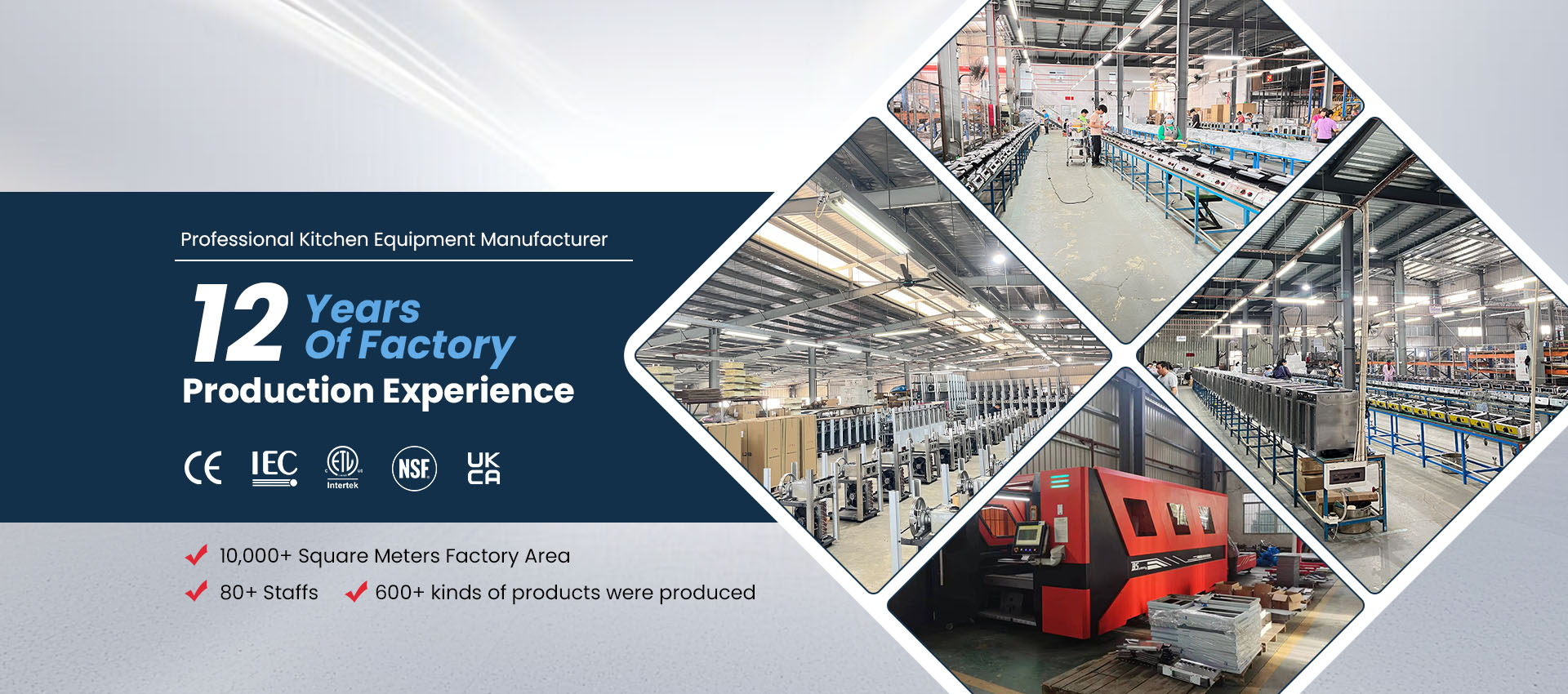
A factory understands every production step, from stainless steel cutting and welding to assembly and performance testing. This allows manufacturers to improve product reliability instead of simply distributing finished products.
For example, DINGFENG controls the production process of equipment such as the Commercial Gas Griddle from material processing to final inspection, ensuring consistent performance for professional kitchens. (DINGFENG)
Key Factors To Consider When Selecting Restaurant Equipment
Before purchasing equipment, it is important to evaluate several technical and commercial factors.
| Evaluation Factor | Why It Matters |
|---|---|
| Material Quality | Determines durability, corrosion resistance, and service life |
| Heating Performance | Ensures stable cooking temperature and efficiency |
| Manufacturing Process | Influences product consistency and reliability |
| Safety Standards | Supports safe operation in commercial kitchens |
| Customization Capability | Helps match different kitchen layouts and requirements |
| Supply Capacity | Ensures stable delivery for large projects |
The material standard is especially important for commercial kitchen environments. Stainless steel is widely used because it offers strong corrosion resistance, easy cleaning, and durability under frequent operation. Equipment surfaces must handle heat, moisture, grease, and intensive daily use.
OEM and ODM Process For Customized Kitchen Equipment
Different restaurants, hotels, and foodservice projects often have unique requirements for equipment size, voltage, appearance, and functions. This makes OEM and ODM capability an important consideration when selecting a supplier.
A professional OEM process usually includes:
Requirement discussion and technical confirmation
Product design adjustment
Prototype development and sample testing
Production preparation
Mass manufacturing and quality inspection
For ODM projects, manufacturers can provide deeper support by participating in product structure optimization, function improvements, and appearance design.
DINGFENG provides customized solutions based on different application scenarios, helping customers develop equipment that matches their kitchen workflow, regional standards, and market requirements.
Bulk Supply Considerations For Large Kitchen Projects
For restaurant chains, distributors, and commercial kitchen projects, supply stability is as important as product quality.
A reliable commercial kitchen equipment supplier should have:
Stable production capacity
Standardized manufacturing procedures
Complete quality inspection systems
Professional export packaging
Efficient communication during production
Bulk supply requires more than producing large quantities. Each unit needs to maintain the same performance level. Manufacturing consistency helps reduce installation problems and maintenance costs after delivery.
Manufacturing Process Overview and Quality Control
The manufacturing process directly determines equipment reliability. A professional factory should have clear production control at every stage.
Typical production procedures include:
Raw Material Inspection Steel sheets, heating components, electrical parts, and other materials are checked before production.
Metal Fabrication Cutting, bending, welding, and polishing processes shape the equipment structure.
Component Assembly Engineers install heating systems, control components, and functional parts according to technical standards.
Performance Testing Finished equipment is tested for heating stability, electrical safety, operational functions, and appearance quality.
According to international manufacturing quality practices, process control and inspection checkpoints are essential methods for reducing product defects and improving consistency.
DINGFENG applies strict quality control throughout production, ensuring each commercial kitchen equipment unit meets performance expectations before shipment.
Export Compliance and Project Sourcing Checklist
For international purchasing, equipment compliance is another key factor. Different markets may require specific electrical specifications, safety requirements, and documentation.
Before confirming a supplier, a project sourcing checklist should include:
Product specifications and technical drawings
Voltage and power requirements
Material standards
Packaging requirements
Certification requirements
Production timeline
Inspection procedures
A manufacturer with export experience can help avoid communication problems and ensure equipment matches destination market requirements.
Choosing The Right Restaurant Equipment Partner
The best restaurant equipment choice is not simply the product with the lowest price. Long-term value comes from combining reliable manufacturing, quality materials, customization capability, and stable supply support.
As an experienced foodservice equipment manufacturer, DINGFENG continues to optimize production processes, improve quality control, and provide professional solutions for commercial kitchens worldwide. From individual equipment supply to customized kitchen projects, manufacturing capability remains the foundation for dependable performance.