


How to Compare Different Commercial Kitchen Equipment Suppliers
Selecting the right supplier for restaurant equipment is a critical decision that affects kitchen performance, operating efficiency, and long-term maintenance costs. Many buyers compare suppliers mainly by price, but professional kitchens require more than affordable equipment. Factors such as manufacturing capability, product consistency, customization support, quality control, and export experience should all be carefully evaluated.
According to the National Restaurant Association, foodservice operators continue to invest in equipment upgrades to improve efficiency and adapt to changing operational demands. A reliable commercial kitchen equipment supplier should not only provide products but also offer stable manufacturing support throughout the entire cooperation process.
As a professional commercial kitchen equipment manufacturer, DINGFENG focuses on developing and producing cooking equipment, Snack Equipment, Refrigeration Equipment, and complete foodservice solutions. With independent production capabilities and experience in international markets, DINGFENG helps customers achieve more reliable equipment sourcing.
Manufacturer vs Trader: Understanding Supplier Differences
The first step when comparing suppliers is understanding whether you are working with a manufacturer or a trader. Although both can provide commercial kitchen equipment, their capabilities are different.
A trader usually focuses on product distribution and supplier coordination, while a manufacturer controls the production process directly. Working with a factory provides better transparency in product development, material selection, production scheduling, and quality inspection.
A direct restaurant equipment manufacturer can provide:
Direct communication with engineering teams
More flexible OEM and ODM options
Better control over production standards
More stable bulk supply capability
Faster response to technical requirements
For example, DINGFENG manufactures products such as the Professional Stainless Steel Gas Griddle through controlled production processes, including material preparation, fabrication, assembly, and inspection. This manufacturing approach helps maintain consistent performance for commercial kitchens. (DINGFENG)
Evaluate Manufacturing Capability Before Choosing A Supplier
A reliable supplier should have clear manufacturing capabilities rather than only product catalogs. Factory size, production equipment, technical team, and production experience are important indicators of supplier reliability.
When comparing commercial cooking equipment manufacturers, consider the following:
| Evaluation Area | Key Points To Review |
|---|---|
| Factory Capability | Production area, equipment, workforce, manufacturing experience |
| Product Development | Engineering support and customization ability |
| Production Process | Internal control of cutting, welding, assembly, and testing |
| Quality Management | Inspection procedures and product consistency |
| Export Experience | Compliance support and international shipping knowledge |
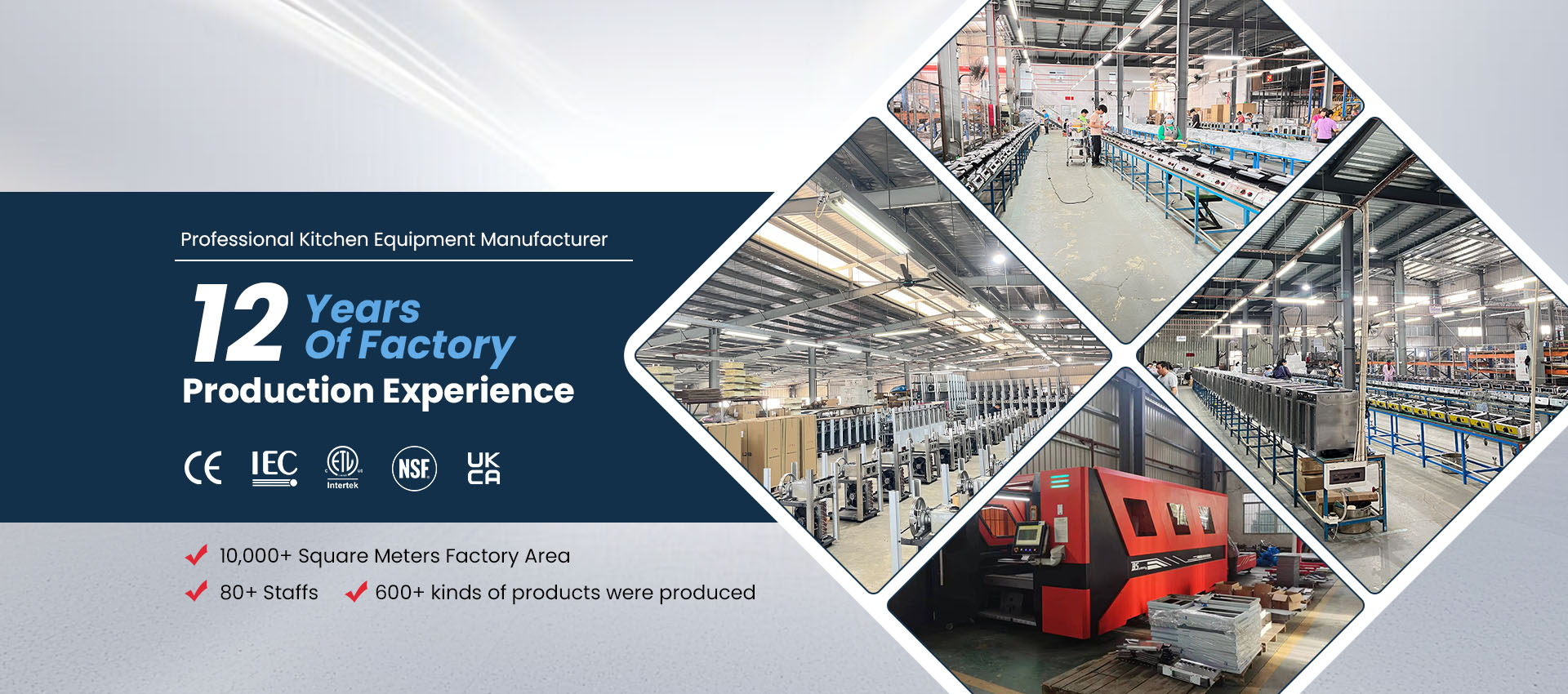
DINGFENG operates a modern production facility with professional processing equipment including CNC punching, cutting, bending, and welding machines. The company has developed more than 1,000 product models covering different commercial kitchen applications. (DINGFENG)
OEM and ODM Process Comparison
Customization capability is another important factor when selecting a supplier. Different markets may require different product designs, electrical specifications, branding methods, or packaging solutions.
A professional OEM process usually includes:
Requirement confirmation
Technical evaluation
Prototype or sample development
Production preparation
Quality inspection before shipment
ODM projects require deeper cooperation because manufacturers participate in product improvement and design optimization.
A capable OEM commercial kitchen equipment manufacturer should support adjustments such as:
Product dimensions
Control panel design
Logo customization
Voltage and plug specifications
Packaging requirements
Compared with suppliers that only resell standard products, manufacturers with engineering teams can better manage customization risks and improve project efficiency.
Bulk Supply Considerations For Commercial Projects
For large restaurant projects, distributors, and foodservice operations, supply stability is often more important than initial pricing.
A suitable bulk supply commercial kitchen equipment supplier should have:
Stable raw material sourcing
Standardized production procedures
Consistent product specifications
Reliable production schedules
Professional export packaging
Bulk orders require strict production control because even small differences between equipment batches can affect installation and operation. Manufacturers that maintain production records and technical drawings can reproduce the same product specifications more accurately for future orders.
DINGFENG supports large-volume supply by integrating production management, quality inspection, and export preparation within its manufacturing system. This helps improve delivery stability for different commercial kitchen projects. (DINGFENG)
Project Sourcing Checklist For Equipment Buyers
Before selecting a supplier, creating a clear sourcing checklist can reduce project risks.
Important evaluation points include:
Product Requirements
Equipment type and application
Size and installation requirements
Power or gas specifications
Material requirements
Supplier Capability
Factory ownership
Production capacity
Customization experience
Quality control system
Compliance Requirements
Product certifications
Safety standards
Export documentation
Packaging requirements
Service Support
Technical communication
Sample confirmation
Production updates
After-sales support
A structured sourcing process helps ensure that the selected supplier can support the complete project lifecycle.
Manufacturing Process Overview and Quality Control
Understanding the manufacturing process is an effective way to compare equipment suppliers. A professional factory should have clear production procedures from raw materials to finished products.
The typical manufacturing process includes:
Material Preparation High-quality stainless steel and functional components are inspected before production.
Metal Fabrication Cutting, bending, welding, and surface finishing create the equipment structure.
Component Assembly Heating systems, control components, and other parts are installed according to technical specifications.
Performance Testing Finished equipment is tested for operation stability, heating performance, safety, and appearance quality.
Quality control checkpoints are essential for commercial equipment because these products often operate continuously in demanding kitchen environments.
DINGFENG applies multiple inspection procedures during production to ensure equipment performance and reliability before shipment. (DINGFENG)
Material Standards Used In Commercial Kitchen Equipment
Material selection directly influences equipment durability, hygiene, and maintenance requirements.
Commercial kitchen equipment commonly uses stainless steel because it provides:
Strong corrosion resistance
Easy cleaning performance
Long service life
Better resistance to heat and moisture
For cooking equipment such as griddles and fryers, the thickness and quality of metal components influence heat stability and structural strength. A professional manufacturer should clearly understand how different materials affect product performance.
DINGFENG designs commercial equipment with durable stainless steel structures to meet the requirements of restaurants, catering businesses, and professional kitchens.
Export Market Compliance Capability
For international sourcing, compliance experience is another important comparison factor. Different countries may have different requirements for electrical systems, gas configurations, labeling, and documentation.
A reliable foodservice equipment manufacturer should understand export requirements and provide support with:
Product specifications
Certification documents
Packaging standards
Market-specific adjustments
Manufacturers with international experience can reduce communication problems and help ensure smoother delivery processes.
Choosing A Long-Term Commercial Kitchen Equipment Partner
Comparing suppliers is not only about finding the lowest price. The right supplier should combine manufacturing strength, customization ability, quality control, and export experience.
A professional commercial kitchen equipment supplier should provide confidence throughout the entire process, from product design and production to final delivery.
With factory-controlled manufacturing, OEM and ODM capabilities, strict inspection procedures, and a wide range of foodservice equipment, DINGFENG continues to provide reliable kitchen solutions for global commercial applications.