


What Production Processes Ensure Reliable Restaurant Equipment Quality
Reliable restaurant equipment quality does not come from a single inspection at the end of production. It depends on a complete manufacturing system that controls every stage, from product design and material selection to fabrication, assembly, testing, and shipment preparation.
Commercial kitchen equipment operates under demanding conditions, including high temperatures, continuous operation, moisture exposure, and frequent cleaning. According to NSF commercial food equipment standards, the materials, design, fabrication, construction, and performance of foodservice equipment all influence safety and reliability.
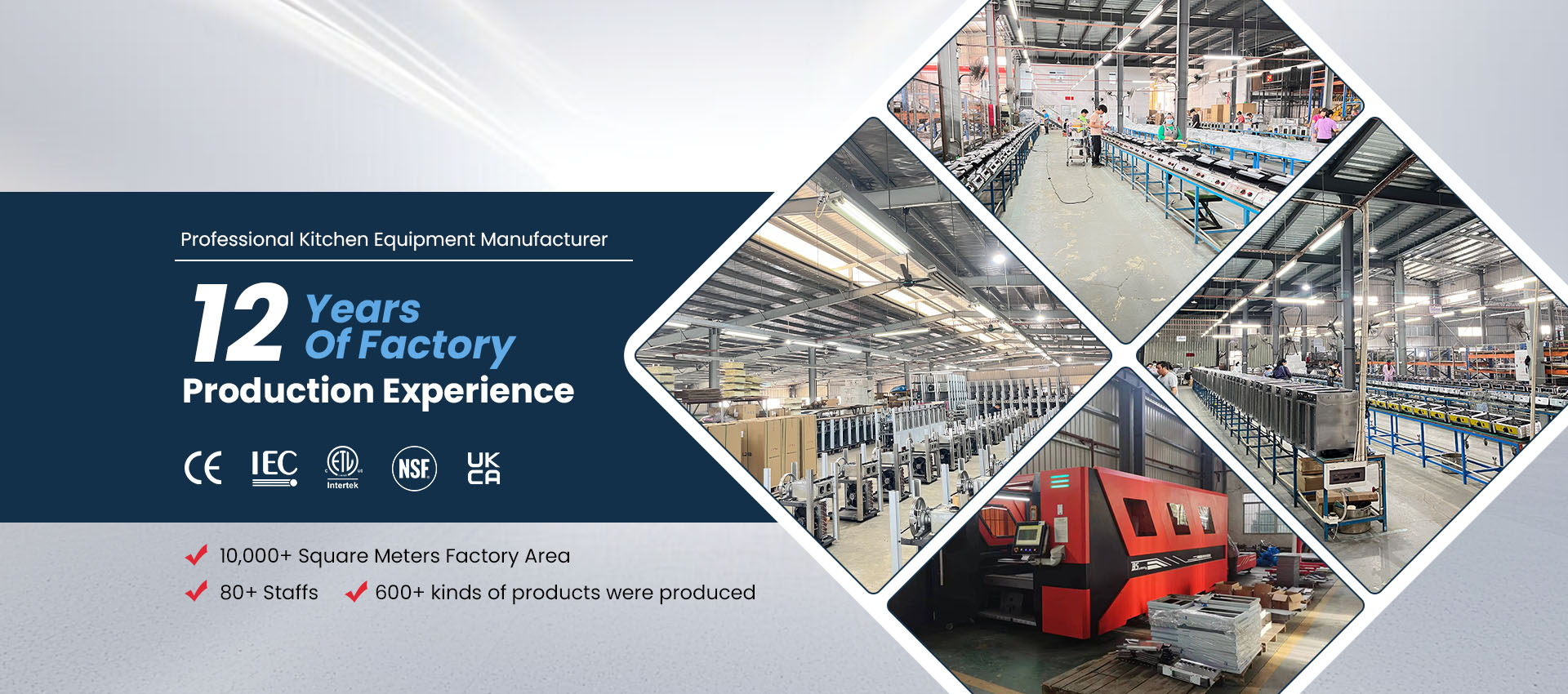
As an experienced commercial kitchen equipment manufacturer, DINGFENG focuses on producing cooking equipment, Snack Equipment, Refrigeration Equipment, and customized foodservice solutions. Through standardized production processes and strict quality control, DINGFENG helps restaurants and commercial kitchens achieve stable equipment performance and long-term operational value.
Product Design And Engineering Evaluation Come First
Before manufacturing begins, professional factories evaluate product structure, application requirements, and technical details. A well-designed product reduces production risks and improves reliability during daily operation.
Unlike a trader who mainly coordinates products from different sources, a manufacturer controls the engineering process directly. This allows production teams to optimize equipment structures based on actual usage environments.
The design stage usually includes:
Product function analysis
Structural optimization
Material selection planning
Manufacturing feasibility evaluation
Prototype improvement
For OEM and ODM projects, engineering evaluation becomes even more important because customized equipment needs to match specific kitchen layouts, power requirements, and operating conditions.
A professional OEM commercial kitchen equipment manufacturer should have the ability to transform customer requirements into practical production solutions.
Material Selection Determines Equipment Durability
Material quality is one of the most important factors affecting restaurant equipment performance. Commercial kitchens require equipment that can withstand heat, humidity, grease, and intensive cleaning.
Stainless steel is widely used in foodservice equipment because of its corrosion resistance, durability, and easy cleaning characteristics.
Important material evaluation factors include:
| Material Factor | Quality Impact |
|---|---|
| Stainless Steel Grade | Influences corrosion resistance and service life |
| Material Thickness | Affects structural strength |
| Surface Treatment | Improves hygiene and cleaning performance |
| Component Quality | Determines equipment stability |
For cooking equipment such as griddles, fryers, and grills, material selection directly influences heating efficiency, structural durability, and maintenance requirements.
DINGFENG carefully selects commercial-grade materials and integrates material inspection into the production process to ensure equipment reliability.
Precision Fabrication Creates Stable Structures
After material confirmation, manufacturing enters the fabrication stage. This process determines the accuracy, strength, and appearance of commercial kitchen equipment.
A professional commercial kitchen equipment manufacturer should control fabrication procedures internally, including:
Cutting Process
Metal sheets are cut according to engineering drawings to ensure accurate dimensions.
Bending Process
Precision bending creates stable structures while maintaining product strength.
Welding Process
Professional welding ensures strong connections and reduces structural weaknesses.
Surface Finishing
Polishing and finishing improve appearance, durability, and cleaning efficiency.
A factory with complete fabrication capabilities can better maintain product consistency compared with suppliers that depend on multiple external manufacturers.
DINGFENG uses professional processing equipment and standardized fabrication procedures to support stable production quality.
Assembly Process Ensures Functional Performance
After fabrication, individual components are assembled into complete equipment.
The assembly process includes:
Installing heating systems
Connecting electrical components
Checking control systems
Adjusting functional parts
Verifying structural stability
Each component must work together correctly to ensure reliable operation.
For example, commercial cooking equipment requires accurate temperature control, stable heating performance, and durable structures because it often operates continuously during busy kitchen hours.
DINGFENG produces equipment such as the Professional Stainless Steel Gas Griddle through controlled manufacturing procedures, ensuring each production stage meets commercial application requirements.
Quality Control Checkpoints Protect Product Reliability
A reliable production system does not wait until the final stage to identify problems. Quality control should be integrated throughout the entire manufacturing process.
Key inspection checkpoints include:
| Quality Control Stage | Inspection Focus |
|---|---|
| Incoming Material Inspection | Verify material specifications and quality |
| Fabrication Inspection | Check cutting accuracy and welding quality |
| Assembly Inspection | Confirm correct installation |
| Performance Testing | Verify operational functions |
| Final Inspection | Check appearance and shipment condition |
Important testing procedures include:
Material Inspection
Ensures raw materials meet manufacturing requirements before production.
Structural Inspection
Checks welding strength, frame stability, and fabrication accuracy.
Functional Testing
Tests heating performance, electrical systems, temperature control, and operational safety.
Final Quality Inspection
Confirms product appearance, accessories, packaging, and documentation before delivery.
DINGFENG applies multiple quality checkpoints throughout production to improve consistency and reduce potential equipment issues.
Manufacturing Process Overview For Bulk Supply
Large commercial kitchen projects require more than product availability. They need stable production capacity and consistent quality across every batch.
A reliable bulk supply commercial kitchen equipment supplier should have:
Standardized manufacturing procedures
Stable production scheduling
Consistent product specifications
Complete quality inspection systems
Professional packaging processes
Bulk manufacturing requires strict process management because every unit should maintain the same structure, performance, and appearance.
A manufacturer with internal production control can better support repeated orders and large-scale kitchen projects.
OEM And ODM Production Management Improves Flexibility
OEM and ODM capabilities show the technical strength of a factory.
A complete customization process usually includes:
Requirement confirmation
Engineering review
Sample production
Testing and improvement
Mass manufacturing
Final inspection
Through OEM and ODM services, manufacturers can adjust:
Product dimensions
Functional configurations
Electrical specifications
Appearance design
Packaging requirements
DINGFENG supports customized commercial kitchen solutions by combining engineering experience with production capability.
Export Compliance Ensures International Reliability
Commercial kitchen equipment supplied to different markets may require different standards for electrical systems, safety requirements, documentation, and packaging.
A professional factory should understand:
Destination market requirements
Product certification needs
Shipping protection standards
Technical documentation
Export experience helps manufacturers prepare products correctly and reduce risks during transportation and installation.
DINGFENG focuses on international market requirements and provides commercial kitchen equipment solutions supported by professional manufacturing management.
Project Sourcing Checklist For Evaluating Factory Capability
Before selecting a supplier, a complete evaluation can help identify reliable manufacturing partners.
| Evaluation Area | Key Questions |
|---|---|
| Factory Capability | Does the supplier control production internally? |
| Engineering Ability | Can OEM and ODM projects be supported? |
| Material Standards | Are commercial-grade materials used? |
| Manufacturing Process | Are procedures standardized? |
| Quality Control | Are inspection checkpoints established? |
| Export Experience | Can international requirements be handled? |
A professional manufacturer should demonstrate capability in every stage, from product development to final delivery.
Building Reliable Equipment Through Manufacturing Excellence
High-quality restaurant equipment is the result of a complete manufacturing system. Design capability, material standards, fabrication accuracy, assembly control, testing procedures, and export experience all contribute to long-term reliability.
As a professional foodservice equipment manufacturer, DINGFENG combines factory-controlled production, OEM and ODM capabilities, strict quality management, and comprehensive manufacturing processes to provide reliable commercial kitchen solutions for global customers.