


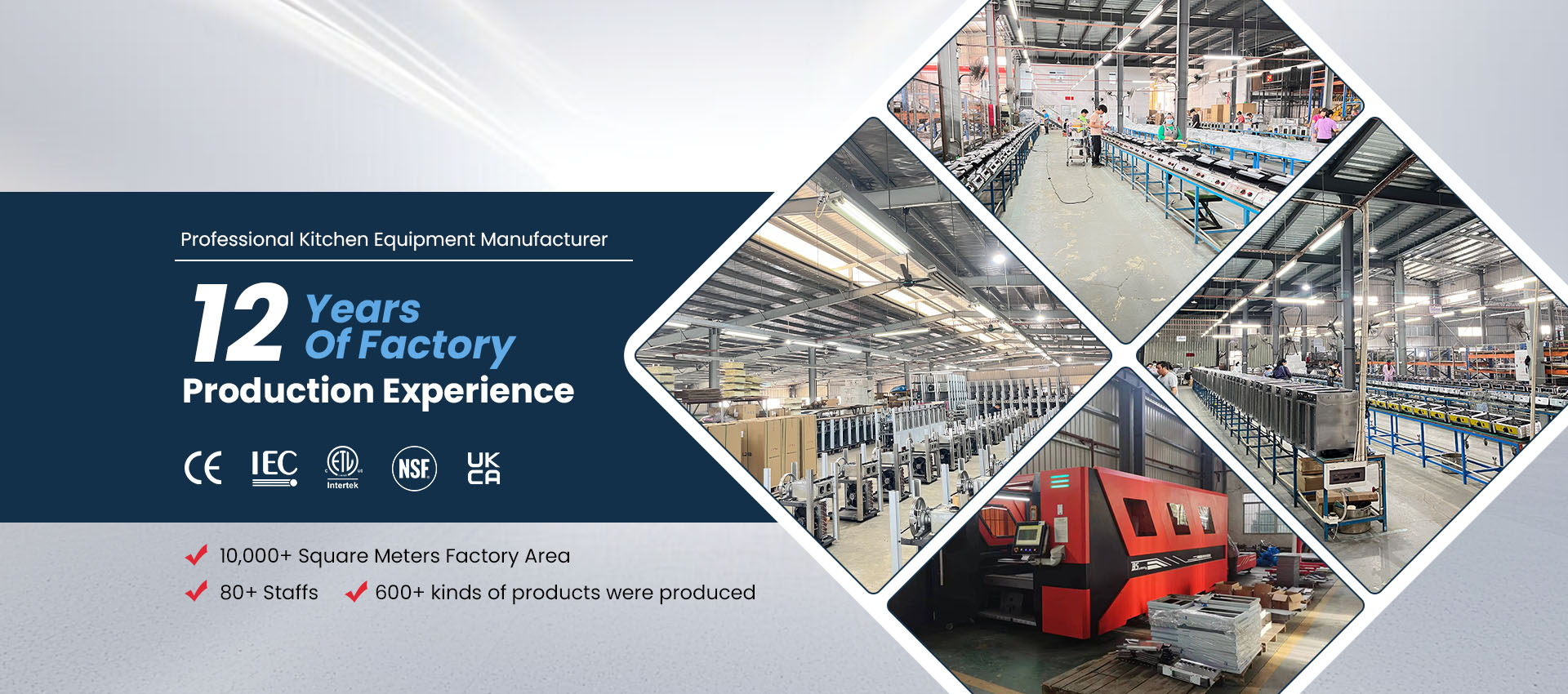
How to Evaluate the Manufacturing Capability of Kitchen Equipment Suppliers
Choosing a reliable kitchen equipment supplier requires more than checking product catalogs and prices. The real difference between suppliers often comes from manufacturing capability, production control, engineering experience, and quality management systems.
For commercial kitchens, equipment needs to operate under high temperatures, heavy workloads, moisture exposure, and frequent cleaning. A supplier with strong manufacturing capability can provide better product consistency, customization support, and long-term supply stability. According to NSF commercial food equipment standards, professional food equipment quality depends on factors such as materials, design, construction methods, sanitation, and performance testing.
As an experienced commercial kitchen equipment manufacturer, DINGFENG focuses on developing and producing cooking equipment, Snack Equipment, Refrigeration Equipment, and customized foodservice solutions. By controlling production processes from material selection to final inspection, DINGFENG provides stable equipment solutions for restaurants, catering projects, and commercial kitchens worldwide.
Manufacturer vs Trader: Understanding Real Production Capability
The first step in evaluating a supplier is identifying whether the company is a real manufacturer or mainly a trading company.
A trader can provide product sourcing services, but a factory-based supplier controls the actual production process. This difference becomes especially important when projects involve customization, bulk orders, or long-term supply requirements.
A professional restaurant equipment manufacturer should have control over:
Product engineering and design
Material purchasing
Production scheduling
Manufacturing procedures
Quality inspection
Technical improvement
A manufacturer can communicate directly with production teams when adjustments are required, reducing delays caused by multiple communication channels.
DINGFENG manages its own manufacturing operations and integrates engineering, production, and quality management to improve product consistency.
Evaluate Factory Production Capacity
A supplier’s production capacity directly affects delivery reliability. A professional factory should have sufficient equipment, production space, and experienced workers to handle different order volumes.
When evaluating manufacturing capability, consider:
| Evaluation Area | Key Questions |
|---|---|
| Factory Size | Does the facility support stable production? |
| Production Equipment | Are professional machines used? |
| Workforce | Are skilled technicians available? |
| Production Lines | Can multiple projects be handled? |
| Capacity Planning | Can bulk orders be completed on time? |
A strong commercial kitchen equipment supplier should demonstrate not only production quantity but also the ability to maintain consistent quality during continuous manufacturing.
DINGFENG uses professional processing equipment and standardized workflows to support different commercial kitchen equipment projects.
Check The Manufacturing Process Overview
A reliable supplier should have a clear and controlled manufacturing process. Production capability is reflected in every stage, from raw materials to finished products.
The typical manufacturing process includes:
| Production Stage | Main Purpose |
|---|---|
| Engineering Design | Confirm product structure and requirements |
| Material Preparation | Select suitable commercial-grade materials |
| Metal Fabrication | Complete cutting, bending, and welding |
| Assembly | Install functional components |
| Testing | Verify performance and safety |
| Packaging | Protect equipment during transportation |
Process qualification is important in manufacturing because it confirms that production methods can consistently achieve required quality standards during commercial production.
DINGFENG follows structured manufacturing procedures to ensure each equipment unit meets performance expectations before shipment.
Review Material Standards Used By The Factory
Materials determine the durability and performance of commercial kitchen equipment.
A professional commercial cooking equipment manufacturer should clearly understand how materials influence product quality.
Important material factors include:
Stainless steel grade
Material thickness
Welding quality
Surface treatment
Component durability
Stainless steel is widely used in professional kitchen equipment because it provides corrosion resistance, durability, and easy cleaning performance.
A reliable factory should have a material management system that includes:
Supplier evaluation
Incoming material inspection
Storage control
Production traceability
DINGFENG applies material inspection procedures before production to ensure equipment meets commercial kitchen requirements.
Assess OEM And ODM Capability
Customization ability is an important indicator of manufacturing strength.
Many commercial kitchen projects require adjustments based on:
Kitchen space
Cooking workflow
Local electrical standards
Branding requirements
Packaging needs
A professional OEM commercial kitchen equipment manufacturer should provide a complete development process:
Requirement analysis
Engineering evaluation
Product design adjustment
Sample production
Testing confirmation
Mass manufacturing
OEM focuses on producing equipment according to specific requirements, while ODM involves deeper cooperation where manufacturers participate in product improvement and optimization.
DINGFENG provides OEM and ODM solutions by combining engineering experience with factory production capabilities.
Check Quality Control Checkpoints
Manufacturing capability is closely connected with quality management. A factory that only focuses on output quantity may struggle to maintain consistency.
A professional quality control system should include:
| Quality Checkpoint | Inspection Focus |
|---|---|
| Incoming Inspection | Verify raw materials and components |
| Production Inspection | Check fabrication accuracy |
| Assembly Inspection | Confirm installation quality |
| Functional Testing | Verify equipment operation |
| Final Inspection | Approve shipment condition |
Quality control is a systematic process that maintains production standards through inspection, testing, and verification of manufacturing factors.
DINGFENG integrates quality checkpoints throughout production to reduce potential defects and improve equipment reliability.
Evaluate Bulk Supply Capability
For large restaurant projects, distributors, and commercial kitchen installations, production scalability is essential.
A reliable bulk supply commercial kitchen equipment supplier should have:
Stable material supply
Standardized production procedures
Consistent product specifications
Efficient scheduling systems
Professional packaging capability
Bulk production requires more than increasing output. Every unit should maintain the same structure, function, and appearance.
A factory with mature production management can better support repeated orders and large-scale projects.
Confirm Export Market Compliance Experience
International equipment supply requires understanding different market requirements.
A professional manufacturer should have experience with:
Product documentation
Electrical specifications
Safety requirements
Packaging standards
Shipping preparation
Commercial food equipment certification programs often evaluate product safety, sanitation, and performance requirements for different markets.
DINGFENG focuses on international market requirements and provides commercial kitchen equipment solutions with professional export preparation.
Project Sourcing Checklist For Evaluating Suppliers
Before selecting a supplier, a complete evaluation checklist can help identify real manufacturing capability.
| Category | Evaluation Questions |
|---|---|
| Factory Capability | Does the supplier own production facilities? |
| Manufacturing Process | Are production stages controlled internally? |
| Materials | Are commercial-grade materials used? |
| Quality Control | Are inspection procedures established? |
| Customization | Can OEM and ODM projects be supported? |
| Supply Ability | Can bulk orders be managed effectively? |
| Export Experience | Can international requirements be handled? |
A supplier that performs well in these areas is more likely to provide stable quality and reliable long-term support.
Choosing A Supplier Through Manufacturing Strength
The best kitchen equipment supplier is not simply the one with the largest product catalog or lowest price. Real manufacturing capability comes from engineering expertise, production control, quality systems, and supply chain management.
Choosing a professional foodservice equipment manufacturer provides better control over customization, product consistency, and delivery reliability.
With factory-controlled manufacturing, OEM and ODM capabilities, strict quality inspection procedures, and a complete commercial kitchen equipment range, DINGFENG continues to provide reliable solutions for restaurants, catering projects, and foodservice applications worldwide.