


What Buyers Should Know About Commercial Kitchen Equipment Supply Chains
The supply chain behind commercial kitchen equipment is more complex than simply manufacturing and shipping products. From raw materials and component sourcing to production management, quality inspection, and export preparation, every stage influences equipment quality, delivery stability, and long-term performance.
For restaurants, catering projects, and foodservice businesses, understanding how a commercial kitchen equipment manufacturer manages its supply chain helps evaluate whether a supplier can provide consistent products and reliable support.
According to supply chain research from the U.S. Census Bureau, manufacturing supply chains involve multiple stages, including foreign trade, production activities, movement of goods, and supplier relationships. Effective supply chain management is essential for maintaining manufacturing efficiency and reducing operational risks.
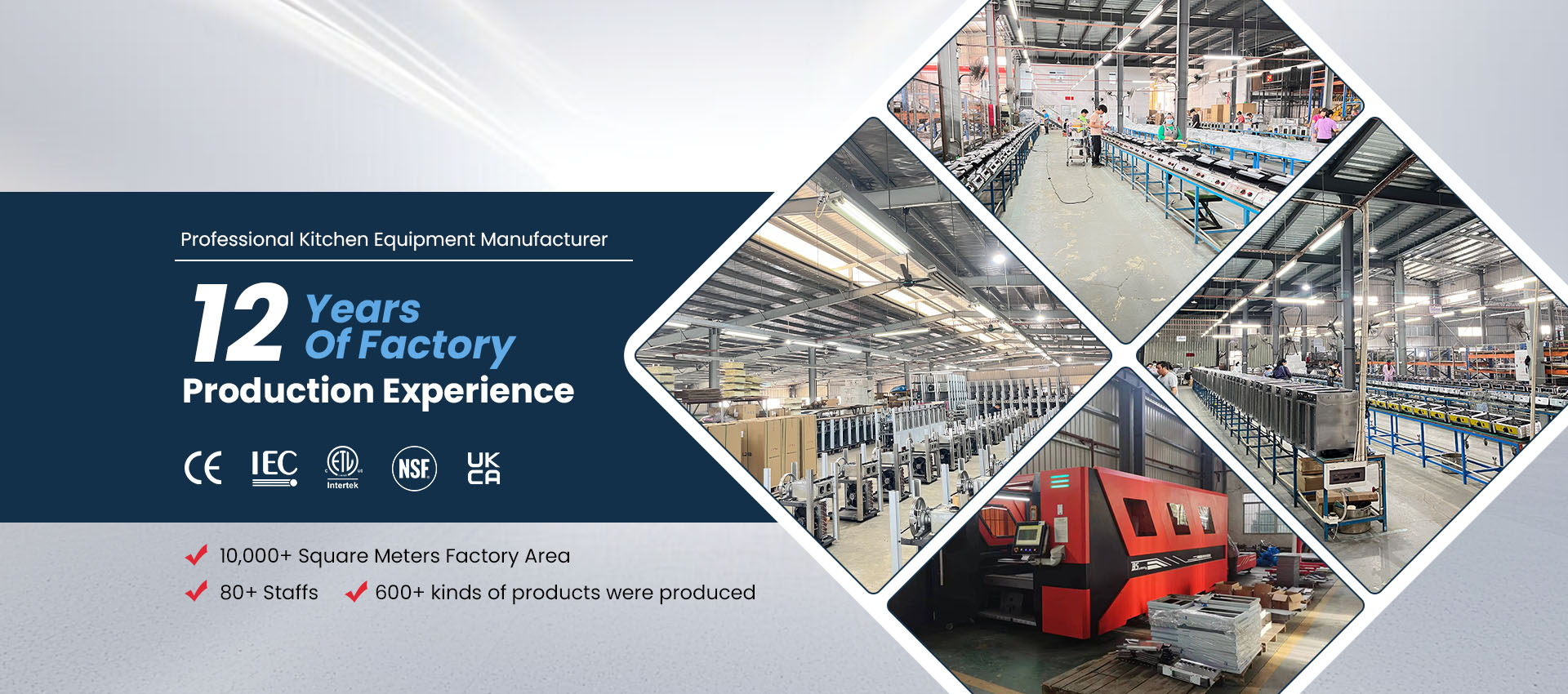
As an experienced restaurant equipment manufacturer, DINGFENG manages commercial kitchen equipment production through factory-controlled processes, including material selection, product manufacturing, quality inspection, and export preparation. This integrated approach helps ensure stable supply for different commercial kitchen applications.
Understanding The Difference Between Manufacturer And Trader
The first thing to understand about the supply chain is the role of the supplier.
A trader mainly connects products from different sources, while a manufacturer controls the production process directly. This difference becomes especially important when dealing with customized projects, bulk orders, and long-term supply requirements.
A direct commercial kitchen equipment supplier with manufacturing capability can better manage:
Raw material selection
Production scheduling
Product customization
Quality standards
Delivery planning
Technical communication
Working directly with a manufacturer provides better visibility into how equipment is produced and how quality is controlled.
DINGFENG manages its own manufacturing process, allowing engineering teams and production departments to work closely together during product development and production.
Raw Material Supply Is The Foundation Of Equipment Quality
The first stage of the supply chain begins with material selection. Commercial kitchen equipment requires materials that can withstand heat, moisture, grease, and frequent cleaning.
Stainless steel is commonly used in professional kitchen equipment because of its corrosion resistance, durability, and easy maintenance characteristics.
A reliable commercial cooking equipment manufacturer should carefully manage:
| Supply Chain Stage | Quality Control Focus |
|---|---|
| Material Purchasing | Select qualified raw materials |
| Incoming Inspection | Verify material specifications |
| Storage Management | Prevent damage before production |
| Production Preparation | Ensure materials match requirements |
Material control directly affects equipment performance. Poor-quality materials can lead to structural problems, corrosion issues, or reduced service life.
DINGFENG integrates material inspection into the manufacturing process to ensure production begins with qualified components.
How Manufacturers Manage Production Processes
After materials are prepared, manufacturers transform components into finished equipment through a structured production system.
A professional manufacturing process overview usually includes:
Engineering Review
Before production, engineers confirm product specifications, drawings, and technical requirements.
Metal Fabrication
Production teams complete:
Cutting
Bending
Welding
Polishing
These processes determine equipment strength, accuracy, and appearance quality.
Component Assembly
Technicians install:
Heating systems
Electrical components
Control systems
Mechanical parts
Performance Testing
Finished equipment is tested to confirm:
Operating stability
Temperature control
Functional performance
Safety requirements
A factory with complete production control can maintain better consistency compared with suppliers that depend on multiple external sources.
OEM And ODM Processes Within The Supply Chain
Customization adds another layer of complexity to commercial kitchen equipment supply chains.
Different markets may require adjustments in:
Equipment dimensions
Voltage specifications
Product functions
Branding requirements
Packaging design
A professional OEM commercial kitchen equipment manufacturer should have a clear customization workflow:
| OEM/ODM Stage | Main Purpose |
|---|---|
| Requirement Analysis | Confirm project requirements |
| Engineering Evaluation | Check technical feasibility |
| Sample Development | Verify product design |
| Testing | Confirm performance |
| Mass Production | Maintain consistency |
| Final Inspection | Approve shipment |
DINGFENG supports OEM and ODM projects by combining engineering capability with factory production management, helping customized equipment move smoothly from concept to production.
Quality Control Throughout The Supply Chain
Quality management should not only happen after production. Professional manufacturers establish inspection points throughout the entire supply chain.
Important quality checkpoints include:
Incoming Material Inspection
Checks whether raw materials and components meet production standards.
Production Process Inspection
Monitors fabrication accuracy, welding quality, and assembly procedures.
Functional Testing
Confirms heating performance, electrical safety, and equipment operation.
Final Shipment Inspection
Verifies:
Product appearance
Quantity
Accessories
Packaging
Documentation
According to manufacturing quality management practices, controlling processes at multiple stages helps reduce defects and improve production consistency.
DINGFENG applies systematic quality control procedures throughout production to ensure commercial kitchen equipment maintains stable performance.
Bulk Supply Management Requires Strong Production Planning
Large-volume orders require more than increased production capacity. Manufacturers need effective supply chain coordination to maintain delivery schedules and product consistency.
A reliable bulk supply commercial kitchen equipment supplier should have:
Stable material sources
Standardized production processes
Experienced production teams
Quality control systems
Efficient warehouse management
For bulk orders, consistency is critical. Different production batches should maintain the same specifications, appearance, and performance.
DINGFENG manages production planning according to order requirements, helping support different project scales while maintaining quality standards.
Project Sourcing Checklist For Evaluating Supply Chains
Before selecting a supplier, a project sourcing checklist can help evaluate supply chain capability.
| Evaluation Area | Key Questions |
|---|---|
| Manufacturing | Does the supplier control production internally? |
| Materials | Are quality standards clearly managed? |
| Customization | Can OEM and ODM requirements be supported? |
| Quality | Are inspection procedures established? |
| Capacity | Can bulk orders be delivered consistently? |
| Export | Does the supplier understand international requirements? |
A strong supply chain is built on transparent processes, stable production, and effective communication.
Export Market Compliance And International Supply
For global projects, supply chain management also includes export preparation.
Manufacturers need to consider:
Destination market standards
Electrical specifications
Product documentation
Packaging requirements
Transportation protection
International supply chains require coordination between production, quality control, and logistics departments.
DINGFENG focuses on export market requirements and provides commercial kitchen equipment solutions supported by professional manufacturing and shipment management.
Choosing A Manufacturer With Supply Chain Control
A reliable commercial kitchen equipment supply chain depends on more than product availability. It requires control over materials, production, quality, customization, and delivery.
Compared with simple product sourcing, working with a factory-based foodservice equipment manufacturer provides better control over equipment consistency and long-term supply reliability.
With factory-controlled manufacturing, OEM and ODM capabilities, strict quality checkpoints, and professional supply chain management, DINGFENG continues to provide reliable commercial kitchen solutions for restaurants, catering projects, and foodservice applications worldwide.