


Why Product Customization Matters in Restaurant Equipment Procurement
Restaurant kitchens are becoming more specialized as different foodservice operations require equipment that matches their unique workflows, production volumes, and market requirements. Standard equipment models can meet common needs, but customized solutions often provide better performance, space utilization, and long-term operational value.
For professional kitchens, product customization is not only about changing appearance. It involves equipment structure, functional configuration, material selection, manufacturing methods, and compliance requirements. According to NSF commercial food equipment standards, equipment design, materials, construction, and performance all influence safety, sanitation, and reliability.
As an experienced commercial kitchen equipment manufacturer, DINGFENG focuses on developing cooking equipment, Snack Equipment, Refrigeration Equipment, and customized foodservice solutions. Through OEM and ODM capabilities, DINGFENG helps create equipment that matches different restaurant applications and international market requirements.
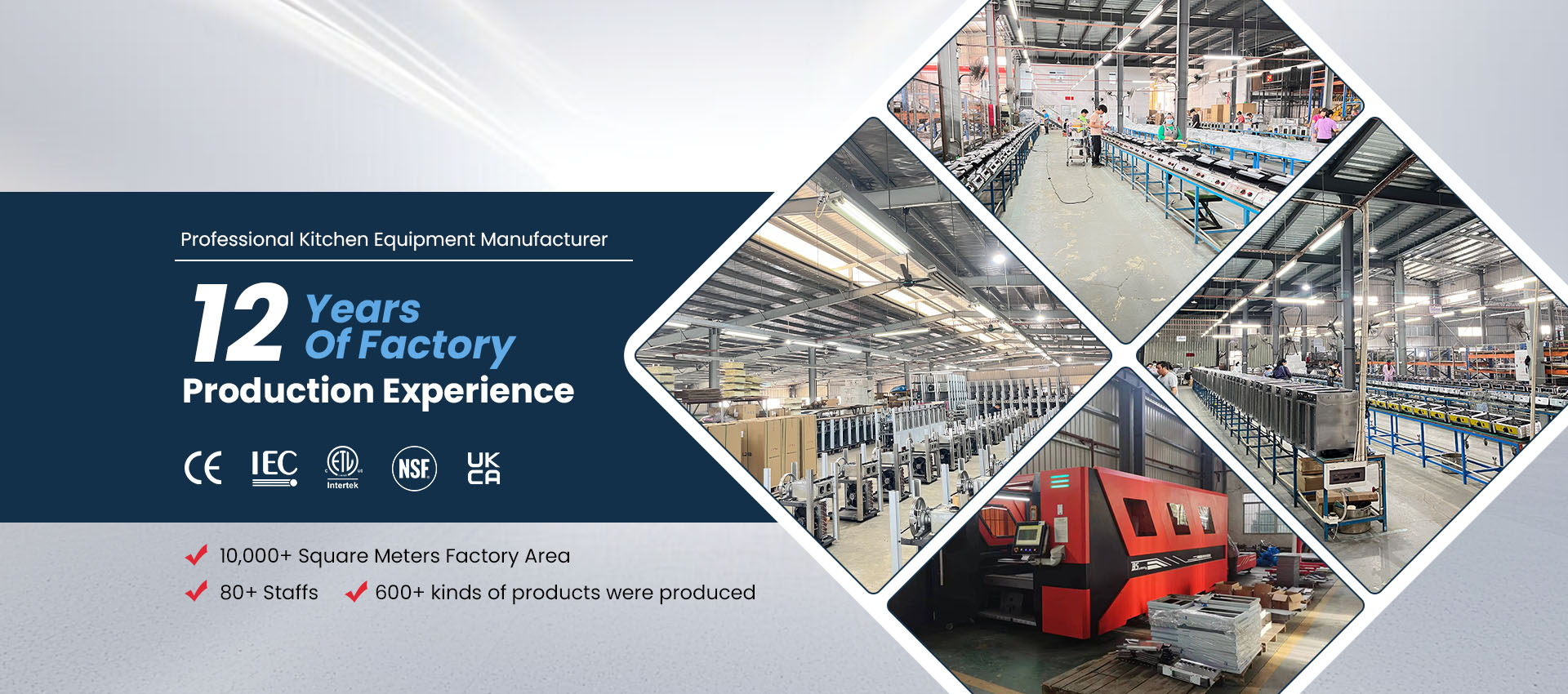
Manufacturer vs Trader: Why Customization Requires Factory Capability
The first reason product customization matters is that customized equipment requires direct manufacturing control.
A trader usually provides existing products from different suppliers, while a factory manufacturer manages the complete development and production process.
A professional restaurant equipment manufacturer can directly control:
Product engineering
Material selection
Manufacturing process
Quality inspection
Production adjustment
Technical improvement
This difference becomes important when equipment needs modifications based on kitchen layouts, cooking methods, or regional standards.
A factory with internal production capability can quickly evaluate whether a customized idea is practical and how it should be manufactured.
DINGFENG manages product development and manufacturing internally, allowing engineering teams to work closely with production teams throughout customization projects.
Customization Improves Kitchen Space Utilization
Every commercial kitchen has different space conditions. Restaurants, hotels, catering facilities, and foodservice projects often require equipment that fits specific layouts.
Common customization options include:
| Customization Area | Application Benefit |
|---|---|
| Equipment Dimensions | Fits different kitchen spaces |
| Working Height | Improves operator convenience |
| Cooking Area Size | Matches production requirements |
| Storage Structure | Optimizes workflow |
| Installation Design | Simplifies project integration |
For example, compact restaurants may require smaller equipment footprints, while large kitchens may need higher-capacity designs.
Professional manufacturers evaluate space requirements before production to ensure equipment fits the actual operating environment.
Functional Customization Creates Better Performance
Different restaurants have different cooking processes. Equipment designed for one application may not achieve the best results in another environment.
Customization allows manufacturers to adjust:
Heating capacity
Control systems
Cooking surface design
Equipment configuration
Additional functions
A professional OEM commercial kitchen equipment manufacturer does not simply modify existing products. It analyzes application requirements and develops practical solutions.
The OEM customization process usually includes:
| Development Stage | Main Purpose |
|---|---|
| Requirement Analysis | Understand operational needs |
| Engineering Review | Evaluate technical feasibility |
| Design Adjustment | Optimize equipment structure |
| Prototype Development | Verify product performance |
| Testing | Confirm reliability |
| Mass Production | Maintain consistency |
This process helps ensure customized equipment delivers stable performance after installation.
Material Selection Is A Key Part Of Customization
Customization also involves choosing the right materials for different operating environments.
Commercial kitchen equipment faces:
High temperatures
Moisture exposure
Grease contamination
Frequent cleaning
Therefore, manufacturers must consider material standards carefully.
NSF/ANSI 51 establishes requirements for materials and finishes used in commercial food equipment, focusing on factors such as sanitation and suitability for foodservice environments.
Important material considerations include:
| Material Factor | Quality Impact |
|---|---|
| Stainless Steel Grade | Determines corrosion resistance |
| Material Thickness | Affects equipment strength |
| Surface Finish | Improves cleaning efficiency |
| Component Quality | Influences service life |
DINGFENG applies material inspection procedures during production to ensure customized equipment maintains commercial-grade durability.
OEM And ODM Processes Support Product Development
Product customization requires strong engineering capability. OEM and ODM services allow manufacturers to participate in product improvement from the early development stage.
The difference between OEM and ODM is mainly the level of design involvement.
OEM focuses on manufacturing according to specified requirements, while ODM involves deeper cooperation where manufacturers contribute to product optimization and development.
A complete ODM process includes:
Project requirement confirmation
Product design evaluation
Engineering optimization
Sample production
Performance testing
Mass manufacturing
A professional ODM commercial kitchen equipment manufacturer can help improve product functionality while ensuring the design remains suitable for production.
Manufacturing Process Overview For Customized Equipment
Customization requires a controlled manufacturing process to maintain quality.
A professional production workflow includes:
Engineering Preparation
Technical drawings, specifications, and manufacturing requirements are reviewed.
Material Preparation
Raw materials and components are inspected before production.
Metal Fabrication
Manufacturing includes:
Cutting
Bending
Welding
Surface treatment
Assembly
Heating systems, electrical components, and functional parts are installed.
Quality Testing
Finished equipment is checked for:
Operating performance
Safety functions
Structural stability
Appearance quality
A factory with standardized manufacturing processes can maintain consistent quality even when producing customized equipment.
Quality Control Ensures Customization Reliability
Customization increases product complexity, which makes quality control even more important.
A professional foodservice equipment manufacturer should establish inspection checkpoints throughout production.
| Quality Stage | Inspection Focus |
|---|---|
| Material Inspection | Verify raw material standards |
| Fabrication Inspection | Check welding and structure |
| Assembly Inspection | Confirm component installation |
| Functional Testing | Verify equipment operation |
| Final Inspection | Approve shipment quality |
Quality control helps ensure that customized equipment matches approved designs and performance expectations.
DINGFENG integrates quality management throughout manufacturing to reduce production risks and improve equipment reliability.
Bulk Supply Considerations For Customized Projects
Customization is often required for large restaurant projects or repeated equipment orders. In these situations, manufacturers must maintain consistency across multiple production batches.
A reliable bulk supply commercial kitchen equipment supplier should have:
Stable production capacity
Standardized manufacturing procedures
Consistent material supply
Batch inspection systems
Professional packaging processes
Large-volume customized production requires strong process management because every unit must maintain the same specifications.
DINGFENG combines customization capability with standardized production management to support different project scales.
Export Market Compliance Requires Early Planning
Different markets may have different requirements for commercial kitchen equipment.
Customization may involve:
Electrical standards
Safety requirements
Product documentation
Packaging regulations
Transportation conditions
Export requirements should be considered during the design stage because they may affect product structure and component selection.
Manufacturers with international experience can integrate these requirements into product development and production planning.
Project Sourcing Checklist For Customized Equipment
Before starting a customization project, evaluate the supplier through these areas:
| Evaluation Category | Key Questions |
|---|---|
| Factory Capability | Does the supplier control production internally? |
| Engineering | Can designs be optimized professionally? |
| Materials | Are suitable standards applied? |
| Manufacturing | Are processes standardized? |
| Quality | Are inspection systems established? |
| Supply | Can bulk production remain consistent? |
| Export | Can market requirements be supported? |
A complete evaluation helps identify manufacturers with real customization capability.
Building Better Restaurant Solutions Through Customization
Product customization matters because commercial kitchens are not identical. Equipment needs to match specific workflows, space conditions, performance requirements, and market standards.
Working with a professional commercial kitchen equipment supplier provides greater flexibility in design, production, quality control, and long-term supply support.
With OEM and ODM capabilities, factory-controlled manufacturing, strict quality inspection, and experience in customized commercial kitchen solutions, DINGFENG continues to provide reliable equipment for restaurants, catering projects, and foodservice applications worldwide.