


Why Does Stainless Steel Quality Matter in Commercial Kitchen Equipment?
High-quality stainless steel determines the durability, hygiene, safety, and long-term performance of commercial kitchen equipment.
Why Is Stainless Steel Widely Used in commercial kitchen equipment?
Stainless steel has become one of the most important materials in commercial kitchens because it combines corrosion resistance, strength, easy maintenance, and food safety advantages. From preparation tables and storage racks to sinks and kitchen accessories, stainless steel supports demanding environments where equipment is exposed to moisture, heat, cleaning chemicals, and continuous operation.
Commercial kitchens require materials that can maintain stable performance under heavy workloads. Unlike ordinary metals that may rust or deteriorate over time, properly selected stainless steel grades help equipment maintain structural integrity and appearance throughout years of daily use.
For manufacturers, stainless steel selection is not only a material decision but also a key factor affecting product reliability, production consistency, and customer satisfaction.
How Does Stainless Steel Quality Affect Kitchen Hygiene?
Hygiene is one of the most important requirements in commercial food preparation environments. High-quality stainless steel provides a smooth and non-porous surface that reduces the possibility of food residue accumulation and makes daily cleaning more efficient.
A well-finished stainless steel surface helps prevent:
Bacteria growth caused by surface damage
Food contamination from material deterioration
Difficult cleaning caused by rough textures
Long-term staining from frequent use
commercial kitchen equipment made with suitable stainless steel can better meet strict sanitation requirements because the material remains stable after repeated washing and sanitizing processes.
The surface treatment process also matters. Professional manufacturers pay attention to polishing quality, welding accuracy, and edge finishing to ensure equipment surfaces are easy to clean and safe for food-related applications.
What Makes Stainless Steel Suitable for Heavy-Duty Commercial Use?
Commercial kitchens operate for many hours every day, requiring equipment that can withstand frequent impact, weight loads, and temperature changes.
High-quality stainless steel provides several performance advantages:
Strong Structural Stability
Commercial equipment such as work tables, shelving units, and storage solutions must support heavy loads. Stainless steel with proper thickness and manufacturing control helps maintain strength without deformation during long-term use.
Better Corrosion Resistance
Kitchen environments contain water, steam, salt, grease, and cleaning agents. Quality stainless steel provides better resistance against corrosion, helping equipment maintain service life in humid conditions.
Better Temperature Performance
Commercial kitchens often involve high-temperature cooking areas and frequent temperature changes. Stainless steel maintains its mechanical properties better compared with many alternative materials.
These characteristics make stainless steel a preferred choice for professional kitchens, restaurants, hotels, catering facilities, and food processing environments.
How Does Stainless Steel Grade Influence Equipment Performance?
Not all stainless steel materials provide the same performance. The grade selection directly affects corrosion resistance, durability, and application suitability.
Common considerations include:
| Stainless Steel Factor | Impact on commercial kitchen equipment |
|---|---|
| Material Grade | Determines corrosion resistance and durability |
| Thickness | Affects load capacity and structural strength |
| Surface Finish | Influences cleaning efficiency and appearance |
| Welding Quality | Impacts product stability and service life |
| Processing Accuracy | Ensures consistent dimensions and assembly quality |
Manufacturers need to select suitable stainless steel specifications based on the product application. Equipment used near water sources may require stronger corrosion resistance, while heavy-load structures require higher mechanical strength.
Why Does Stainless Steel Processing Matter During Manufacturing?
Material quality alone cannot guarantee a reliable final product. Manufacturing processes play an equally important role.
Professional stainless steel equipment production usually involves:
Precision cutting to ensure accurate dimensions
Controlled bending to maintain structural strength
Proper welding techniques to improve durability
Surface polishing to enhance hygiene performance
Quality inspection before shipment
Poor processing can reduce the advantages of stainless steel. For example, uneven welding, rough edges, or improper surface treatment may affect cleaning performance and product lifespan.
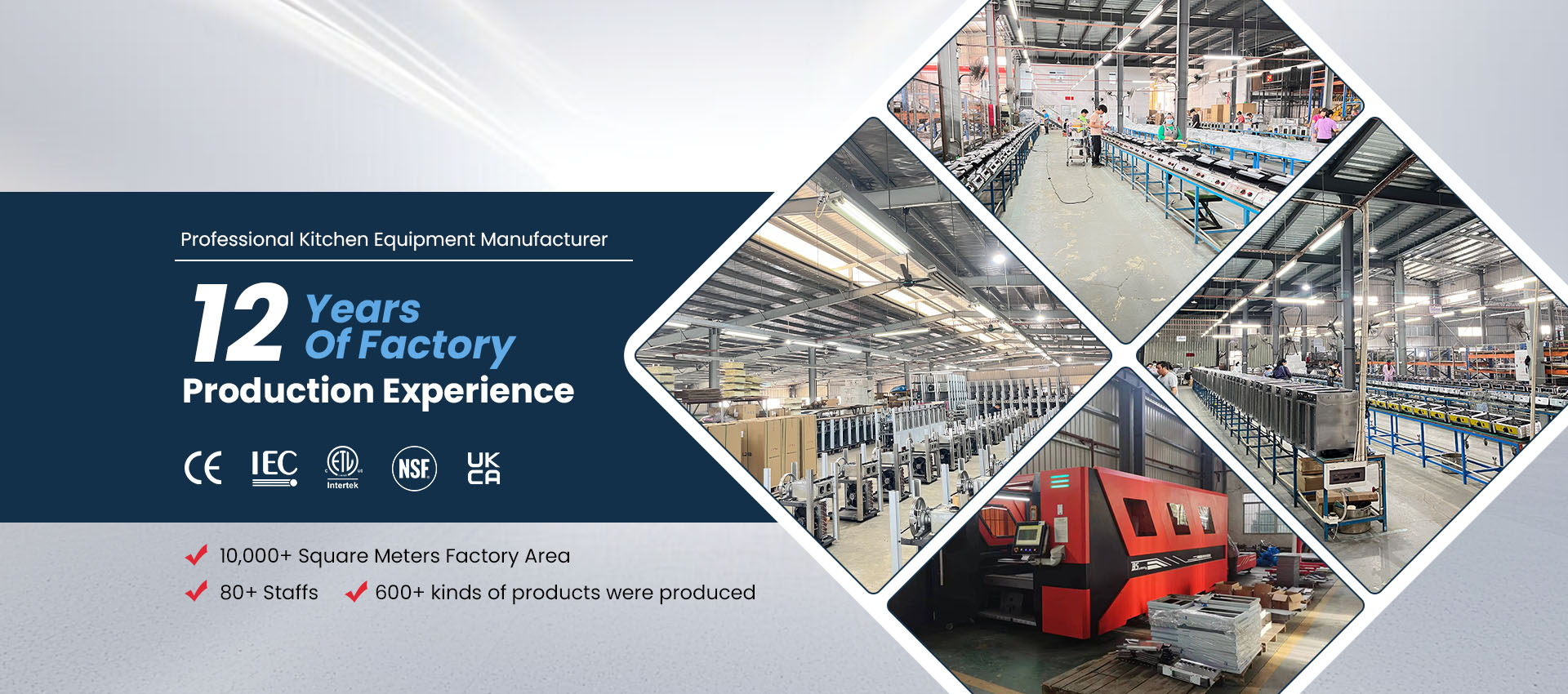
A manufacturer with experience in stainless steel fabrication understands that every production step influences the final user experience.
How Can Buyers Evaluate Stainless Steel Kitchen Equipment Quality?
When selecting commercial kitchen equipment, buyers should evaluate more than just appearance. Several details can indicate product quality:
Check Material Specifications
Confirm the stainless steel type, thickness, and application suitability. Higher-quality materials generally provide better long-term performance.
Inspect Surface Treatment
A smooth, uniform surface indicates better processing control and easier maintenance.
Evaluate Structural Design
Strong welding points, reinforced structures, and stable connections are important for equipment used in busy kitchens.
Consider Manufacturer Experience
Manufacturers with professional stainless steel fabrication capabilities can provide more consistent quality, customized solutions, and better production support.
Why Is Stainless Steel Quality a Long-Term Investment?
Commercial kitchen equipment represents a long-term investment. Choosing reliable stainless steel helps reduce maintenance frequency, replacement costs, and operational interruptions.
High-quality stainless steel equipment provides:
Longer service life
Improved food safety performance
Easier daily maintenance
Better appearance retention
More reliable commercial operation
For restaurants, hotels, and food service businesses, equipment durability directly affects operational efficiency. Selecting products manufactured with proper stainless steel materials and professional processing can create better value throughout the equipment lifecycle.
Conclusion: Why Does Stainless Steel Quality Matter in Commercial Kitchen Equipment?
Stainless steel quality matters because it directly influences hygiene, durability, safety, and overall equipment performance. For commercial kitchen applications, choosing the right stainless steel material and manufacturing process ensures reliable solutions for demanding working environments.
As a professional kitchen equipment manufacturer, MLP Kitchen focuses on material selection, precision manufacturing, and quality control to deliver stainless steel kitchen solutions designed for long-term commercial use.