


What Makes a Commercial Fryer Suitable for Heavy-Duty Restaurant Use?
A heavy-duty commercial fryer requires strong construction, stable heating performance, high production capacity, reliable temperature control, and durable materials for continuous restaurant operation.
Why Do Heavy-Duty Restaurants Need Specialized Commercial Fryers?
Heavy-duty restaurant environments require cooking equipment that can operate reliably for long hours under continuous demand. Fast food restaurants, hotels, catering kitchens, and high-volume food businesses often prepare large quantities of fried products every day.
A standard fryer may struggle with frequent use because of slower heat recovery, limited capacity, higher maintenance requirements, or reduced durability.
A suitable heavy-duty commercial fryer is designed to handle intensive workloads while maintaining consistent cooking performance, reducing downtime, and supporting efficient kitchen operations.
For professional kitchens, fryer quality directly affects food consistency, service speed, and long-term operating costs.
What Makes the Construction of a Heavy-Duty Fryer More Durable?
Durable construction is one of the most important characteristics of a commercial fryer designed for intensive use.
Key construction factors include:
Strong stainless steel body
Reinforced structural design
Durable internal components
High-quality welding
Heat-resistant materials
Stainless steel is commonly selected for commercial fryers because it provides corrosion resistance, easy cleaning, and long-term durability in demanding kitchen environments.
A strong structure helps the fryer withstand daily movement, high temperatures, oil exposure, and frequent cleaning cycles.
How Does Heating Performance Affect Heavy-Duty Fryer Operation?
Heating performance determines how effectively a fryer can handle continuous cooking demand.
A heavy-duty commercial fryer should provide:
Fast heat-up speed
Strong heat output
Stable oil temperature
Quick heat recovery
During busy service periods, large amounts of frozen or cold food may be added frequently. This causes oil temperature fluctuations.
A fryer with strong heat recovery can quickly restore the required temperature, helping maintain cooking quality and reduce waiting time.
Why Is Temperature Stability Important for Commercial Fryers?
Temperature stability directly affects food quality and production efficiency.
Consistent oil temperature helps:
Produce evenly cooked food
Maintain desired texture
Reduce excessive oil absorption
Improve batch-to-batch consistency
Heavy-duty restaurants often require the same food quality throughout long operating hours. Reliable temperature control helps operators maintain consistent results even during peak demand.
How Does Fryer Capacity Support High-Volume Restaurant Operations?
Capacity is a key factor when selecting equipment for heavy-duty applications.
A suitable fryer capacity helps restaurants:
Increase production volume
Reduce cooking delays
Handle peak service periods
Improve workflow efficiency
However, larger capacity does not always mean better performance. The ideal fryer size should match the restaurant’s menu, production volume, and available kitchen space.
Professional equipment selection balances cooking demand with operational efficiency.
What Oil Management Features Improve Heavy-Duty Fryer Performance?
Oil management becomes increasingly important in high-volume kitchens.
Useful features include:
Efficient Filtration
Filtering removes food particles and helps extend oil usability.
Easy Oil Drainage
A practical drainage system simplifies cleaning and oil replacement.
Stable Oil Temperature Control
Maintaining proper temperatures helps reduce unnecessary oil degradation.
Good oil management improves food quality while helping restaurants control operating costs.
Why Are Stainless Steel Materials Important for Heavy-Duty Fryers?
Material quality directly influences fryer durability and maintenance requirements.
Important material considerations include:
| Material Factor | Performance Impact |
|---|---|
| Stainless Steel Grade | Affects corrosion resistance |
| Material Thickness | Influences structural strength |
| Surface Finish | Improves cleaning efficiency |
| Welding Quality | Determines equipment stability |
High-quality stainless steel construction helps fryers withstand heat, moisture, grease, and frequent cleaning.
How Does Easy Maintenance Improve Heavy-Duty Fryer Reliability?
Commercial kitchens need equipment that is easy to maintain because downtime can affect business operations.
Heavy-duty fryers should support:
Simple cleaning procedures
Easy component inspection
Convenient oil management
Reduced maintenance time
Equipment designed with practical maintenance features helps restaurant teams keep operations running efficiently.
What Safety Features Should a Heavy-Duty Commercial Fryer Have?
Safety is essential when operating equipment with high-temperature oil for extended periods.
Important safety considerations include:
Reliable temperature control
Stable structure
Safe operating design
Proper heat management
Easy monitoring functions
A well-designed fryer helps reduce operational risks and creates a safer working environment for kitchen staff.
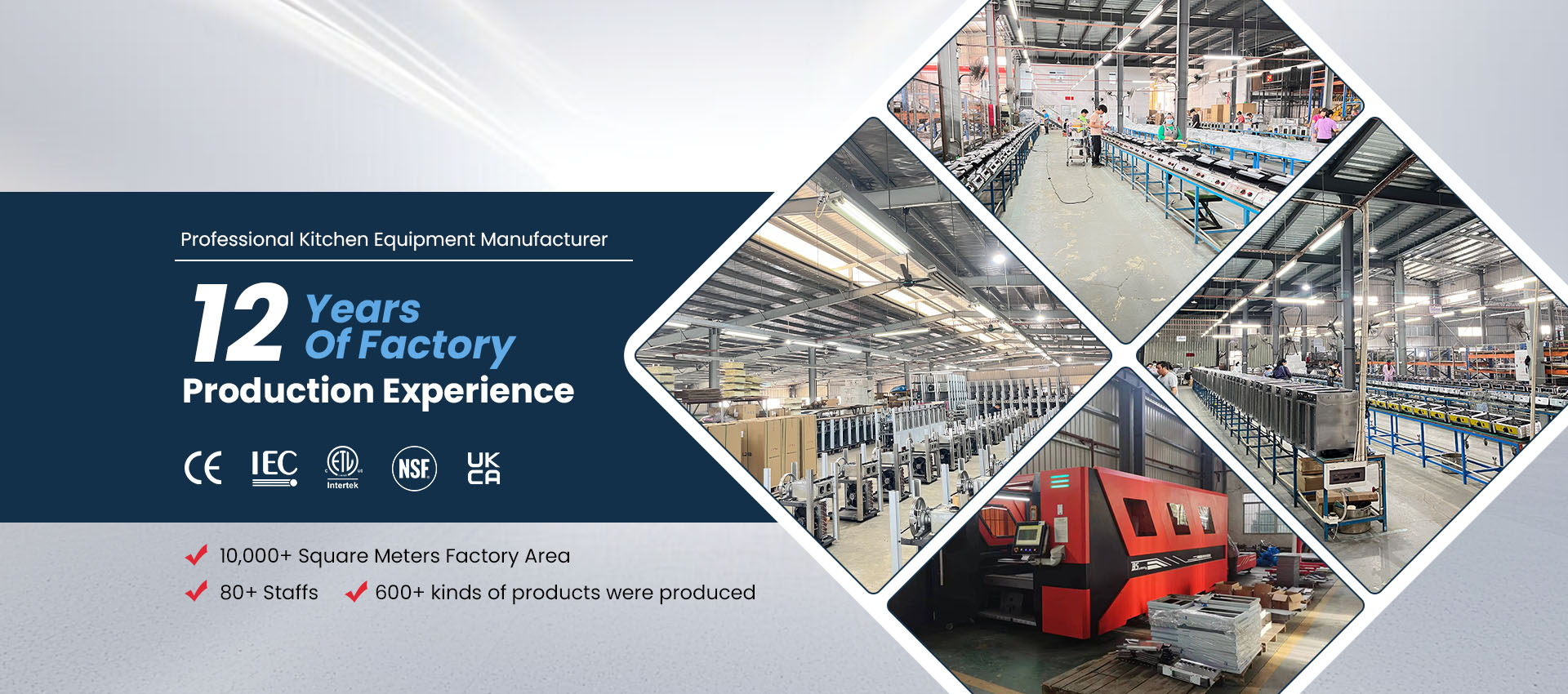
How Do Manufacturers Ensure Commercial Fryer Quality?
Professional manufacturers use multiple quality control steps to ensure heavy-duty fryers meet commercial requirements.
Quality checks may include:
Material Inspection
Confirming stainless steel specifications and component quality.
Fabrication Inspection
Checking cutting, forming, welding, and assembly accuracy.
Performance Testing
Evaluating heating capability, temperature stability, and operational reliability.
Final Inspection
Reviewing appearance, function, and packaging before shipment.
A complete quality system helps ensure consistent performance across production batches.
How Can Buyers Evaluate a Heavy-Duty Commercial Fryer?
Before purchasing, buyers should consider several important factors.
Production Requirements
Evaluate daily food volume and peak cooking demand.
Heating Capability
Check heat recovery speed and temperature control performance.
Construction Quality
Review materials, fabrication methods, and structural strength.
Manufacturer Experience
Experienced manufacturers can provide better product consistency and technical support.
Why Does Manufacturing Quality Matter for Heavy-Duty Restaurant Fryers?
A commercial fryer used in demanding restaurants must maintain performance over years of operation.
Manufacturing quality influences:
Equipment durability
Cooking consistency
Maintenance requirements
Service life
Operating efficiency
Professional manufacturing combines suitable materials, precise fabrication, and strict testing to create reliable equipment for intensive commercial use.
Conclusion: What Makes a Commercial Fryer Suitable for Heavy-Duty Restaurant Use?
A commercial fryer suitable for heavy-duty restaurant use requires durable construction, powerful heating performance, stable temperature control, appropriate capacity, efficient oil management, and reliable safety features.
By selecting equipment designed for continuous operation and manufactured with quality materials and processes, restaurants can achieve higher productivity, consistent food quality, and long-term operational value.