


How Do Manufacturers Improve Commercial Fryer Safety and Performance?
Manufacturers improve commercial fryer safety and performance through better material selection, precise engineering, heating control, safety design, quality testing, and production inspection.
Why Is Safety and Performance Important in Commercial Fryer Manufacturing?
Commercial fryers operate in environments where high temperatures, hot oil, continuous cooking, and heavy workloads create demanding conditions. Restaurants, hotels, fast food businesses, and catering operations depend on fryers that can deliver stable performance while maintaining safe operation.
A fryer with poor design or insufficient quality control may experience problems such as unstable temperatures, inefficient heating, oil management issues, or increased operational risks.
Professional manufacturers focus on improving both safety and performance throughout the entire production process, from material selection and component design to final testing.
How Does Material Selection Improve Commercial Fryer Safety?
Material selection is the foundation of commercial fryer quality. The materials used must withstand high temperatures, oil exposure, moisture, and frequent cleaning.
Manufacturers typically focus on:
Stainless steel quality
Material thickness
Heat resistance
Corrosion resistance
Structural durability
High-quality stainless steel helps create equipment that is easier to clean, more resistant to corrosion, and more reliable during long-term operation.
Suitable materials also reduce the risk of surface deterioration and structural problems caused by intensive restaurant use.
How Do Manufacturers Improve Fryer Heating Performance?
Heating performance directly affects cooking efficiency and food consistency.
Manufacturers improve fryer performance through:
Optimized Heating Systems
Well-designed heating systems help generate stable heat and improve energy efficiency.
Better Heat Distribution
Even heat distribution helps maintain consistent oil temperatures across different cooking cycles.
Faster Heat Recovery
Strong heat recovery allows the fryer to return to the required temperature quickly after adding food.
Improved heating performance helps restaurants increase production speed while maintaining consistent frying results.
How Does Temperature Control Improve Fryer Safety?
Temperature control is one of the most important safety and performance features in commercial fryers.
Accurate temperature management helps:
Prevent overheating
Maintain consistent cooking quality
Reduce oil degradation
Improve energy efficiency
Manufacturers design control systems to help operators maintain appropriate frying temperatures throughout daily operations.
Stable temperature control improves both food quality and equipment safety.
How Do Manufacturers Prevent Oil-Related Safety Problems?
Oil management is an important part of commercial fryer safety.
Manufacturers improve oil handling through:
Efficient Filtration Systems
Filtration helps remove food particles that can affect oil quality.
Safe Drainage Design
Proper drainage systems make oil replacement and cleaning safer.
Temperature Monitoring
Stable temperature monitoring helps prevent excessive oil heating.
Better oil management improves food quality while reducing operational risks in busy kitchens.
How Does Structural Design Improve Commercial Fryer Reliability?
A commercial fryer must maintain stability during continuous operation.
Manufacturers improve structural reliability through:
Reinforced stainless steel construction
Strong welded joints
Stable component installation
Durable internal structures
A well-designed structure helps equipment withstand daily movement, high temperatures, and frequent usage.
Strong construction also reduces maintenance requirements and extends product lifespan.
How Do Manufacturers Improve User Safety During Operation?
Commercial fryer safety depends not only on internal performance but also on operator-friendly design.
Manufacturers consider features such as:
Safe operating controls
Heat protection design
Stable equipment placement
Easy monitoring functions
Convenient maintenance access
These design improvements help reduce risks and allow kitchen staff to operate equipment more efficiently.
What Quality Tests Are Used Before Commercial Fryers Are Delivered?
Manufacturers conduct multiple inspections to verify fryer performance and safety.
Common tests include:
| Testing Process | Purpose |
|---|---|
| Material Inspection | Confirm raw material quality |
| Heating Test | Verify temperature performance |
| Temperature Stability Test | Check control accuracy |
| Structural Inspection | Evaluate durability |
| Safety Inspection | Confirm reliable operation |
| Final Product Check | Ensure shipment quality |
Testing helps identify potential problems before equipment reaches customers.
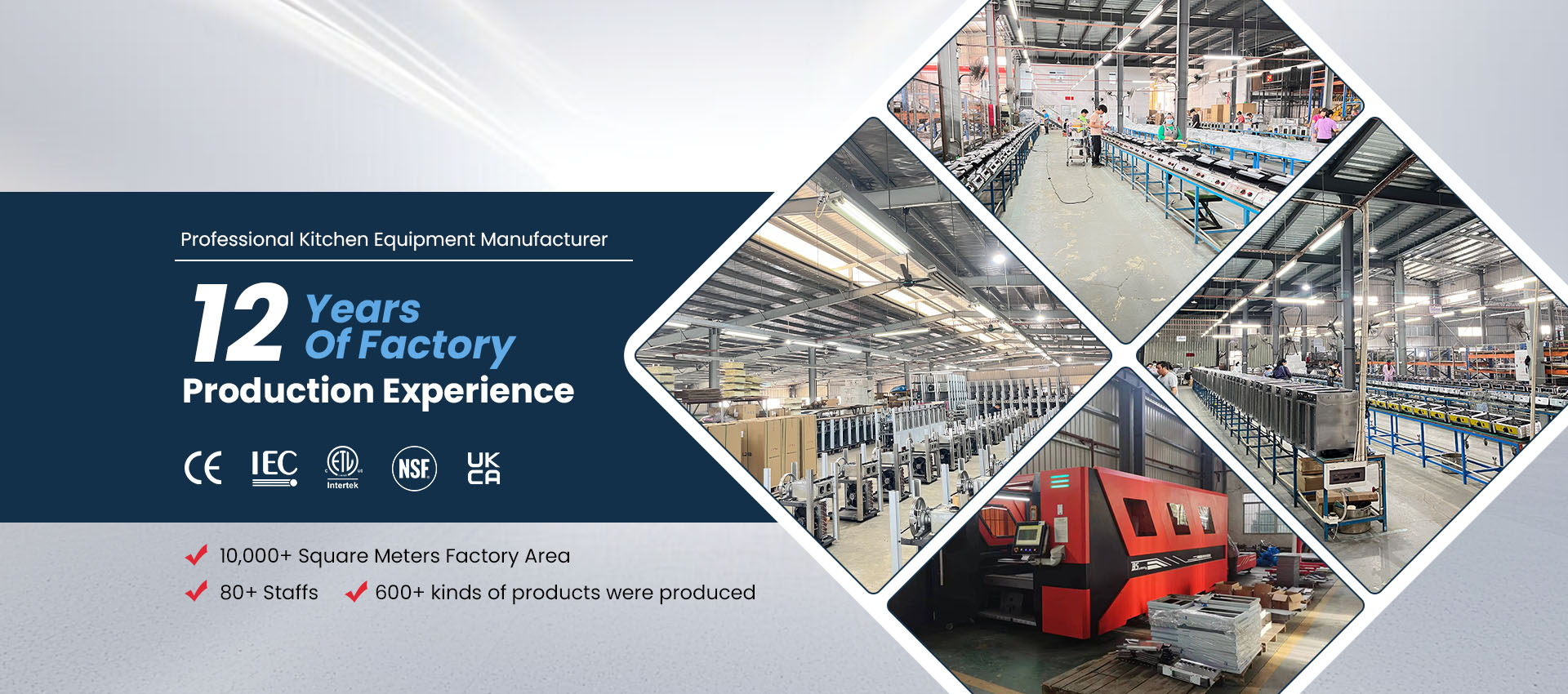
How Does Manufacturing Experience Improve Fryer Quality?
Manufacturing experience allows companies to understand the practical challenges of commercial kitchen applications.
Experienced manufacturers can improve:
Product design
Production processes
Quality control procedures
Performance testing methods
Knowledge gained from real manufacturing experience helps create equipment that better matches restaurant operating requirements.
How Can Buyers Evaluate a Commercial Fryer Manufacturer?
When selecting a commercial fryer supplier, buyers should evaluate manufacturing capability rather than only product specifications.
Important factors include:
Production Experience
Manufacturers with experience in commercial kitchen equipment usually understand performance requirements better.
Quality Management
A complete inspection system indicates stronger production control.
Fabrication Capability
Professional stainless steel processing improves product consistency.
Customization Support
Manufacturers with engineering capabilities can provide solutions based on specific kitchen needs.
Why Does Continuous Improvement Matter in Commercial Fryer Manufacturing?
Commercial kitchen requirements continue to change, requiring manufacturers to improve equipment design and production methods.
Continuous improvement helps achieve:
Better energy efficiency
Safer operation
More reliable performance
Improved user experience
Longer service life
Manufacturers that focus on process improvement can provide equipment better suited for modern food service environments.
Why Does Improved Fryer Safety and Performance Create Long-Term Value?
A commercial fryer is a long-term investment for food businesses. Equipment that combines safety, efficiency, and durability helps reduce operational challenges.
Improved fryer design provides:
More consistent cooking results
Lower maintenance requirements
Reduced operational risks
Longer equipment lifespan
Better overall cost efficiency
Reliable equipment supports smoother kitchen operations and helps businesses maintain service quality.
Conclusion: How Do Manufacturers Improve Commercial Fryer Safety and Performance?
Manufacturers improve commercial fryer safety and performance through advanced material selection, optimized heating systems, reliable temperature control, strong structural design, safety features, and comprehensive testing.
A professional manufacturing approach ensures that commercial fryers deliver stable operation, consistent cooking results, and long-term reliability in demanding food service environments.