


How Can Buyers Reduce Risks When Importing Commercial Kitchen Equipment?
Buyers can reduce risks when importing commercial kitchen equipment by selecting reliable manufacturers, verifying product quality, confirming compliance requirements, and managing production and shipping processes carefully.
Why Is Risk Management Important When Importing commercial kitchen equipment?
Importing commercial kitchen equipment involves multiple stages, including supplier selection, product customization, production, quality inspection, transportation, customs clearance, and installation.
Unlike local purchases, international equipment procurement requires buyers to consider additional challenges such as communication differences, technical requirements, shipping conditions, and after-sales support.
Equipment problems after delivery can result in:
Installation delays
Additional repair costs
Production interruptions
Replacement difficulties
Business losses
A well-planned import process helps buyers reduce uncertainty and ensure that equipment meets operational expectations.
How Should Buyers Choose a Reliable commercial kitchen equipment manufacturer?
Supplier selection is the first step in reducing import risks.
Buyers should evaluate:
Manufacturing experience
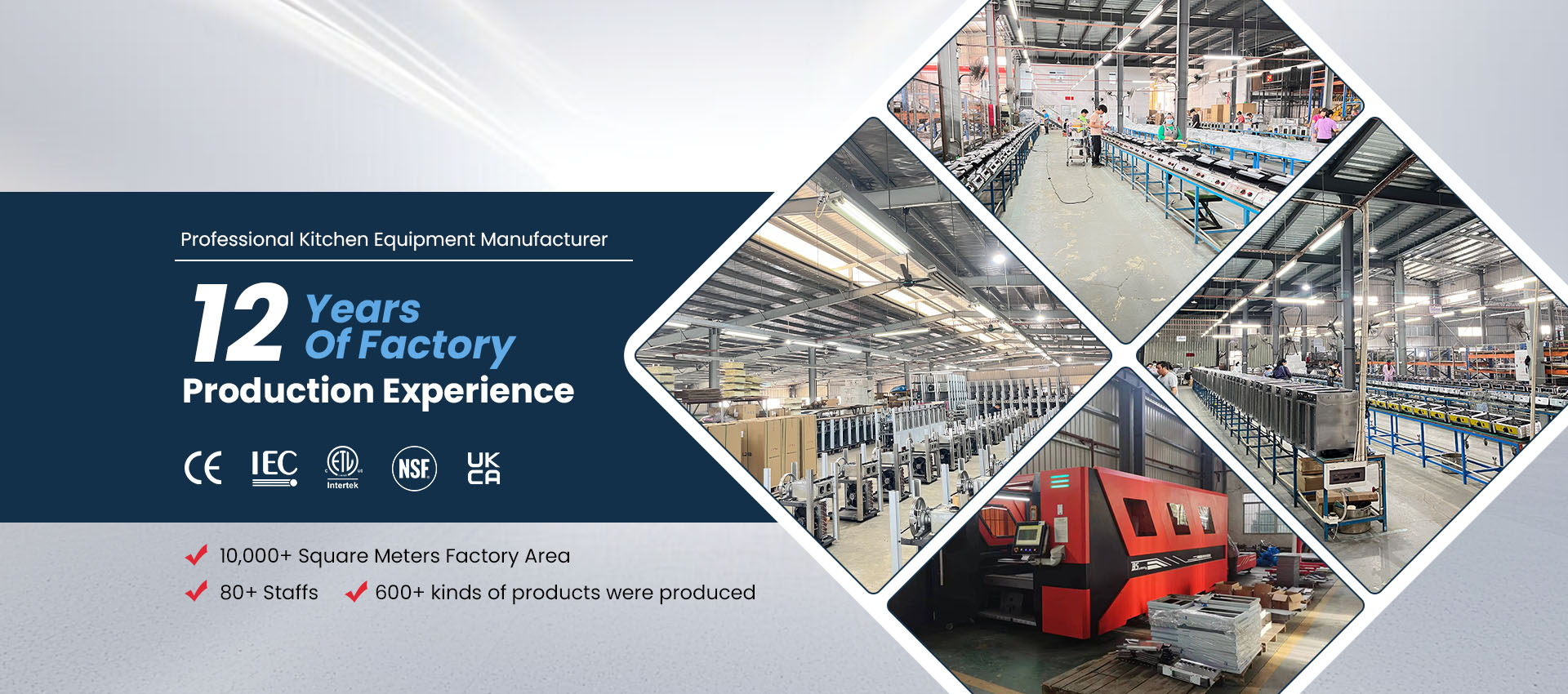
Factory production capability
Product quality systems
Export experience
Customer support ability
A professional manufacturer should have the ability to control production quality rather than relying only on external suppliers.
Factory experience is especially important because commercial kitchen equipment involves multiple processes, including stainless steel fabrication, welding, assembly, testing, and packaging.
Why Should Buyers Verify Manufacturer Capability Before Ordering?
A supplier’s ability directly affects product quality and delivery reliability.
Before placing an order, buyers should consider:
Production Facilities
A professional factory should have suitable equipment and production processes for commercial kitchen equipment manufacturing.
Engineering Capability
Manufacturers with technical teams can better support customization and product improvements.
Quality Control Process
A complete inspection system helps reduce production defects.
Export Experience
Manufacturers familiar with international markets usually understand documentation, packaging, and shipping requirements better.
Verifying supplier capability before production helps prevent quality and communication issues later.
How Can Buyers Reduce Product Quality Risks Before Shipment?
Product quality control should begin before the equipment leaves the factory.
Important quality measures include:
Confirm Product Specifications
Buyers should clearly define:
Equipment dimensions
Material requirements
Functions
Electrical specifications
Packaging requirements
Clear specifications reduce misunderstandings during production.
Conduct Production Inspections
Quality checks during manufacturing help identify problems earlier.
Perform Final Inspection
Before shipment, buyers should verify:
Product appearance
Equipment functions
Accessories
Packaging condition
Required documents
Early quality control reduces the risk of receiving unsuitable equipment.
Why Are Material and Construction Quality Important?
Commercial kitchen equipment operates under demanding conditions involving heat, moisture, grease, and frequent cleaning.
Material quality affects:
Equipment durability
Hygiene performance
Corrosion resistance
Service life
Buyers should pay attention to:
| Quality Factor | Importance |
|---|---|
| Stainless Steel Grade | Affects corrosion resistance and durability |
| Material Thickness | Influences structural strength |
| Welding Quality | Determines stability and reliability |
| Surface Finishing | Affects cleaning and appearance |
Understanding material and construction details helps buyers avoid low-quality products that may require frequent repairs.
How Can Buyers Avoid Compliance Risks During Import?
Different countries have different requirements for commercial kitchen equipment.
Before ordering, buyers should confirm:
Electrical standards
Safety requirements
Food contact material requirements
Certification needs
Import documentation
Equipment that does not meet local regulations may face customs delays or installation problems.
Experienced manufacturers can help buyers prepare suitable technical information and compliance documents.
Why Is Communication Important in International Equipment Purchasing?
Clear communication reduces many risks during international procurement.
Important communication points include:
Product specifications
Technical drawings
Production schedule
Inspection requirements
Shipping arrangements
Installation instructions
Misunderstandings during early stages can lead to incorrect products or unexpected costs.
Professional communication between buyers and manufacturers helps ensure that expectations remain aligned throughout the project.
How Can Buyers Control Production and Delivery Risks?
Production and delivery management are important parts of international purchasing.
Buyers should monitor:
Production Schedule
Confirm estimated completion dates and important production milestones.
Quality Verification
Arrange inspections when necessary.
Packaging Preparation
Ensure equipment is properly protected for long-distance transportation.
Shipping Planning
Consider transportation time, customs procedures, and delivery arrangements.
Good project management helps reduce delays and unexpected expenses.
Why Is Export Packaging Important for Commercial Kitchen Equipment?
Commercial kitchen equipment often travels long distances and may experience handling during transportation.
Proper export packaging helps prevent:
Surface scratches
Structural damage
Component loss
Moisture problems
Manufacturers should consider:
Equipment size
Product weight
Transportation method
Destination conditions
Reliable packaging protects the equipment until it reaches the final installation location.
How Should Buyers Evaluate After-Sales Support?
After-sales service is an important factor when importing equipment from overseas.
Reliable manufacturers should provide:
Operation guidance
Technical support
Spare parts assistance
Maintenance recommendations
Commercial kitchen equipment is a long-term investment, and effective support helps businesses maintain stable operations after installation.
What Common Mistakes Should Buyers Avoid When Importing Kitchen Equipment?
Several mistakes can increase import risks.
Choosing Only Based on Price
Lower initial costs may lead to higher maintenance expenses later.
Ignoring Product Specifications
Unclear requirements can cause unsuitable equipment.
Skipping Quality Inspection
Without inspection, defects may only be discovered after delivery.
Not Checking Compliance Requirements
Non-compliant equipment may create installation or customs problems.
Overlooking After-Sales Support
Lack of technical support can make future maintenance difficult.
Avoiding these mistakes helps create a smoother import experience.
How Does Working With an Experienced Manufacturer Reduce Import Risks?
Experienced manufacturers understand the challenges of international equipment supply.
They can provide:
Better product consistency
Professional customization support
More reliable quality control
Export preparation experience
Long-term cooperation support
A capable manufacturing partner helps buyers manage risks throughout the entire purchasing process.
Why Is Careful Supplier Selection a Long-Term Investment?
Commercial kitchen equipment affects daily business operations. Selecting the right supplier helps buyers achieve better reliability and reduce future costs.
A reliable supplier provides:
Stable equipment quality
Predictable delivery
Technical support
Lower maintenance risks
Long-term business value
For international buyers, supplier selection is not only a purchasing decision but also an important part of operational planning.
Conclusion: How Can Buyers Reduce Risks When Importing Commercial Kitchen Equipment?
Buyers can reduce import risks by carefully selecting manufacturers, confirming product specifications, controlling quality, checking compliance requirements, managing shipping processes, and ensuring after-sales support.
A professional import process combined with an experienced commercial kitchen equipment manufacturer helps businesses receive reliable equipment with better performance and long-term value.