


Countertop Fryer vs Floor Fryer: Which Is More Suitable for Restaurants?
Countertop fryers are more suitable for small and space-limited restaurants, while floor fryers provide higher capacity and stronger performance for high-volume food businesses.
What Is the Difference Between a Countertop Fryer and a Floor Fryer?
Countertop fryers and floor fryers are both designed for commercial frying applications, but their structures, capacity, and installation methods are different.
The main difference is the equipment size and production capability.
| Comparison Factor | Countertop Fryer | Floor Fryer |
|---|---|---|
| Installation | Placed on countertop | Installed directly on the floor |
| Size | Compact design | Larger structure |
| Capacity | Small to medium | Medium to high |
| Space Requirement | Less kitchen space | Requires dedicated floor area |
| Application | Small restaurants, cafes | High-volume commercial kitchens |
Choosing between these two types depends on restaurant size, menu demand, available space, and expected cooking volume.
Why Do Restaurants Choose Countertop Fryers?
Countertop fryers are popular among businesses that need efficient frying equipment without occupying much kitchen space.
Their advantages include:
Compact structure
Easy installation
Flexible placement
Lower initial investment
They are suitable for:
Small restaurants
Cafes
Snack shops
Food trucks
Convenience stores
For businesses with limited kitchen space, countertop fryers provide a practical frying solution.
Why Do Large Restaurants Choose Floor Fryers?
Floor fryers are designed for businesses requiring higher production capacity.
Their advantages include:
Larger oil capacity
Higher frying output
Better support for continuous operation
Stronger commercial performance
They are commonly used in:
Fast-food chains
Fried chicken restaurants
Catering kitchens
Hotels
Large restaurants
For businesses with high customer traffic, floor fryers help maintain stable food production during peak hours.
Which Fryer Provides Better Cooking Capacity?
Capacity is one of the biggest differences between countertop and floor fryers.
Countertop fryers are suitable for:
Small batch frying
Limited menu items
Moderate customer demand
Floor fryers are suitable for:
Large batch production
Continuous frying operations
High-volume food service
Restaurants should select fryer capacity based on daily food output rather than only equipment size.
Which Fryer Is Better for Small Restaurants?
Small restaurants often prioritize:
Space efficiency
Investment control
Easy operation
Countertop fryers provide advantages because they:
Require less installation space
Can fit smaller kitchen layouts
Support flexible operation
They are suitable for businesses with limited frying requirements.
Which Fryer Is Better for Fast Food Businesses?
Fast food businesses usually require:
High output
Fast cooking speed
Consistent frying results
Floor fryers are often preferred because they provide:
Larger oil tanks
Higher production efficiency
Better performance during busy periods
For businesses selling large quantities of fried food, floor fryers generally provide stronger operational advantages.
How Does Kitchen Space Affect Fryer Selection?
Kitchen layout plays an important role in equipment selection.
Countertop fryers are suitable when:
Floor space is limited
The kitchen requires flexible equipment placement
Production demand is moderate
Floor fryers are suitable when:
Dedicated cooking areas are available
Higher output is required
Multiple frying stations are needed
The best choice depends on balancing available space and production requirements.
Which Fryer Is Easier to Install?
Installation requirements are different.
Countertop fryers provide:
Simple placement
Faster setup
Easier movement
Floor fryers require:
Dedicated installation space
Proper kitchen planning
Stable positioning
For new or smaller businesses, countertop models often provide easier deployment.
Which Fryer Is More Energy Efficient?
Energy efficiency depends on:
Fryer capacity
Usage frequency
Heating system design
Operating habits
Countertop fryers may reduce energy consumption when used for smaller workloads because they heat a smaller oil volume.
Floor fryers may provide better efficiency for large-volume operations because they reduce the need for repeated cooking cycles.
The most efficient choice is the one that matches actual production needs.
Which Fryer Requires Less Maintenance?
Maintenance requirements depend on equipment usage and design.
Countertop fryers usually provide:
Easier cleaning
Simpler operation
Faster oil replacement
Floor fryers require attention to:
Larger oil tanks
More frequent commercial use
Long-term operating components
Professional fryer manufacturers focus on:
Easy-clean structures
Durable stainless steel materials
Reliable heating systems
Safe operating designs
How Does Manufacturing Quality Affect Fryer Performance?
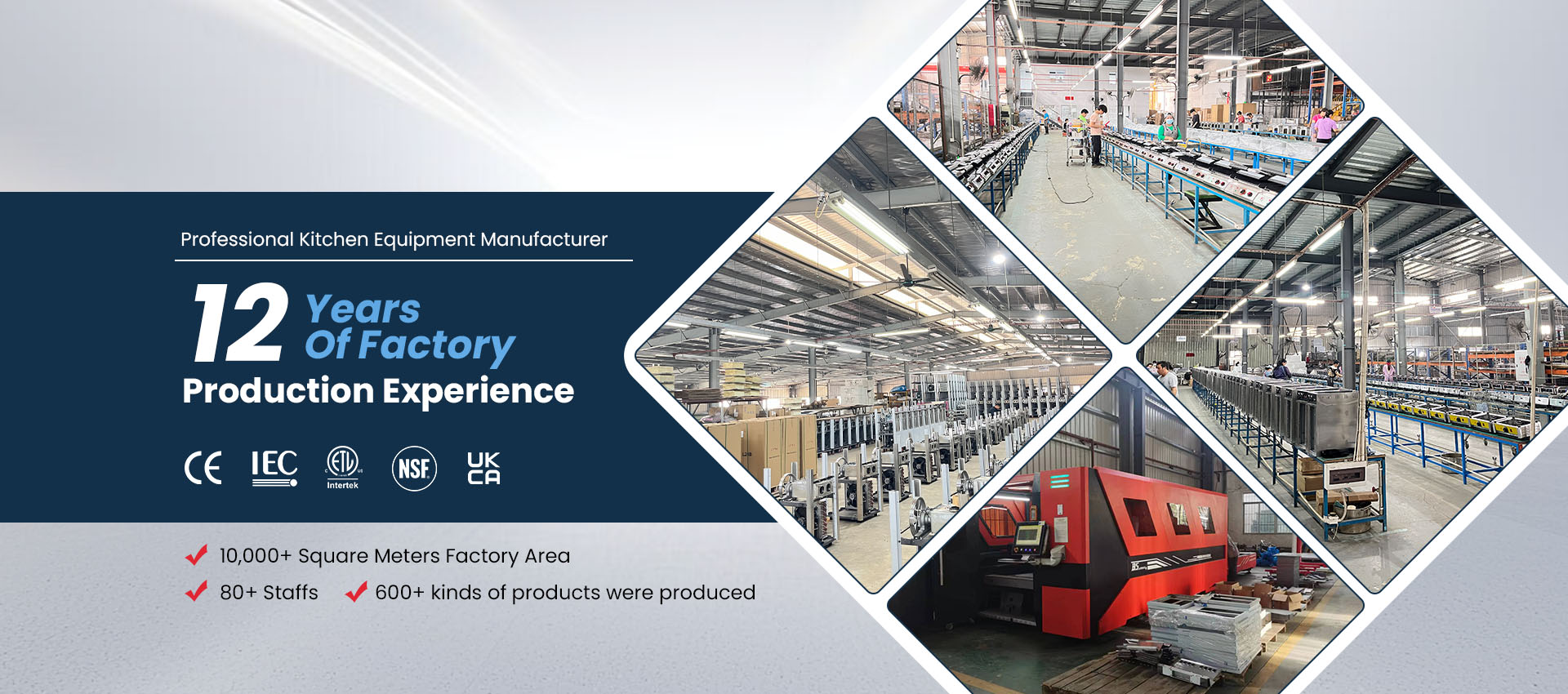
Equipment type is important, but manufacturing quality directly affects lifespan and reliability.
Professional fryer production includes:
Stainless Steel Construction
High-quality stainless steel improves corrosion resistance and durability.
Heating System Design
Efficient heating improves temperature recovery and frying consistency.
Oil Tank Manufacturing
Proper tank design supports stable operation and easier cleaning.
Temperature Control
Reliable controls maintain accurate frying conditions.
Quality Inspection
Performance testing ensures equipment reliability before shipment.
For restaurant equipment buyers, manufacturer capability is an important factor when selecting suppliers.
Which Fryer Is Better for Different Restaurant Types?
| Restaurant Type | Recommended Fryer |
|---|---|
| Small Cafe | Countertop Fryer |
| Snack Shop | Countertop Fryer |
| Food Truck | Countertop Fryer |
| Fast Food Chain | Floor Fryer |
| Fried Chicken Restaurant | Floor Fryer |
| Hotel Kitchen | Floor Fryer |
The right choice depends on menu, customer volume, and kitchen design.
Should Restaurants Choose Countertop or Floor Fryers?
Businesses should evaluate:
Daily Food Production
Higher output requires larger capacity equipment.
Kitchen Space
Compact kitchens may benefit from countertop designs.
Menu Requirements
Different foods require different frying capacities.
Future Growth
Equipment should support expected business expansion.
Selecting the right fryer helps improve efficiency and reduce unnecessary operating costs.
Countertop Fryer vs Floor Fryer: Which Is More Suitable for Restaurants?
Countertop fryers are more suitable for small restaurants and businesses with limited space, while floor fryers are better for high-volume restaurants requiring continuous frying performance.
The best choice depends on kitchen size, production demand, menu requirements, and long-term business plans.
Conclusion: Countertop Fryer vs Floor Fryer: Which Is More Suitable for Restaurants?
Both countertop and floor fryers provide reliable solutions for commercial kitchens.
Countertop fryers offer flexibility, compact design, and easy installation, while floor fryers provide higher capacity and stronger performance for demanding food businesses.
Restaurant owners should select equipment based on actual cooking volume, available space, and future operational needs.