


Commercial Grill vs Charbroiler: Which Creates Better Cooking Performance?
Commercial grills provide flexible cooking performance for various foods, while charbroilers create stronger grilled flavor and searing effects. The better choice depends on menu requirements, cooking style, and restaurant positioning.
What Is the Difference Between a Commercial Grill and a Charbroiler?
Commercial grills and charbroilers are both widely used in professional kitchens, but their heating methods and cooking results are different.
The main difference is the cooking surface and heat transfer method.
| Comparison Factor | Commercial Grill | Charbroiler |
|---|---|---|
| Cooking Surface | Flat or contact cooking surface | Open grate surface |
| Heating Method | Direct surface heating | Radiant or open flame heating |
| Food Result | Even cooking | Grilled texture and smoky flavor |
| Best Application | Sandwiches, burgers, general cooking | Steaks, meats, barbecue foods |
| Operation Style | Flexible cooking | High-temperature grilling |
Understanding these differences helps restaurants select equipment that matches their menu and customer expectations.
Why Do Restaurants Choose Commercial Grills?
Commercial grills are popular because they provide flexible cooking solutions for different food businesses.
Their advantages include:
Consistent cooking surface
Easy temperature control
Wide application range
Simple operation
Commercial grills are suitable for:
Sandwich shops
Cafes
Burger restaurants
Breakfast businesses
Fast-food kitchens
For restaurants that need to prepare different types of food efficiently, commercial grills provide strong versatility.
Why Do Restaurants Choose Charbroilers?
Charbroilers are designed for cooking methods that require direct grilling effects.
Their advantages include:
Strong searing performance
Distinct grill marks
Enhanced food appearance
Traditional grilled flavor
They are commonly used for:
Steaks
Burgers
Chicken
Seafood
Barbecue products
For restaurants focused on grilled menu items, charbroilers provide a more authentic grilling experience.
Which Equipment Creates Better Food Flavor?
Flavor performance depends on the desired cooking style.
Commercial grills provide:
Even heating
Consistent cooking results
Better control for delicate foods
Charbroilers provide:
Stronger grilled aroma
Charred surface texture
Traditional barbecue characteristics
Restaurants focusing on premium grilled foods may prefer charbroilers, while businesses requiring consistent daily production may choose commercial grills.
Which Equipment Provides Better Cooking Efficiency?
Cooking efficiency depends on menu type and production requirements.
Commercial grills provide advantages for:
Multiple food categories
Quick preparation
Consistent results
Charbroilers provide advantages for:
Meat-focused menus
High-temperature cooking
Specialty grilled products
The right choice depends on whether the business prioritizes flexibility or grilling performance.
Which Equipment Is Better for Fast Food Restaurants?
Fast food businesses usually require:
Fast production
Easy operation
Consistent food quality
Commercial grills are often suitable because they support:
Burgers
Sandwiches
Breakfast items
Multiple menu options
However, fast-food brands specializing in grilled burgers or barbecue products may benefit from charbroilers.
Which Equipment Is Better for Steak and Meat Restaurants?
Meat-focused restaurants usually require strong grilling performance.
Charbroilers provide advantages through:
High-temperature cooking
Better searing ability
Strong grilled appearance
They are suitable for:
Steak restaurants
BBQ restaurants
Premium grilled food concepts
Commercial grills may still be used for menu items requiring flat cooking surfaces.
How Does Temperature Control Differ Between Grills and Charbroilers?
Temperature control affects cooking consistency.
Commercial grills generally provide:
More direct temperature adjustment
Stable cooking surfaces
Easier control for different foods
Charbroilers require more attention to:
Heat zones
Cooking distance
Flame intensity
Professional operation experience helps maximize charbroiler performance.
Which Equipment Is Easier to Clean and Maintain?
Maintenance affects equipment lifespan and daily kitchen efficiency.
Commercial grills usually provide:
Easier surface cleaning
Simple grease management
Straightforward maintenance
Charbroilers require attention to:
Grate cleaning
Grease collection
Carbon buildup removal
Both equipment types require regular cleaning to maintain food safety and performance.
Manufacturers improve maintenance efficiency through:
Stainless steel construction
Durable components
Easy-access structures
Reliable design
Which Equipment Is Better for Different Food Businesses?
| Food Business | Recommended Equipment |
|---|---|
| Cafe | Commercial Grill |
| Sandwich Shop | Commercial Grill |
| Burger Restaurant | Grill or Charbroiler |
| Steakhouse | Charbroiler |
| BBQ Restaurant | Charbroiler |
| Hotel Kitchen | Depends on Menu |
Choosing equipment according to business type improves kitchen workflow and operational efficiency.
How Does Manufacturing Quality Affect Grill Performance?
Equipment design and manufacturing quality directly affect long-term performance.
Professional commercial grill and charbroiler production includes:
Stainless Steel Construction
High-quality stainless steel improves durability and corrosion resistance.
Heating System Design
Efficient heating structures improve cooking consistency.
Surface Processing
Quality cooking surfaces improve food preparation performance.
Temperature Control
Reliable controls help maintain stable cooking conditions.
Quality Testing
Performance inspections ensure equipment reliability before shipment.
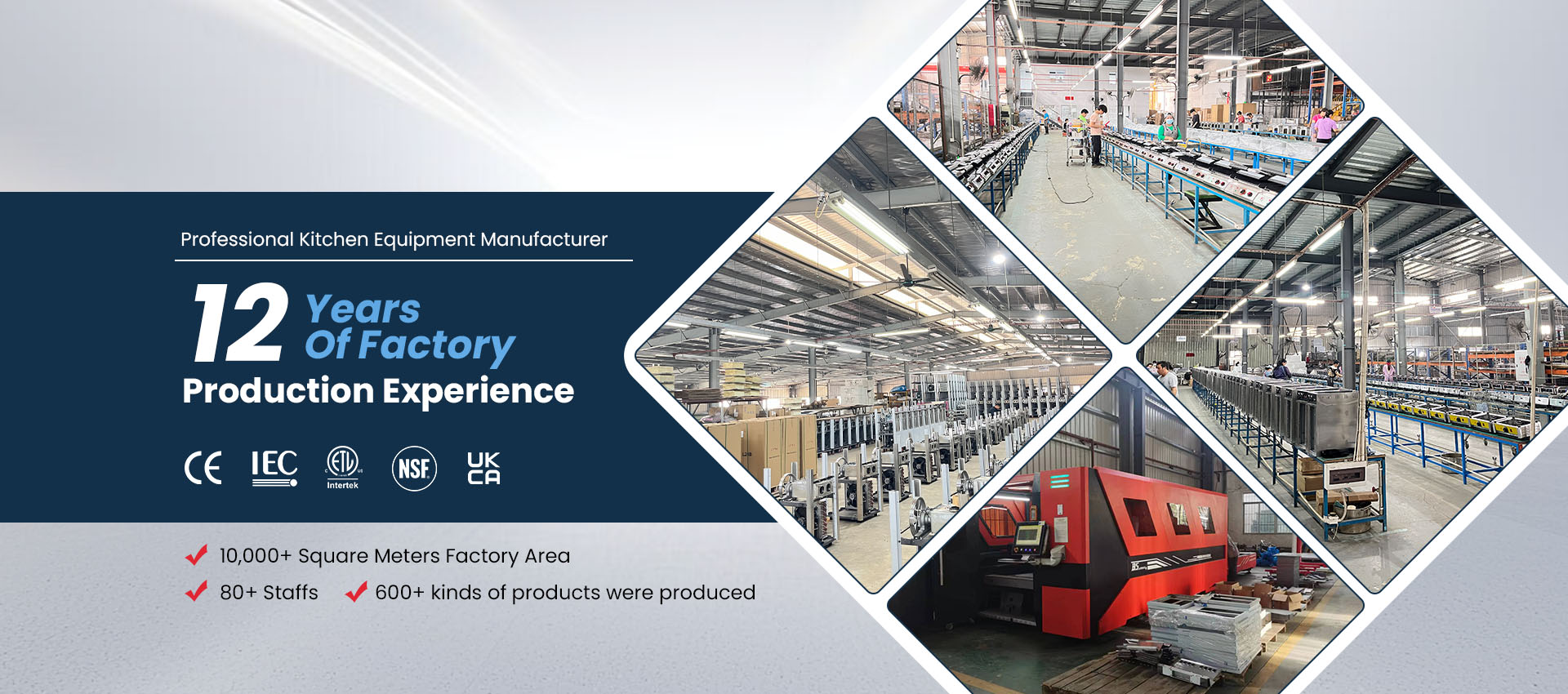
For international buyers, manufacturer experience is important for reducing equipment operation risks.
How Do Manufacturers Ensure Commercial Grill Quality?
Professional manufacturers usually conduct:
Material Inspection
Checking stainless steel and component quality.
Heating Performance Testing
Ensuring stable temperature operation.
Structure Testing
Checking welding strength and equipment stability.
Safety Inspection
Confirming safe commercial operation.
Final Quality Control
Ensuring products meet export requirements.
These processes help commercial kitchens receive reliable equipment.
Should Restaurants Choose a Commercial Grill or Charbroiler?
The choice depends on business goals.
Choose a commercial grill when the business needs:
Flexible cooking options
Consistent results
Multiple menu applications
Choose a charbroiler when the business needs:
Strong grilled flavor
High-temperature searing
Premium meat preparation
Both equipment types provide value when used in the correct application.
Commercial Grill vs Charbroiler: Which Creates Better Cooking Performance?
Commercial grills provide better overall flexibility for restaurants with diverse menus, while charbroilers create stronger grilled flavor and searing performance for meat-focused businesses.
The better choice depends on menu style, cooking requirements, production volume, and customer expectations.
Conclusion: Commercial Grill vs Charbroiler: Which Creates Better Cooking Performance?
Both commercial grills and charbroilers are important solutions for professional kitchens.
Commercial grills provide versatility, efficiency, and easy operation, while charbroilers deliver distinctive grilled flavor and premium cooking results.
Restaurant owners and equipment buyers should select the right solution based on food type, kitchen workflow, and long-term business requirements.