


Electric Grill vs Gas Grill: Which Is Better for Commercial Food Service?
Electric grills provide easier temperature control and installation flexibility, while gas grills deliver stronger heating power and faster recovery. The better choice depends on restaurant volume, menu requirements, and kitchen conditions.
What Is the Difference Between an Electric Grill and a Gas Grill?
Electric grills and gas grills are both widely used in commercial food service businesses, including restaurants, cafes, fast-food shops, and catering kitchens.
The main difference is the heating method.
| Comparison Factor | Electric Grill | Gas Grill |
|---|---|---|
| Heating Source | Electric heating elements | Gas burners |
| Temperature Control | More precise adjustment | Strong heat response |
| Heat Recovery | Stable performance | Faster recovery for heavy use |
| Installation | Easier installation | Requires gas connection |
| Application | Indoor kitchens, cafes, restaurants | High-volume food operations |
Choosing between electric and gas grills requires evaluating cooking demand, energy availability, and business requirements.
Why Do Restaurants Choose Electric Grills?
Electric grills are popular because they provide stable and convenient cooking performance.
Their advantages include:
Accurate temperature control
Simple operation
Easier installation
Suitable for indoor environments
Electric grills are commonly used in:
Cafes
Small restaurants
Sandwich shops
Hotels
Compact commercial kitchens
For businesses that prioritize consistency and operational convenience, electric grills provide practical advantages.
Why Do Restaurants Choose Gas Grills?
Gas grills are preferred by many commercial kitchens because they provide strong heating capability.
Their advantages include:
High heating power
Fast temperature recovery
Suitable for continuous cooking
Strong performance during peak hours
Gas grills are commonly used in:
Fast-food restaurants
BBQ restaurants
High-volume kitchens
Catering businesses
For businesses requiring heavy-duty cooking performance, gas grills can provide stronger output.
Which Grill Provides Better Cooking Performance?
Cooking performance depends on the type of food and production requirements.
Electric grills provide advantages for:
Stable temperature management
Consistent cooking results
Controlled cooking processes
Gas grills provide advantages for:
High-temperature cooking
Fast recovery after adding food
Continuous commercial operation
A cafe preparing sandwiches may benefit from an electric grill, while a busy restaurant serving grilled meat may prefer a gas model.
Which Grill Heats Faster?
Heating speed affects kitchen efficiency during busy periods.
Gas grills generally provide:
Faster heat-up capability
Strong direct heating
Quick temperature recovery
Electric grills provide:
Stable heating cycles
Controlled temperature adjustment
Consistent heat distribution
For high-volume cooking environments, gas grills often provide stronger heating performance.
Which Grill Provides Better Temperature Control?
Temperature control affects food quality and consistency.
Electric grills usually offer:
Precise thermostat control
Stable cooking temperature
Easier operation
Gas grills provide:
Strong heating response
Adjustable flame power
Flexible heat management
For foods requiring exact temperature control, electric grills may offer advantages. For high-output kitchens, gas grills provide strong performance.
Which Grill Is More Energy Efficient?
Energy efficiency depends on local energy costs and usage conditions.
Electric grills may provide advantages when:
Electricity is easily available
Precise energy management is important
Indoor installation is preferred
Gas grills may provide advantages when:
Gas costs are lower
Continuous high-power cooking is required
Large production volume is involved
Restaurant buyers should evaluate local energy conditions before selecting equipment.
Which Grill Is Easier to Install?
Installation requirements differ significantly.
Electric grills generally require:
Suitable electrical supply
Proper voltage configuration
Standard installation space
Gas grills require:
Gas connection
Ventilation considerations
Professional installation
For locations with limited infrastructure, electric grills are often easier to install.
Which Grill Is Easier to Maintain?
Maintenance affects equipment lifespan and operating efficiency.
Electric grills require attention to:
Heating elements
Electrical components
Temperature controllers
Gas grills require attention to:
Burners
Gas connections
Flame systems
Both types require:
Regular cleaning
Surface maintenance
Safety inspection
Professional commercial grill manufacturers focus on durable materials and easy-maintenance structures to improve long-term reliability.
Which Grill Is Better for Different Food Businesses?
Different businesses have different equipment requirements.
| Food Business | Recommended Grill |
|---|---|
| Cafe | Electric Grill |
| Sandwich Shop | Electric Grill |
| Burger Restaurant | Gas or Electric Grill |
| BBQ Restaurant | Gas Grill |
| Catering Business | Gas Grill |
| Hotel Kitchen | Depends on Kitchen Requirements |
The right choice depends on menu type, cooking volume, and operating environment.
How Does Grill Manufacturing Quality Affect Performance?
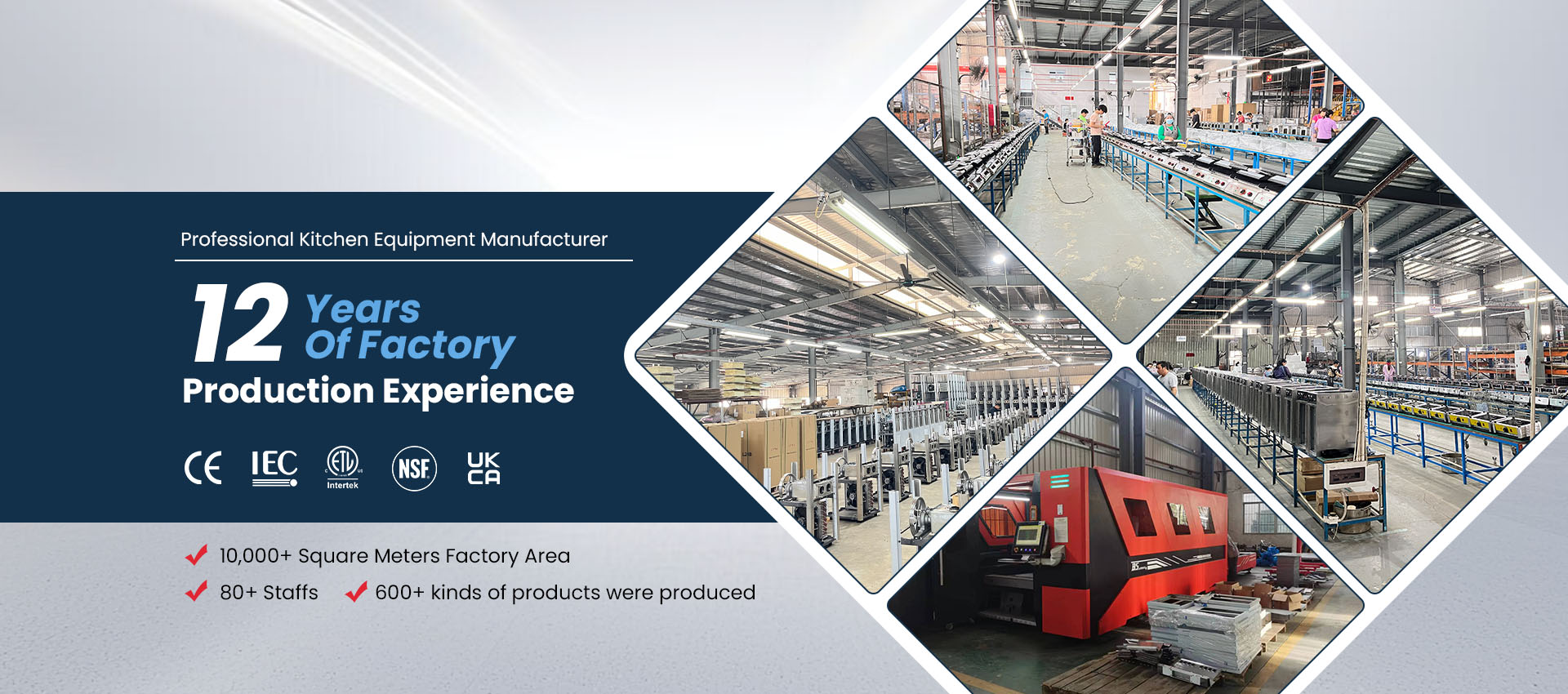
Heating method is only one factor affecting grill performance. Manufacturing quality also determines durability and reliability.
Professional commercial grill production focuses on:
Stainless Steel Construction
High-quality stainless steel improves corrosion resistance and equipment lifespan.
Heating System Design
Proper heating structures ensure stable cooking performance.
Cooking Surface Quality
Durable surfaces improve cooking consistency and cleaning efficiency.
Temperature Control System
Reliable controls help maintain accurate cooking conditions.
Safety Testing
Performance checks ensure equipment reliability before shipment.
For global buyers, selecting an experienced manufacturer helps reduce equipment risks.
How Do Manufacturers Test Commercial Grill Performance?
Professional grill production includes multiple inspection processes:
Heating Performance Test
Checking heat-up speed and temperature stability.
Surface Temperature Test
Ensuring even heat distribution.
Electrical or Gas Safety Test
Confirming safe operation.
Structure Inspection
Checking welding quality and equipment strength.
Final Performance Testing
Ensuring the equipment meets commercial kitchen requirements.
These processes help provide reliable equipment for restaurants worldwide.
Should Restaurants Choose an Electric Grill or Gas Grill?
The decision depends on business priorities.
Choose an electric grill when the business needs:
Precise temperature control
Easier installation
Stable cooking performance
Choose a gas grill when the business needs:
Higher heating power
Faster recovery
Heavy-duty operation
Both options can provide excellent commercial cooking performance when matched with the right application.
Electric Grill vs Gas Grill: Which Is Better for Commercial Food Service?
Electric grills are better suited for businesses that need precise control, simple installation, and consistent operation, while gas grills are better for high-volume kitchens requiring stronger heating performance.
The best choice depends on menu requirements, production volume, energy availability, and kitchen conditions.
Conclusion: Electric Grill vs Gas Grill: Which Is Better for Commercial Food Service?
Both electric and gas grills play important roles in commercial food service.
Electric grills provide convenience, control, and flexible installation, while gas grills deliver powerful heating performance for demanding operations.
Restaurant owners and equipment buyers should select grill types based on actual cooking needs, operating environment, and long-term business goals.