


Manual Commercial Equipment vs Automatic Equipment: Which Offers Better Value?
Automatic commercial equipment usually provides higher efficiency and consistency, while manual commercial equipment offers lower investment and greater operational flexibility. The better value depends on business size, production needs, and long-term goals.
What Is the Difference Between Manual Commercial Equipment and Automatic Equipment?
Manual and automatic commercial equipment are both used in professional kitchens, but they operate differently and provide different advantages.
The main difference is the level of automation and operator involvement.
| Comparison Factor | Manual Commercial Equipment | Automatic Equipment |
|---|---|---|
| Operation Method | Requires manual control | Automated operation |
| Investment Cost | Lower initial cost | Higher initial cost |
| Production Efficiency | Depends on operator skill | Higher consistency |
| Labor Requirement | More operator involvement | Reduced manual work |
| Application | Small and flexible operations | High-volume production |
Choosing the right equipment depends on workload, budget, labor availability, and business objectives.
Why Do Businesses Choose Manual Commercial Equipment?
Manual commercial equipment remains popular because it provides flexibility and affordability.
Its advantages include:
Lower purchase cost
Simple operation
Easy maintenance
Flexible usage
It is suitable for:
Small restaurants
Cafes
Start-up businesses
Food shops with moderate demand
For businesses that value control and lower investment, manual equipment can provide practical benefits.
Why Do Businesses Choose Automatic Equipment?
Automatic equipment is designed to improve production efficiency and reduce manual workload.
Its advantages include:
Consistent operation
Faster production
Reduced labor dependency
Better output control
It is commonly used in:
Large restaurants
Food production facilities
Chain businesses
High-volume commercial kitchens
For businesses with large production requirements, automation can improve operational efficiency.
Which Equipment Provides Better Productivity?
Productivity depends on production volume and business requirements.
Manual equipment depends heavily on:
Operator experience
Working speed
Cooking skills
Automatic equipment improves productivity through:
Standardized processes
Stable operation
Reduced preparation time
For high-demand businesses, automatic equipment generally provides stronger productivity advantages.
Which Equipment Provides Better Cost Efficiency?
Cost efficiency depends on both purchase cost and long-term operation.
Manual equipment provides advantages through:
Lower initial investment
Lower technical requirements
Easier maintenance
Automatic equipment provides advantages through:
Reduced labor costs
Higher production capacity
More consistent results
The most cost-effective choice depends on whether the business prioritizes initial savings or long-term efficiency.
Which Equipment Is Better for Small Restaurants?
Small restaurants often consider:
Budget
Kitchen space
Production demand
Staff capability
Manual equipment can be a better choice because it provides:
Lower investment
Easy operation
Flexible usage
However, growing restaurants may choose automatic equipment to prepare for higher future demand.
Which Equipment Is Better for Large Food Businesses?
Large food businesses usually require:
High production capacity
Stable quality
Reduced operating risks
Automatic equipment provides advantages through:
Continuous operation
Consistent product output
Improved workflow efficiency
It is commonly used in businesses where production speed directly affects revenue.
How Does Equipment Control Affect Product Consistency?
Consistency is important for restaurants and food brands.
Manual equipment results may vary depending on:
Operator experience
Cooking habits
Production conditions
Automatic equipment helps maintain:
Stable temperature
Standardized processes
Repeatable results
For businesses operating multiple locations, consistency becomes an important purchasing factor.
Which Equipment Requires More Maintenance?
Maintenance requirements differ between manual and automatic equipment.
Manual equipment usually provides:
Simple structure
Easier troubleshooting
Lower maintenance complexity
Automatic equipment requires attention to:
Control systems
Electronic components
Automation mechanisms
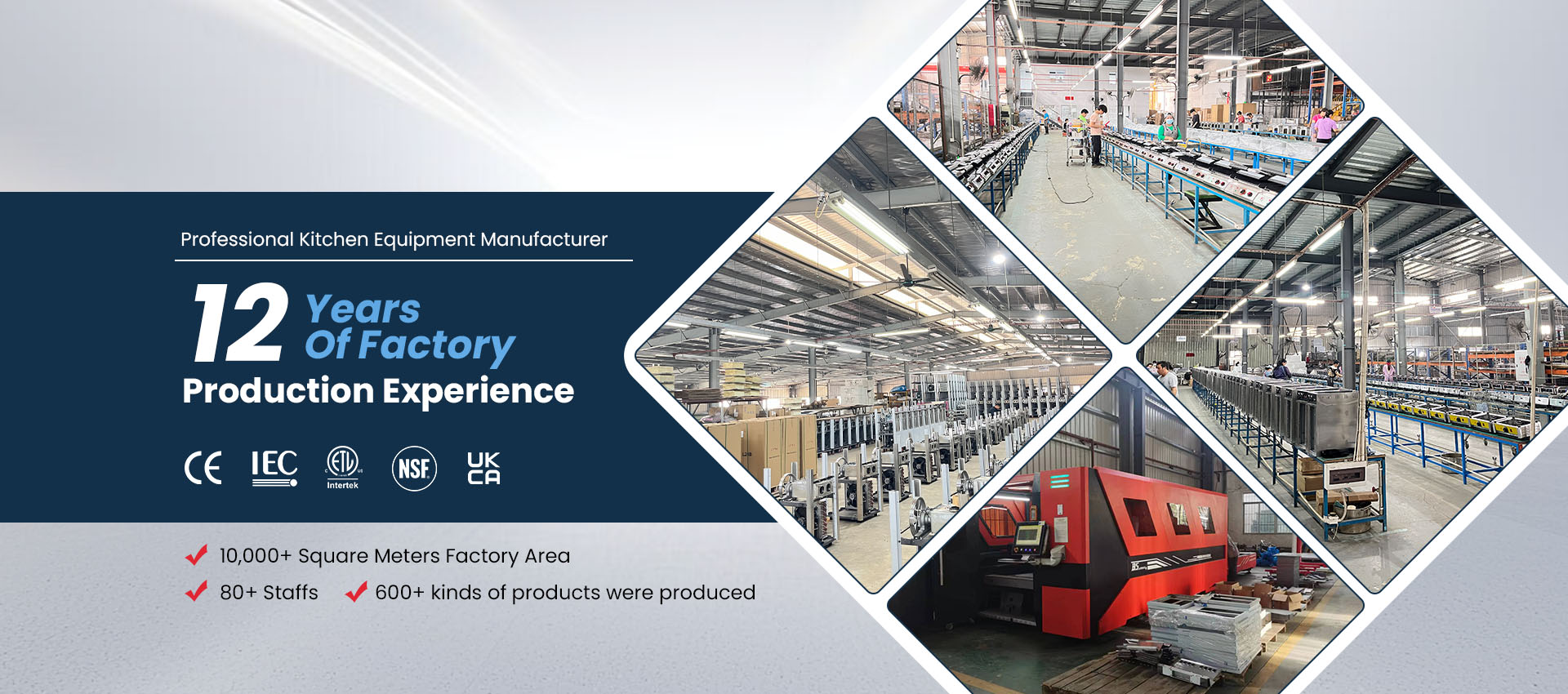
Professional manufacturers improve reliability through durable components and quality testing.
How Does Manufacturing Quality Affect Equipment Performance?
Equipment type is only one factor affecting performance. Manufacturing quality directly impacts reliability.
Professional commercial equipment production focuses on:
Material Quality Control
Checking stainless steel and key components.
Structural Manufacturing
Ensuring strong welding and stable construction.
Component Testing
Confirming reliable operation.
Performance Inspection
Checking heating, control, and functional performance.
Final Quality Control
Ensuring equipment meets commercial requirements.
For international buyers, choosing an experienced manufacturer helps reduce operational risks.
How Do Manufacturers Test Commercial Equipment?
Professional testing processes include:
Function Testing
Checking equipment operation and performance.
Safety Testing
Ensuring electrical and structural safety.
Durability Testing
Evaluating long-term operation capability.
Performance Testing
Confirming efficiency and consistency.
Final Inspection
Ensuring products meet customer requirements before shipment.
These processes help commercial kitchens receive reliable equipment.
Which Equipment Is Better for Different Business Types?
| Business Type | Recommended Equipment |
|---|---|
| Small Cafe | Manual Equipment |
| Small Restaurant | Manual or Semi-Automatic Equipment |
| Chain Restaurant | Automatic Equipment |
| Food Factory | Automatic Equipment |
| Catering Business | Depends on Production Volume |
| Large Commercial Kitchen | Automatic Equipment |
The correct choice depends on operational requirements rather than equipment type alone.
Should Businesses Choose Manual or Automatic Commercial Equipment?
Choose manual commercial equipment when the business needs:
Lower investment
Flexible operation
Moderate production
Choose automatic equipment when the business needs:
Higher efficiency
Consistent output
Large-scale production
The right solution should balance investment, workload, labor costs, and future growth.
Manual Commercial Equipment vs Automatic Equipment: Which Offers Better Value?
Manual commercial equipment offers better value for businesses that need flexibility, lower investment, and moderate production capacity.
Automatic equipment provides better value for businesses requiring higher efficiency, consistent output, and large-scale operations.
The best choice depends on production volume, labor conditions, budget planning, and long-term business strategy.
Conclusion: Manual Commercial Equipment vs Automatic Equipment: Which Offers Better Value?
Both manual and automatic commercial equipment play important roles in professional kitchens.
Manual equipment provides affordability, flexibility, and simple operation, while automatic equipment improves productivity, consistency, and efficiency.
Restaurant owners and equipment buyers should select equipment based on actual business needs, operational goals, and expected future development.