


What Size Waffle Maker Should You Choose
Choosing the right Waffle Maker size is not only about countertop space. In commercial sourcing, size affects hourly output, menu design, labor efficiency, cleaning workload, packaging dimensions, and shipping cost. A smaller unit may suit limited-serve operations, while a larger machine with multiple grids supports faster batch production and more stable workflow during peak hours. Dingfeng’s current waffle maker range includes compact specialty models as well as larger multi-grid units, which shows that size selection should start from production needs rather than from appearance alone.
Start with output, not with external dimensions
The most practical way to choose waffle maker size is to begin with the number of waffles needed per hour. Commercial buying guidance notes that some waffle makers produce one waffle at a time, while others can make up to four per batch, and this directly affects service speed and staffing efficiency. The same guidance also notes that waffle size itself can vary from about 7 inches to more than 10 inches, so the right machine depends on both serving volume and finished product format. In other words, machine size should match menu demand, not just available shelf space.
Small waffle makers fit limited menus and compact workstations
A smaller waffle maker is usually the better choice when the menu includes waffles as a secondary item or when the work area is restricted. Dingfeng’s smaller-format models show how compact equipment can still deliver efficient production for specialty items. Its lolly waffle maker uses a four-grid bar baking tray, with each grid measuring 22.5 cm by 6 cm, while one of its smaller business-oriented waffle machines is listed with overall dimensions of 358 by 286 by 245 mm. These models make sense where counter space, portability, or single-station service matters more than large batch capacity.
Larger machines support higher productivity
When waffles are a main menu category, a larger machine often delivers better operational value. Dingfeng’s four-grid large-grid waffle maker is listed at 450 by 350 by 300 mm with 1.5 kW power and a high-productivity positioning, which shows how larger equipment is designed for stronger batch output rather than occasional use. A bigger footprint usually brings more baking area, more cavities, or heavier-duty structure, all of which help reduce waiting time between cycles. For bulk supply considerations, this also means better suitability for chains, buffet service, catering preparation, and high-traffic snack operations.
Waffle size and machine size are related, but not identical
A common sourcing mistake is assuming that a physically larger machine is always the correct choice. In reality, the finished waffle size, plate depth, and cavity count may matter more than the outer body dimensions. Commercial buying references emphasize that buyers should first define the type of waffle they want to serve, because Belgian waffles, bubble waffles, cone waffles, and novelty shapes all require different plate structures and machine layouts. Dingfeng’s waffle category reflects this clearly, with Belgian models, sandwich waffle machines, specialty dessert formats, and multi-grid units all grouped under the same equipment family.
Manufacturer vs trader affects size consistency
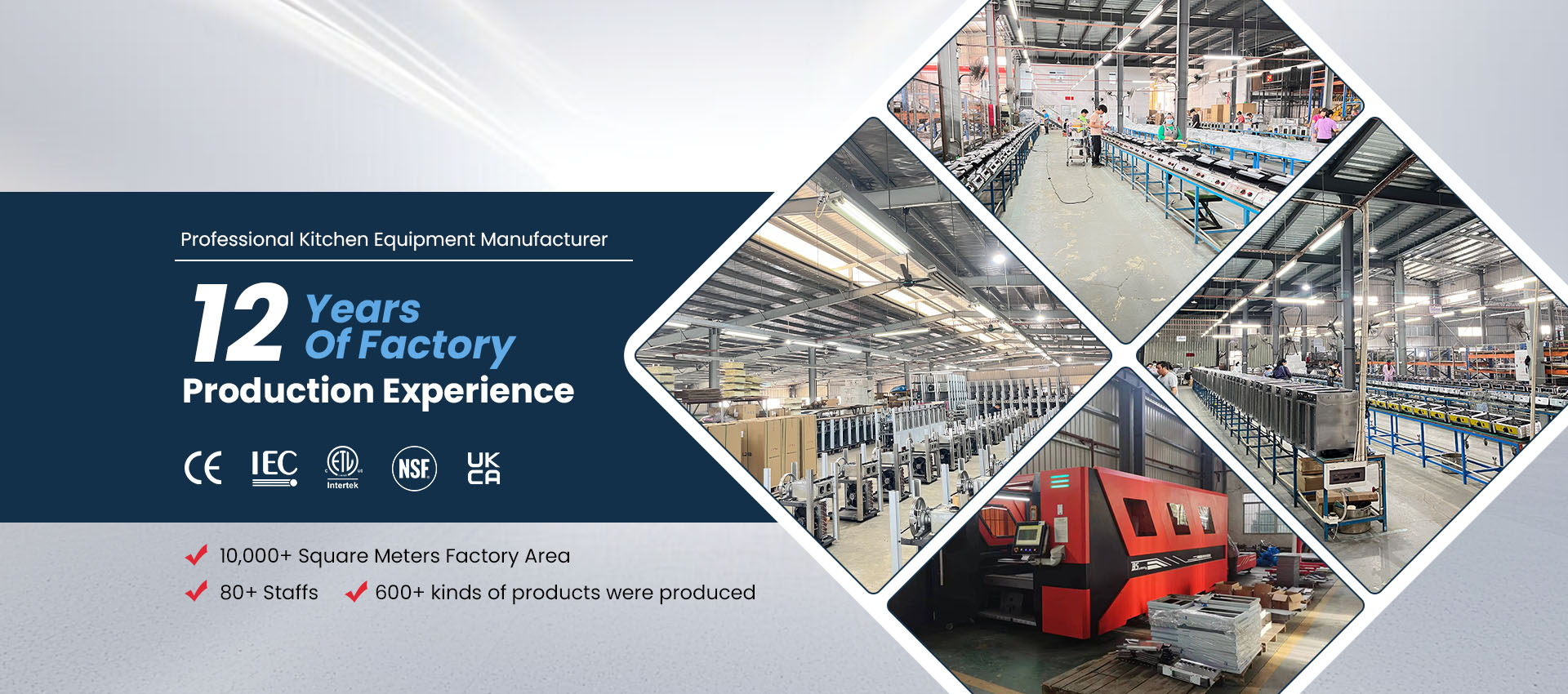
When selecting size for repeat purchasing, the difference between manufacturer vs trader becomes important. A trader may offer many sizes in a catalog, but stable mold dimensions, heating consistency, and identical batch output are harder to verify when products come from multiple upstream factories. Dingfeng presents itself as a factory-based manufacturer with a modern production facility covering over 10,000 square meters, more than 80 trained employees, and more than 1000 product types produced. That manufacturing base matters because machine size is not only a catalog specification. It must stay consistent through tooling, plate production, assembly, and final inspection.
OEM and ODM projects need a more detailed size review
In OEM and ODM projects, size selection goes beyond choosing small, medium, or large. It also includes plate count, cavity shape, housing depth, voltage, handle clearance, and packaging dimensions. A slightly larger machine may be worthwhile if it improves output or allows brand-specific mold development. A slightly smaller machine may be better if freight efficiency, shelf placement, or retail packaging matters more. This is why project sourcing checklist reviews should include both product size and packed size, especially for export programs where container efficiency and carton standardization can change the final landed cost. Dingfeng’s published product parameters already show both machine dimensions and packing size on some models, which is useful for this kind of planning.
Manufacturing process overview should guide the size decision
A larger waffle maker is only a better choice if the supplier can manufacture it with stable quality. The manufacturing process overview should cover plate casting or machining, heating system installation, thermostat assembly, body fabrication, and final functional testing. As machine size increases, requirements for plate flatness, hinge stability, even heating, and structural strength become more demanding. That is why quality control checkpoints should include temperature consistency, plate alignment, coating condition, and repeated cycle testing. A supplier that manages these points in-house is more likely to deliver reliable output across different sizes. This is one of the practical advantages of working with a factory-oriented supplier rather than buying purely by catalog image.
Material standards used still matter at every size
No matter which size is selected, the food-contact and structural materials remain important. Dingfeng’s waffle-related product pages commonly describe stainless steel bodies, cast aluminum baking plates, and non-stick cooking surfaces across different models. That material logic supports durability, heat transfer, and cleaning convenience across both compact and larger units. For export market compliance, food-contact surfaces should also align with the applicable market rules. The European Commission states that Regulation EC No 1935/2004 sets the general principles of safety and inertness for food-contact materials in the EU, so material traceability should be reviewed together with size and performance.
A practical size comparison
| Selection factor | Smaller waffle maker | Larger waffle maker |
|---|---|---|
| Counter space | Easier to place | Needs more room |
| Batch capacity | Lower | Higher |
| Menu role | Secondary item or specialty format | Core menu item or high-volume service |
| Freight and packaging | Usually easier to handle | May improve output but add shipping volume |
| OEM flexibility | Good for niche formats | Better for large-scale standardized supply |
The best choice depends on how the machine will actually be used, not on the largest specification available. Dingfeng’s current lineup, from compact specialty models to larger four-grid units, shows that size should be matched to service pattern, product style, and long-term supply planning.
What buyers should check before making the final decision
A practical project sourcing checklist should include expected hourly volume, finished waffle format, counter space, machine dimensions, packing size, power requirements, and cleaning workflow. It is also worth checking whether the supplier can maintain the same size specification and heating performance across repeat orders. The right waffle maker size is the one that balances production capacity, space efficiency, quality consistency, and export readiness. From a manufacturer perspective, that decision is strongest when it is based on real operating needs and backed by a supplier with stable production capability.