


How To Choose The Best Waffle Maker for Home Use
Choosing the best Waffle Maker for home use is not only about price or shape. A good machine should match daily cooking habits, available counter space, cleaning expectations, and long-term product reliability. For manufacturers and sourcing teams, the decision goes even deeper. It should include material standards used, heating structure, quality control checkpoints, and export market compliance for the target region. Dingfeng’s waffle maker category already shows this range clearly, with 38 waffle-related products covering Belgian styles, sandwich waffles, novelty shapes, and compact countertop models, which means the right choice depends on intended use rather than on one universal specification.
Start with the waffle style you want to make
The first step is to decide what kind of waffle the machine needs to produce. A Belgian waffle maker is better for thick waffles with deeper pockets, while sandwich waffle models suit filled or sealed formats. Dingfeng’s lineup includes both options. Its 2-grid commercial belgian waffle machine is designed for authentic thick Belgian waffles with large deep-grid plates, while its Electric Sandwich Waffle Maker can produce four complete sandwich waffles in one cycle. This matters because the plate shape determines the final product more than the external housing does. For home use, the best machine is usually the one whose plate format matches the type of breakfast or snack most likely to be made repeatedly.
Temperature control affects consistency more than appearance
A waffle maker may look attractive on a product page, but home users feel the difference through temperature stability. Machines with adjustable thermostats and timers usually deliver more repeatable color and texture from batch to batch. Dingfeng’s sandwich waffle maker page specifically highlights an adjustable temperature control thermostat and built-in digital timer, while its dual-plate waffle maker uses independent control switches and timers for the left and right trays. These details are useful because they improve control over browning, reduce wasted batter, and make the machine easier to adapt to different recipes.
Material selection is one of the most important buying points
Material choice has a direct effect on durability, cleaning, and food-contact safety. Dingfeng’s waffle maker pages consistently describe stainless steel outer bodies and precision-cast aluminum cooking plates with non-stick surfaces. Stainless steel helps with corrosion resistance, daily cleaning, and structural stability, while cast aluminum supports fast and even heat transfer. This combination is especially practical for home users because it balances ease of maintenance with reliable cooking performance. The European Commission also states that Regulation EC No 1935/2004 sets the general principles of safety and inertness for food contact materials in the EU, which is a useful reminder that food-contact surfaces should be reviewed as carefully as power and shape.
Size should fit the kitchen, not just the catalog
Home-use waffle makers do not need to be oversized to be effective. A machine should fit the available workspace and still provide enough output for normal household use. Dingfeng’s range includes compact countertop formats as well as larger multi-grid models. Its 4-grid large-grid waffle maker is positioned as a high-efficiency baking unit with dimensions of 450 by 350 by 300 mm, while several smaller specialty units are designed for narrower use cases and lighter countertop footprints. This means the best home-use model is usually not the largest one. It is the one that balances serving size, counter space, and cleaning convenience.
Manufacturer vs trader changes long-term value
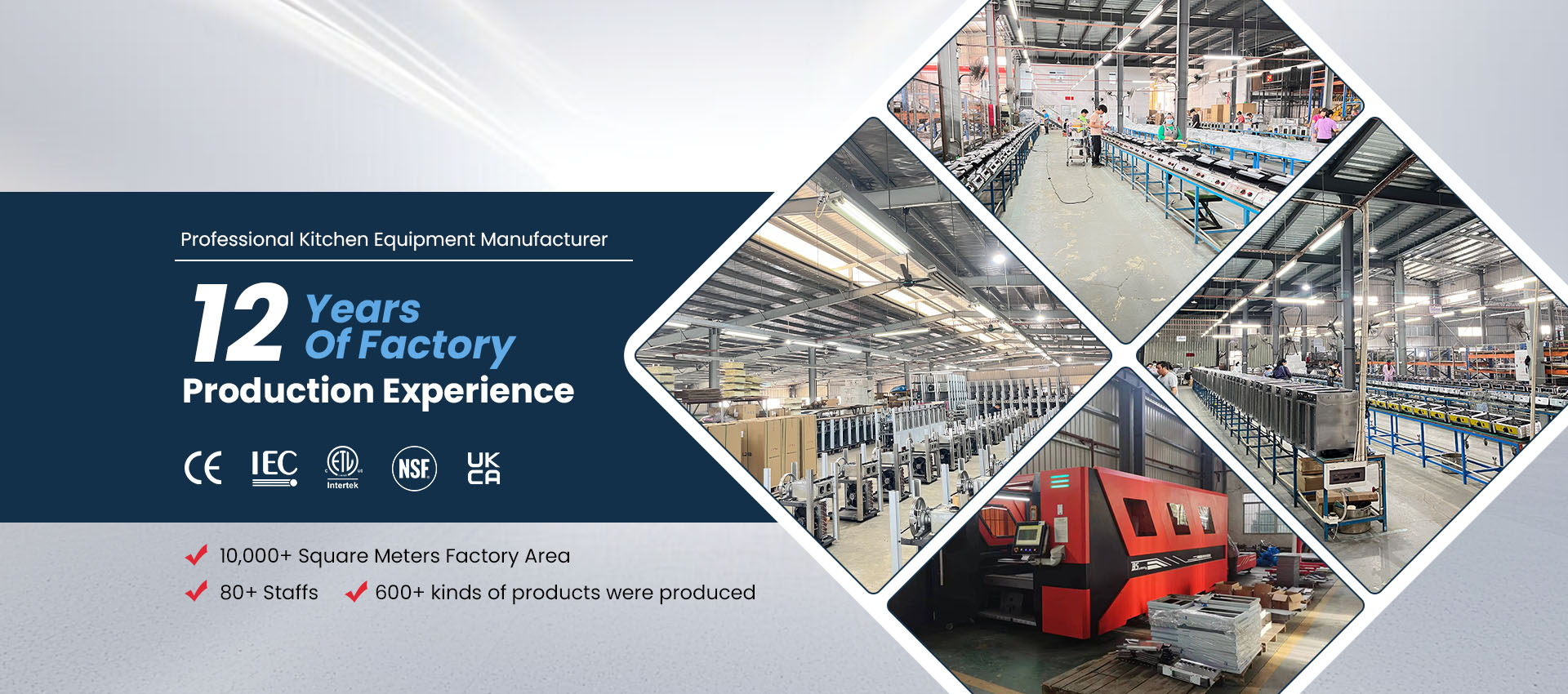
For a home-use appliance, the difference between manufacturer vs trader may not be obvious at first glance, but it becomes important over time. A manufacturer usually has better control over mold accuracy, heating element assembly, body fabrication, and final inspection. A trader may offer many options, but it often relies on outside factories for actual production consistency. Dingfeng presents itself as a factory-based company with a modern production site covering over 10,000 square meters, more than 80 trained employees, and over 1000 product types produced. That kind of manufacturing base is valuable because it suggests stronger control over repeat orders, parts consistency, and OEM or ODM development.
OEM and ODM capability still matters in home-use products
Even when the end use is residential, OEM and ODM process strength still matters. Home-use waffle makers often need different voltages, plug types, surface finishes, control layouts, and branding depending on the destination market. A supplier with real development capability can adapt these details without losing control over structure or safety. Dingfeng’s broad waffle maker line, from novelty plates to commercial-style Belgian units, suggests a more flexible platform for customization than a narrow one-model supplier. For project sourcing, that is useful because it supports both standard retail lines and private-label product planning.
Manufacturing process overview should guide the final decision
A strong waffle maker is built through controlled production, not only through a good-looking design. The manufacturing process overview should include body forming, plate casting or machining, coating application, heating system installation, thermostat assembly, and final functional testing. Dingfeng’s product pages repeatedly point to stainless steel housings, cast aluminum plates, and control-focused designs, all of which suggest a process built around repeatable heating and structural consistency. For home-use appliances, the practical result is easier operation and more dependable performance over time.
Quality control checkpoints matter even in smaller appliances
Home-use buyers often focus on convenience, but quality control checkpoints remain essential. Temperature accuracy, plate alignment, coating condition, hinge stability, timer response, and power safety all affect real-world use. A waffle maker with poor alignment or unstable heat may still look acceptable in photos, but it will not deliver consistent waffles. This is why a manufacturer-based supply chain generally creates more confidence than a purely catalog-based purchase. Dingfeng’s emphasis on structured product categories and factory capability makes this point stronger, especially for buyers who care about repeat supply and long-term product consistency.
A simple comparison for home-use selection
| Key factor | What to check | Why it matters |
|---|---|---|
| Plate type | Belgian, sandwich, novelty, multi-grid | Determines waffle style and portion format |
| Temperature control | Adjustable thermostat, timer, independent controls | Improves repeatability and ease of use |
| Materials | Stainless steel body, cast aluminum plates, non-stick surface | Affects durability, heat transfer, and cleaning |
| Size | Countertop footprint and output capacity | Helps balance space and daily use |
| Supplier type | Manufacturer or trader | Influences consistency, OEM support, and long-term reliability |
The strongest home-use model is usually the one that fits actual daily cooking needs while also being backed by stable production capability.
What buyers should check before making the final choice
A practical project sourcing checklist should include waffle type, plate depth, temperature control, body material, food-contact surface quality, machine size, and the supplier’s manufacturing background. It is also worth checking whether the product is suitable for the destination market from an export market compliance perspective, especially where food-contact material documentation matters. The European Commission’s food-contact framework makes that point clear, since food-contact materials are expected to remain safe and inert under intended use. A well-chosen waffle maker should therefore combine convenient daily use with sound materials, stable process control, and a reliable manufacturer behind it.