


How Does Power Wattage Impact Waffle Makers
Power wattage is one of the most important technical factors influencing Waffle Maker performance, especially in commercial kitchen environments where consistency, speed, and thermal stability are essential. In electrical heating systems used in food equipment, higher wattage directly affects heat-up time, temperature recovery speed, and cooking cycle efficiency.
In commercial food equipment engineering studies, increasing wattage levels has been shown to reduce preheating time by up to 35 percent, improving workflow efficiency in high volume cooking operations.
Wattage And Heating Speed Performance
Wattage determines how quickly a waffle maker reaches optimal cooking temperature. Lower wattage units take longer to stabilize, while higher wattage systems achieve faster heat-up and more stable temperature recovery between cooking cycles.
Typical commercial waffle makers operate between 800W and 2000W depending on plate size, material thickness, and intended usage intensity.
Temperature Stability And Cooking Consistency
Stable wattage output ensures uniform heat distribution across the cooking plate. If wattage is too low, temperature drops occur when batter is added, leading to uneven cooking. If wattage is too high without control systems, overheating may cause surface burning.
Engineering data from commercial kitchen systems shows that stable wattage control improves cooking consistency by more than 20 percent in continuous production environments.
Energy Efficiency And Operational Cost
Power wattage also impacts energy consumption. Higher wattage machines consume more energy per cycle but reduce overall cooking time, which can improve efficiency in high throughput environments.
In commercial kitchen operations, optimized wattage systems can reduce total production time per batch by approximately 15 to 25 percent depending on workload intensity.
Manufacturing Design And Electrical Engineering Control
Wattage performance is not only a power specification but also a result of engineering design. A commercial kitchen equipment manufacturer integrates heating elements, thermostat systems, insulation materials, and circuit protection systems to stabilize wattage output.
During OEM and ODM development, wattage calibration must match plate material thickness and thermal conductivity to ensure safe and efficient operation under continuous usage conditions.
Manufacturing Process Overview For Waffle Makers
A structured production system includes:
Heating element design and wattage calibration
Plate casting and thermal surface treatment
Electrical system integration and wiring
Thermostat and control system assembly
Safety protection and overload testing
Continuous operation cycle testing
Final inspection and packaging
Each stage directly affects wattage efficiency and cooking stability in commercial applications.
Manufacturer vs Trader Capability
A manufacturer vs trader comparison is critical in equipment sourcing. A manufacturer controls heating system design, wattage calibration, circuit engineering, and thermal testing. This ensures consistent performance across mass production.
A trader depends on external factories, which may lead to inconsistent wattage output, unstable heating recovery, and uneven temperature distribution.
Quality Control Checkpoints
Key inspection stages include:
Wattage stability testing under rated load
Heating recovery time measurement
Temperature uniformity across plate surface
Electrical insulation safety testing
Overheat protection system verification
Continuous cycle endurance testing
These processes ensure export compliance and stable performance in bulk supply equipment systems.
Wattage Performance Comparison
| Wattage Level | Heating Speed | Energy Consumption | Commercial Suitability |
|---|---|---|---|
| 800–1000W | Slow | Low | Light use |
| 1200–1500W | Medium | Balanced | Standard kitchens |
| 1600–2000W | Fast | Higher | High volume production |
OEM ODM And Bulk Supply Considerations
For international procurement, key sourcing factors include wattage specification, heating element design, thermostat accuracy, insulation material quality, safety certification, and production scalability. A structured OEM and ODM process includes design validation, thermal testing, sample approval, mass production, and final inspection.
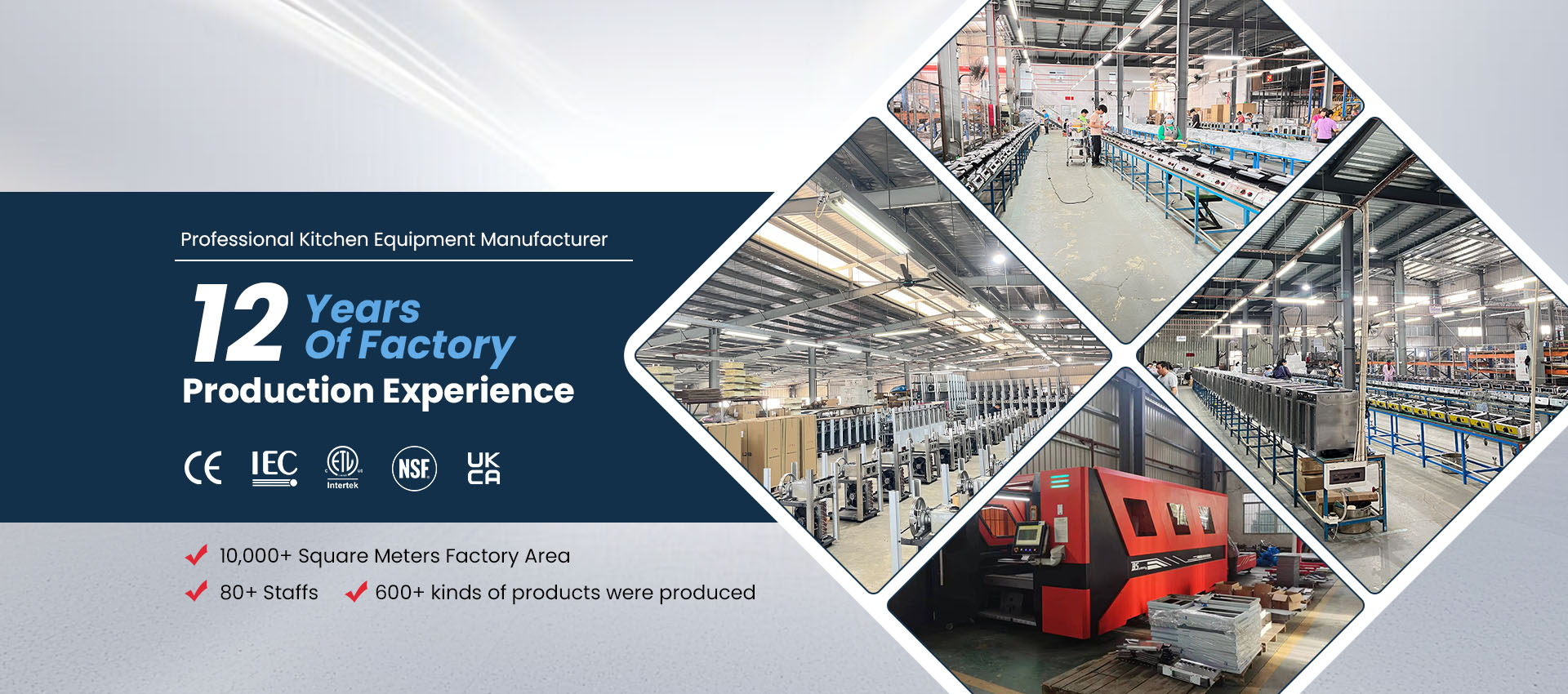
MLP Kitchen operates a commercial kitchen infrastructure system supporting standardized cooking equipment and scalable food production environments. Its engineering capability ensures stable wattage control, efficient heating systems, and reliable performance across global commercial kitchen applications.