


How Commercial Kitchen Equipment Manufacturers Manage Bulk Orders
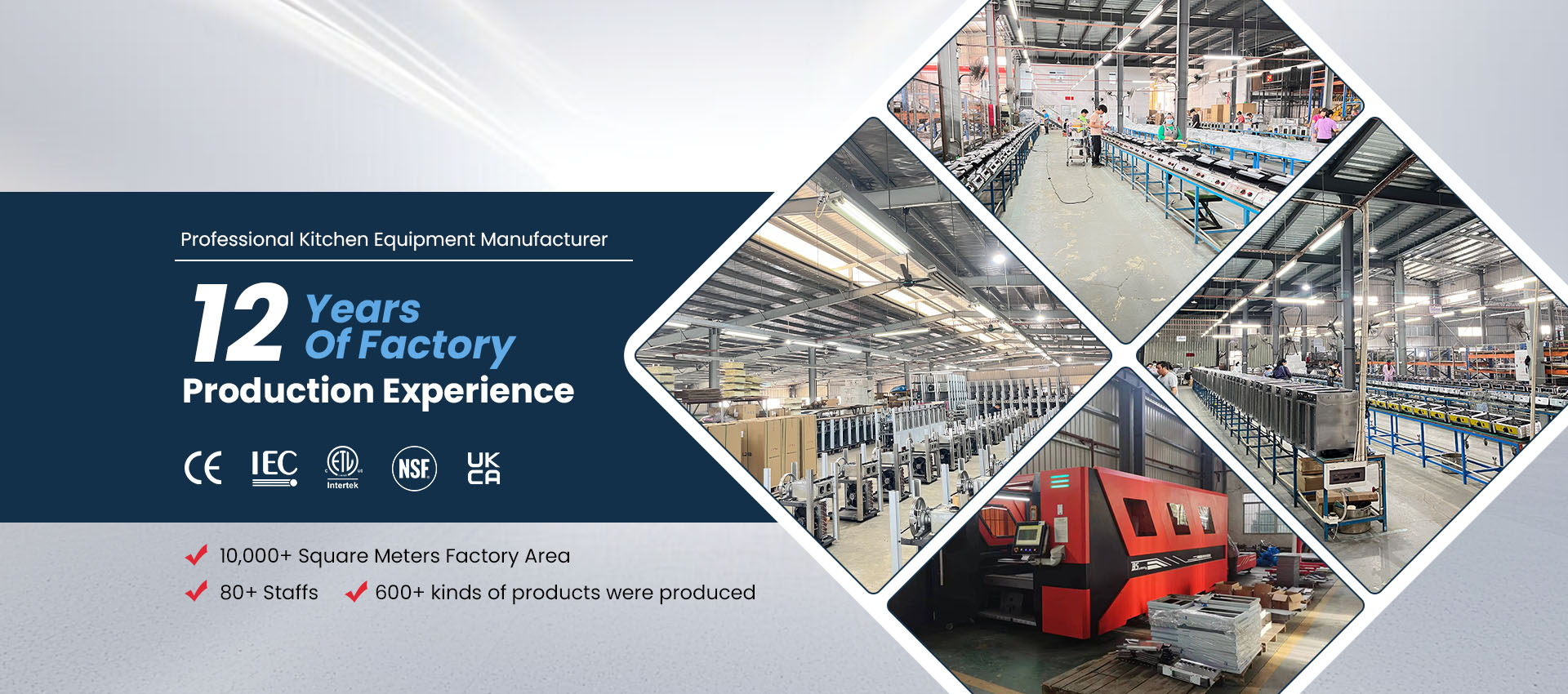
Managing bulk orders for commercial kitchen equipment requires much more than increasing production volume. A professional commercial kitchen equipment manufacturer must coordinate product design, material supply, production scheduling, quality control, packaging, and export preparation to ensure every unit maintains the same performance standard.
Large-scale kitchen projects often involve hundreds or thousands of equipment units with strict requirements for consistency and delivery. Industry sourcing practices show that reliable factories need strong control over manufacturing capability, quality systems, compliance requirements, and production planning before handling bulk orders.
As an experienced restaurant equipment manufacturer, DINGFENG focuses on providing stable commercial kitchen solutions, including cooking equipment, Snack Equipment, Refrigeration Equipment, and customized foodservice products. Through standardized manufacturing processes and strict quality management, DINGFENG supports different project scales while maintaining consistent product quality.
Manufacturer vs Trader: Why Production Control Matters
The first factor in managing bulk orders is having direct control over production.
A trader mainly coordinates products from different suppliers, while a factory manufacturer manages the complete production process internally. This difference becomes especially important for large orders because consistency is harder to maintain when production is controlled by multiple sources.
A professional commercial kitchen equipment supplier with factory capability can control:
Product specifications
Material standards
Manufacturing procedures
Production schedules
Quality inspection
Delivery planning
When a manufacturer receives a bulk order, engineers and production teams can directly review technical requirements and adjust manufacturing details quickly.
DINGFENG manages its own production processes, allowing better control over product consistency and project requirements.
Step 1: Project Evaluation And Order Planning
Before bulk production begins, manufacturers need to evaluate the complete project requirements.
A professional factory usually reviews:
Equipment models and quantities
Product specifications
Customization requirements
Delivery schedule
Packaging requirements
Export standards
A detailed project sourcing checklist helps avoid production problems later.
| Evaluation Item | Main Consideration |
|---|---|
| Product Details | Confirm models, dimensions, and functions |
| Materials | Verify required material standards |
| Production Capacity | Ensure factory can meet volume requirements |
| Quality Requirements | Define inspection procedures |
| Delivery Plan | Arrange production and shipment schedules |
DINGFENG works with customers to confirm technical details before production, helping ensure bulk orders are manufactured according to approved requirements.
Step 2: Stable Material Supply Management
Bulk orders require reliable material supply because production delays can affect the entire project timeline.
A professional commercial kitchen equipment manufacturer manages:
Stainless steel supply
Electrical components
Heating elements
Mechanical parts
Packaging materials
Material standards are especially important for commercial kitchen equipment because products operate under high temperatures, moisture, and continuous workloads.
Stainless steel is widely used in professional kitchen equipment due to its corrosion resistance, durability, and easy cleaning characteristics.
During bulk production, manufacturers should ensure:
| Material Control | Purpose |
|---|---|
| Incoming Inspection | Confirm material quality |
| Specification Check | Ensure consistency |
| Supplier Management | Maintain stable supply |
| Storage Control | Protect materials before production |
DINGFENG integrates material inspection into the manufacturing process to maintain stable product quality during large-volume production.
Step 3: Standardized Manufacturing Process Overview
Bulk orders depend heavily on standardized production procedures. Without clear processes, different batches may have differences in appearance, performance, or structure.
A professional manufacturing process usually includes:
Metal Fabrication
Production teams complete:
Cutting
Bending
Welding
Surface polishing
These processes determine equipment structure and appearance quality.
Component Assembly
Technicians install:
Heating systems
Electrical components
Control systems
Functional parts
Performance Testing
Finished equipment is tested to confirm:
Operating functions
Heating performance
Safety features
Structural stability
Process qualification is important in manufacturing because it verifies that production methods can consistently achieve required quality standards during commercial production.
DINGFENG follows standardized production procedures to ensure every unit from bulk orders maintains consistent performance.
Step 4: OEM And ODM Bulk Production Management
Many commercial kitchen projects require customized equipment. Managing customized bulk orders requires stronger engineering and production coordination.
A professional OEM commercial kitchen equipment manufacturer should provide:
Requirement confirmation
Engineering evaluation
Sample development
Product testing
Mass production
Final inspection
OEM and ODM projects require manufacturers to control:
Customized dimensions
Product structures
Electrical specifications
Branding requirements
Packaging design
DINGFENG supports OEM and ODM solutions by combining engineering capability with factory production experience, helping customized products move smoothly from design to mass manufacturing.
Step 5: Quality Control Throughout Bulk Production
Large orders require strict quality control because even small differences between batches can create installation or operation problems.
Professional manufacturers establish quality checkpoints throughout production.
| Quality Control Stage | Inspection Focus |
|---|---|
| Material Inspection | Confirm incoming material quality |
| Production Inspection | Check fabrication accuracy |
| Assembly Inspection | Verify component installation |
| Functional Testing | Confirm equipment performance |
| Final Inspection | Approve shipment quality |
Important quality checkpoints include:
Material Quality Check
Ensures stainless steel and components meet production requirements.
Production Process Check
Monitors welding quality, structure accuracy, and assembly standards.
Performance Check
Tests equipment functions before shipment.
Final Shipment Check
Confirms appearance, quantity, accessories, and packaging.
DINGFENG applies multiple inspection procedures to maintain product consistency throughout bulk manufacturing.
Step 6: Managing Production Capacity And Delivery
Bulk orders require careful production scheduling. A factory must balance multiple projects while maintaining quality standards.
A reliable bulk supply commercial kitchen equipment supplier should have:
Experienced production teams
Standardized workflows
Production planning systems
Stable manufacturing capacity
Efficient warehouse management
Large orders are not only about producing more units. They require predictable delivery, consistent quality, and effective communication.
DINGFENG manages production planning based on order requirements, helping maintain stable delivery performance for different commercial kitchen projects.
Step 7: Export Market Compliance And Shipment Preparation
For international bulk orders, manufacturers must also consider export requirements.
Before shipment, factories should verify:
Product specifications
Voltage requirements
Documentation
Packaging standards
Shipping protection
Export compliance helps reduce problems during customs clearance, installation, and operation.
A manufacturer with export experience understands that successful bulk supply requires not only production capability but also international logistics preparation.
DINGFENG provides commercial kitchen equipment solutions for global markets with professional manufacturing management and export preparation experience.
Building Reliable Bulk Supply Through Manufacturing Capability
Managing bulk orders requires a complete manufacturing system. From project evaluation and material control to production management and final inspection, every stage influences product quality and delivery reliability.
Compared with simple product sourcing, working with a professional foodservice equipment manufacturer provides stronger control over customization, quality, production consistency, and long-term supply stability.
With factory-controlled production processes, OEM and ODM capabilities, strict quality checkpoints, and a complete commercial kitchen equipment range, DINGFENG continues to provide reliable solutions for restaurants, catering projects, and foodservice applications worldwide.